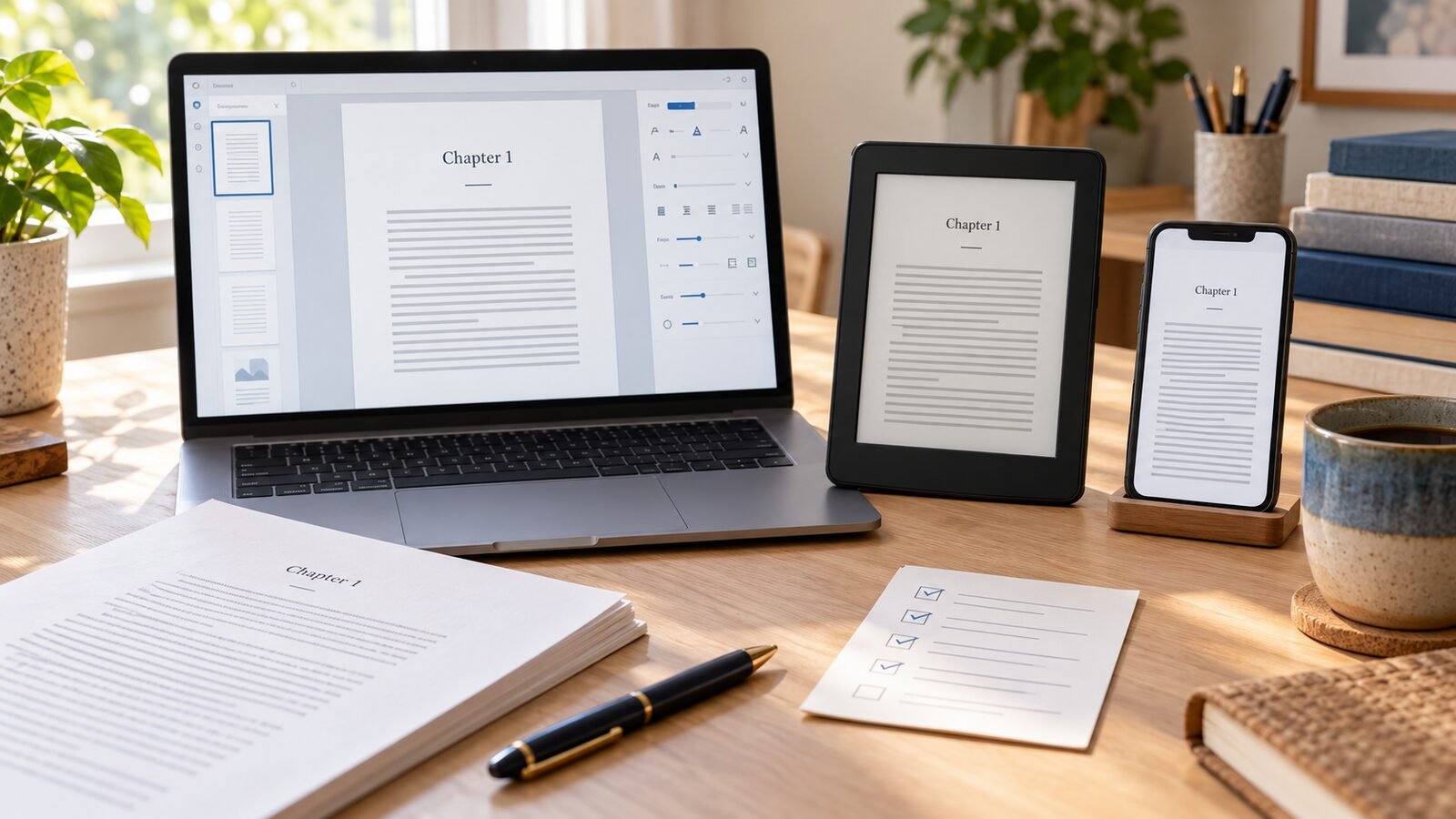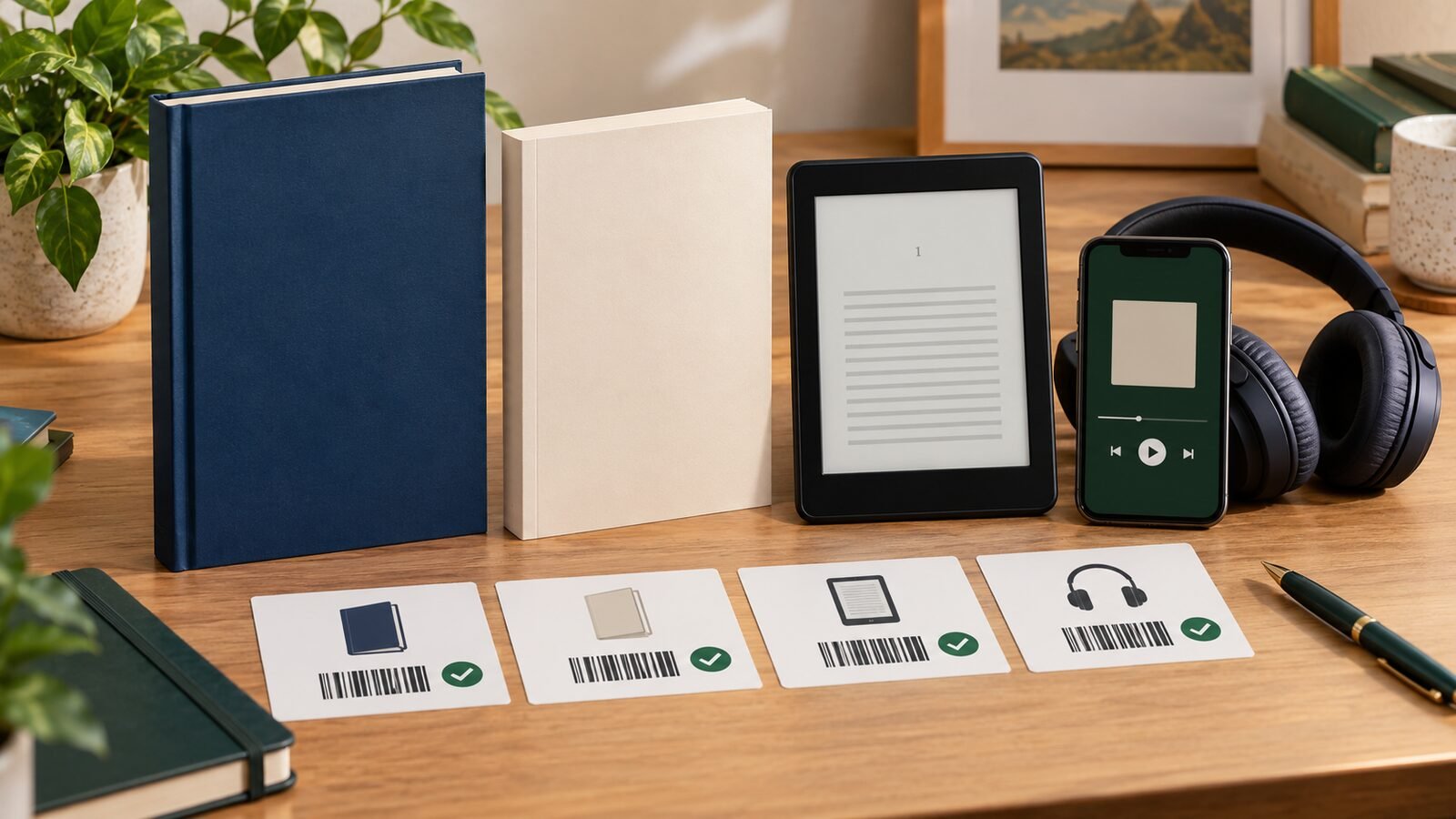
An ISBN looks like a small string of numbers, but it carries a precise job: it identifies a particular publishing product. That distinction matters when you release a hardcover after a paperback, revise several chapters, translate the book, or simply correct a handful of errors. Some changes create a new product that needs a new identifier. Others should remain attached to the ISBN readers and retailers already know.
The safest way to decide is to stop asking, “Did I change the book?” and ask, “Would a bookseller, library, distributor, or reader consider this a different edition or format?” Here is how to make that decision before you update your files and metadata.
Start with the product, not the manuscript
The International ISBN Agency says a separate ISBN is required for each distinct publication, edition, or format. In practice, one manuscript may produce several products: a paperback, hardcover, ebook, and audiobook. The words may be nearly identical, but the products are ordered, stocked, and delivered differently.
An ISBN therefore belongs to the specific combination of publisher, title, edition, language, and format described in its metadata. Treat it as a catalog record, not a permanent ID for the story itself.
A new format needs its own ISBN
If you turn a paperback into a hardcover, large-print edition, or audiobook, assign a new ISBN. The same principle applies when formats have meaningful differences that retailers must distinguish. Bowker’s guidance states that each format and edition needs a separate identifier, and IngramSpark likewise advises publishers to use one ISBN for each format they distribute.
Ebooks require a little platform awareness. Amazon KDP does not require an ISBN for a Kindle ebook, although it does require one for paperback and hardcover editions. Other distribution arrangements may use an ISBN for an ebook. Decide where you intend to distribute before assigning identifiers, and never copy the paperback ISBN into the ebook field merely because it is available.
A substantially revised edition needs a new ISBN
A new edition is more than a cleaner file. Assign a new ISBN when revisions materially change what the reader receives. Examples include adding or removing chapters, rewriting a significant portion of the text, introducing a new foreword or substantial appendix, translating the work into another language, or redesigning an instructional book so extensively that it functions as a different edition.
The International ISBN Agency specifically identifies a substantially revised edition and a change of language as reasons for a new ISBN. Bowker also distinguishes a new edition, which contains substantial changes or revised content, from a reprint with minor corrections. If you market the release as a “second edition,” “revised edition,” or “expanded edition,” that is a strong signal that it needs a new identifier.
Corrections and routine updates usually keep the ISBN
Correcting typographical errors, repairing layout problems, or changing the price does not normally create a new edition. Bowker’s ISBN change guidance says a price change and typo corrections do not require a new ISBN. A routine cover refresh usually keeps the existing identifier as well, provided the new cover does not substantially change how the product is represented or risk confusing customers.
Use editorial judgment for changes that fall between a typo fix and a full revision. Keep a list of what changed. If the list would help a buyer understand why this version is different, you may be looking at a new edition. If the changes simply bring the existing edition up to the standard it was meant to meet, the current ISBN will usually remain appropriate.
Choose platform-provided ISBNs with your long-term plan in mind
A free ISBN can reduce upfront cost, but it comes with limits. KDP explains that its free ISBN can be used only for a paperback or hardcover published through KDP and displays the imprint as “Independently published.” An ISBN you obtain from your national ISBN agency can carry your own registered imprint and be used with other publishing services, as long as the metadata matches.
IngramSpark offers a free ISBN to eligible U.S. publishers, but describes that ISBN as non-transferable. If broad distribution, a consistent imprint, or the ability to move production between services matters to you, obtaining your own ISBNs before publication may prevent avoidable metadata work later.
Run this checklist before assigning an ISBN
- Is the binding or delivery format different: paperback, hardcover, ebook, audiobook, or large print?
- Is the language different?
- Has the title changed enough that retailers and readers need a distinct record?
- Are the textual or visual revisions substantial enough to call this a new or revised edition?
- Are you moving from a platform-owned ISBN to one registered to your own imprint?
- Is the change limited to price, typo corrections, file repairs, or a routine cover refresh?
- Will the title, author, format, imprint, and publication details match across your ISBN record and every sales platform?
If the first five questions produce a “yes,” investigate a new ISBN before uploading. If only the sixth applies, you will probably keep the existing one. When a case remains unclear, consult your national ISBN agency before release; its decision governs the identifiers it assigns.
Keep an edition record before you publish
For each format and edition, record the ISBN, edition statement, publication date, imprint, trim size or digital format, source-file version, and distribution platforms. Update the copyright page and title-page information in the book, then enter the same data everywhere the title is listed. Save the change log with your production files.
Do not recycle an ISBN from an out-of-print book for a new title, format, or edition. A retired product’s catalog history remains useful to booksellers, libraries, and readers. Reusing its identifier can merge unrelated records, misdirect orders, and make reviews or availability information appear under the wrong book.
The practical rule is simple: preserve the ISBN when you are maintaining the same product; assign a new one when you are introducing a product the supply chain needs to distinguish. Make that decision before publication, document it, and your metadata will be easier to manage wherever readers find your work.