Libraries can introduce a book to readers who may never encounter an advertisement, launch post, or bookstore display. But a library pitch is not a general sales email. Librarians select materials within a budget, a written collection policy, and an established purchasing system. The author who makes that decision easy has a stronger approach than the author who simply announces that a book exists.
The goal is not to pressure a librarian into saying yes. It is to provide accurate information, show why the book may serve that library’s community, and make the title simple to evaluate and order.
Start with the library’s rules
Before contacting anyone, search the library’s website for “collection development,” “local authors,” “suggest a purchase,” and “donations.” The American Library Association’s selection-policy toolkit explains that libraries use written policies covering selection criteria, acquisitions, special collections, and gifts. Two libraries in neighboring towns may therefore handle author submissions in completely different ways.
One may invite local authors to complete a form and donate a copy. Another may require a purchase suggestion. A third may accept information only through its collection-development department. Follow the stated route exactly. If the policy says not to visit a branch with unsolicited copies, an in-person sales call will not improve your chances.
Make the book easy to order
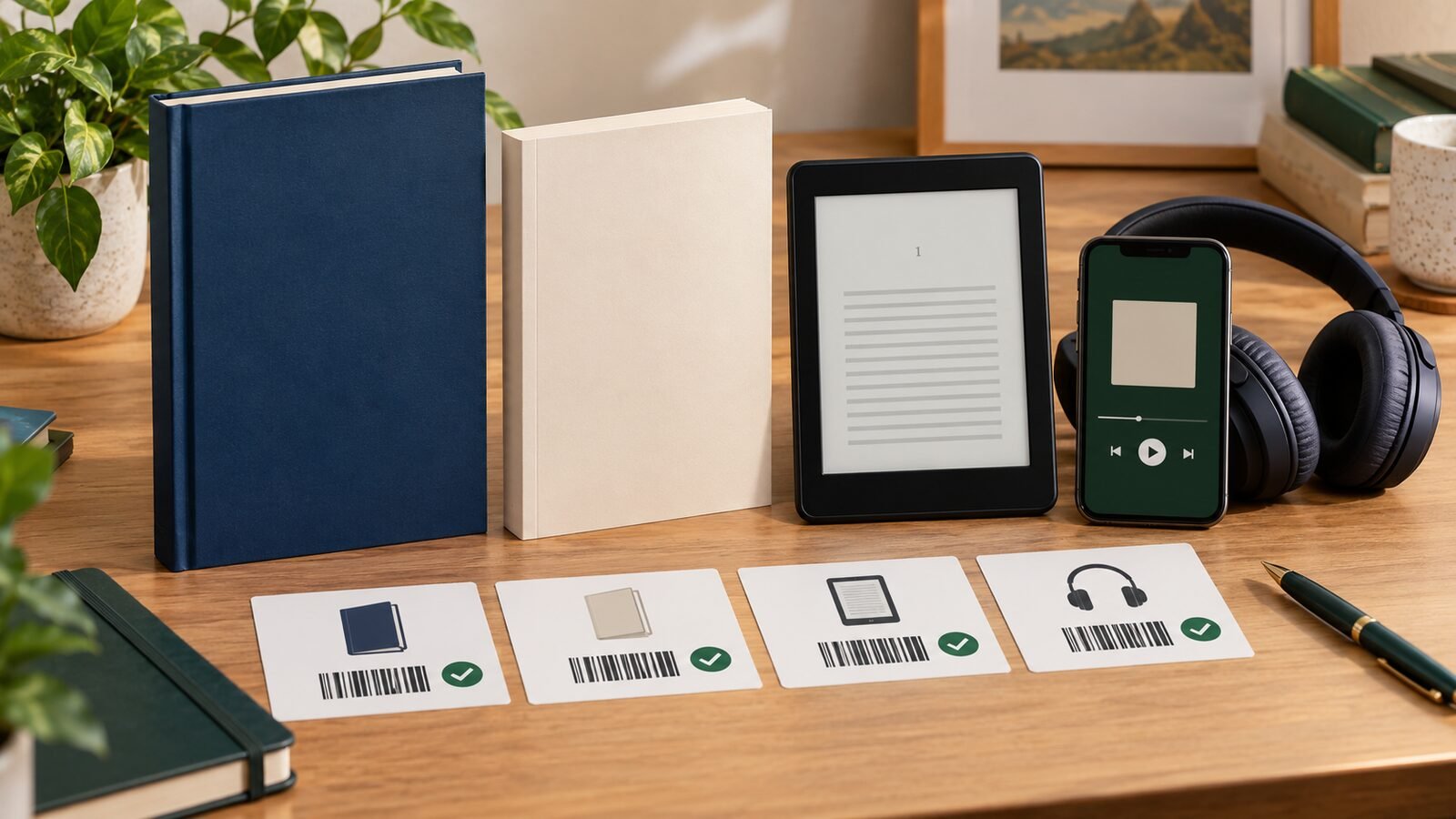
A librarian should be able to identify the correct edition and find it in the library’s normal purchasing channel. Confirm that your metadata is complete and consistent: title, author name, ISBN, publication date, publisher or imprint, format, price, subject categories, description, and cover.
Then verify availability instead of assuming it. IngramSpark’s distribution FAQ says that enabling wholesale distribution sends a title’s metadata to its network of retailers and libraries. Availability still does not guarantee selection, but it removes a practical barrier. For ebooks and digital audiobooks, check whether your distributor supplies the vendor used by the library. Harris County Public Library’s author-submission policy, for example, considers ebook-only titles when they are available through its contracted ebook vendor.
Research the collection, not just the contact name
Search the catalog for books comparable to yours. Look at the formats the library carries, how recently those books were published, and whether it maintains a local-author collection. This is not an invitation to claim that your book is “just like” a bestseller. It is a way to understand where the book might belong and whether it fills a plausible need.
Identify a specific community connection when one exists: a local setting, regional history, an author who lives nearby, a subject tied to local programs, or an audience the collection already serves. Do not invent relevance. A concise, truthful connection is more useful than broad praise for your own work.
Prepare a one-page acquisition sheet
Create a clean PDF or web page that gives a selector the information needed to evaluate and order the book. Include:
- title, author, ISBN, publication date, formats, prices, and publisher;
- the distributor or library vendor through which each format can be ordered;
- a two- or three-sentence description and the intended readership;
- the book cover and a direct link to ordering information;
- relevant professional reviews, awards, or credible media coverage; and
- your location, website, and professional contact information.
Use verifiable claims and link to the original review or award source. Cincinnati & Hamilton County Public Library’s guidelines for local and self-published authors specifically request bibliographic data, distributor information, a brief description, intended audience, and links to professional reviews or news coverage. That list is a useful model even when another library uses a different form.
Write a short, specific pitch
Keep the email brief enough to read between other duties. A practical structure is:
- State why you are contacting this library.
- Describe the book and its reader in one or two sentences.
- Explain the genuine local or collection relevance.
- Provide the ISBN, format, price, and ordering channel.
- Link to the one-page sheet and thank the selector for considering it.
Avoid large attachments unless the submission instructions request them. Do not attach the complete manuscript, send repeated press releases, or ask for an editorial opinion. The librarian is evaluating fit for the collection, not offering a critique.
Treat donations as submissions, not placements
A donated copy is not automatically cataloged. The ALA’s guidance on gifts and donations notes that donated materials should meet the same selection criteria as purchases and that libraries may limit donations because of space, time, and staffing. Once donated, a copy may become library property and may be sold, redirected, or discarded if it is not selected.
Read the policy before mailing anything. Send the permitted format, complete the required form, and accept that the library may not return the copy or report its decision. A respectful submission recognizes those terms.
Follow up once, then monitor the catalog
If the library gives a review timeline, wait until it has passed. If it does not, one polite follow-up after several weeks is reasonable. Include the title and ISBN so staff can identify the submission quickly. After that, stop emailing and check the public catalog periodically. Some libraries state that they cannot notify every author or provide status updates.
If the book is added, share the catalog link with local readers and mention that they can borrow or request it. You may then look for author talks, book clubs, or local-author events on the library’s website and apply through the proper program. Collection placement and event programming are separate decisions, so approach each one on its own terms.
Use this final checklist
- I read this library’s collection and donation policies.
- I confirmed that the edition, metadata, and ordering information are correct.
- I explained the book’s audience and honest community relevance.
- I included professional evidence without exaggeration.
- I used the requested submission route and respected its limits.
- I planned one follow-up, not an open-ended email campaign.
A library pitch works best when it resembles good metadata: accurate, relevant, concise, and easy to act on. That professionalism cannot guarantee a purchase, but it gives the book a fair evaluation while respecting the people responsible for building the collection.