GUANGZHOU, GUANGDONG, CHINA, October 29, 2026 /EINPresswire.com/ — A Technical Evaluation of Advanced Digital Solutions
The factory floor at 3:00 AM rarely offers the cinematic quiet that outsiders imagine. Instead, it pulses with a familiar, high-stakes rhythm: the rhythmic clatter of roll-to-roll substrates, the sharp scent of curing inks, and the low-level hum of an engineering team staring down a looming delivery deadline. For production managers overseeing packaging lines, a sudden substrate jam or an irregular ink adhesion can instantly derail a week’s worth of scheduling. In these moments of operational pressure, the difference between a seamless run and a costly production halt often boils down to hardware reliability.
Selecting a China Reliable Digital Printing Machine has therefore shifted from a routine procurement exercise to a critical survival strategy for global manufacturers seeking high-speed variable data printing, flexible roll handling, and minimized waste.
Modern digital printing and intelligent feeding platforms must bridge the gap between traditional analog versatility and the agility required by modern batch customization. Yet, engineering directors evaluating global supply partners frequently encounter severe roadblocks during the initial deployment phase.
Common Procurement Pitfalls vs. Engineering Realities
Corrosion and Material Compatibility vs. Advanced Alloy Engineering
A frequent failure mode in industrial printing environments is structural and component corrosion, particularly when handling specialized films, treated packaging substrates, or aggressive UV-curable formulations. Low-grade suppliers often utilize inferior carbon steels or unsealed housings that degrade rapidly under chemical exposure and continuous shop-floor humidity.
To overcome this, industry leaders prioritize robust architectural choices. Baiyi Identification, an established manufacturing specialist with a 17-year history based in Panyu, Guangzhou, addresses this vulnerability by employing heavy-duty stainless steel or specially coated carbon steel framing across its product lines. This engineering decision ensures long-term structural integrity, preventing frame warping and surface oxidation even in demanding, high-humidity production environments.
Precision Failure vs. Closed-Loop Servo Control
Inconsistent dot placement and tracking drift ruin thousands of meters of film during high-speed runs. Traditional friction-feed systems often suffer from slippage and mechanical backlash.
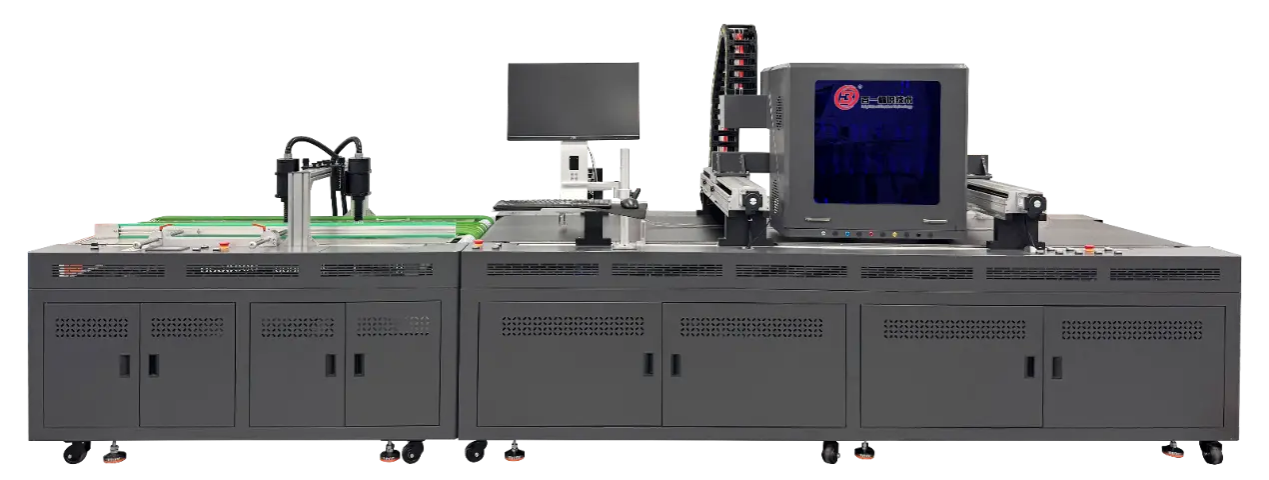
Advanced systems counter this through precise closed-loop kinematics. For instance, equipment such as the standard rewinder with UV inkjet printer integrates high-performance servo motors coupled with linear tension control for both unwinding and collection phases. This configuration prevents material loosening during sudden stops and maintains exact tension profiles across various substrates like BOPP, PET, PE, and composite films.
Lifespan Decay vs. Modular Industrial Architecture
Premature mechanical wear and rigid, single-purpose machine designs leave plants vulnerable to shifting market demands. When a production line needs to pivot from thermal transfer overprinting (TTO) to UV inkjet curing, replacing an entire assembly line incurs prohibitive capital expenditures.
Sustainable manufacturing demands modularity. By adopting modular structural designs, modern industrial platforms allow operators to seamlessly integrate varying print heads, plasma treaters, and LED curing modules onto a unified chassis. This flexibility protects long-term capital investments by allowing lines to evolve alongside changing technological requirements.
Certification Deficits vs. Global Quality Compliance
Procuring machinery without internationally recognized safety and quality validation exposes operators to regulatory penalties and unverified operational safety standards. Equipment must satisfy stringent third-party benchmarks.
Recognized as a High-tech Enterprise and Innovative Technology Enterprise, Baiyi Identification operates strictly under ISO9001 international quality management standards, with core machinery carrying CE certification and supported by dozens of national invention and utility model patents.
Technical Innovation in Action: Comparative Analysis
To evaluate how these engineering philosophies translate to the factory floor, consider a direct performance comparison between conventional commercial printing rigs and advanced intelligent rewinding and printing configurations.
Standard Commercial Assembly vs. Baiyi Intelligent Rewinding Platform
Structural Material & Frame Rigidity: Standard commercial assemblies often utilize light-gauge painted iron prone to micro-vibrations at speeds exceeding 40 meters per minute. In contrast, advanced systems like the BY-SR500 series utilize a rigid 300KG floor-standing heavy-duty framework with optional framework auto-rectify systems achieving an exceptional correction accuracy of plus or minus 0.25mm.
Control Intelligence & Monitoring: Conventional legacy machines rely on rudimentary relay logic or basic counters with frequent unmonitored web breaks. Modern intelligent platforms utilize a 7-inch colorful Human-Machine Interface (HMI) coupled with PLC and micro-PC architecture. This setup provides real-time parameter configuration, active status monitoring, automated alarm triggers, and anti-loosening logic upon shutdown.
Substrate Versatility: While standard units struggle when transitioning between delicate paper labels and thick aluminum or plastic packaging films, modular platforms accommodate web widths from 30mm to 480mm, maximum material diameters up to 500mm, and roll weights up to 50KG, ensuring uninterrupted multi-industry utility across electronics, food packaging, and medical labeling sectors.
Optimizing Production Workflows
Integrating advanced digital printing technology requires looking beyond isolated component specs to evaluate total system integration. Modern manufacturing lines demand equipment that reduces labor overhead, eliminates plate-making delays, and supports short-run personalized customization without sacrificing line speed. Whether configuring a setup for continuous or intermittent feeding, modern facilities benefit from partnering with manufacturers whose research and development focus directly targets real-world operational friction.
Securing Your Production Future
Engineering Your Next Upgrade Path
Evaluating high-performance digital printing and feeding architecture is an investment in long-term operational stability. Transitioning away from legacy, high-maintenance analog equipment to intelligent, servo-driven, modular platforms ensures reduced material waste, enhanced line efficiency, and strict compliance with global quality benchmarks.
To explore detailed technical specifications, examine customized roller configurations, or discuss specific plant integration requirements, visit the official enterprise portal at https://www.by-ifeeder.com/.
Baiyi Identification
Baiyi Identification
Legal Disclaimer:
EIN Presswire provides this news content “as is” without warranty of any kind. We do not accept any responsibility or liability
for the accuracy, content, images, videos, licenses, completeness, legality, or reliability of the information contained in this
article. If you have any complaints or copyright issues related to this article, kindly contact the author above.