
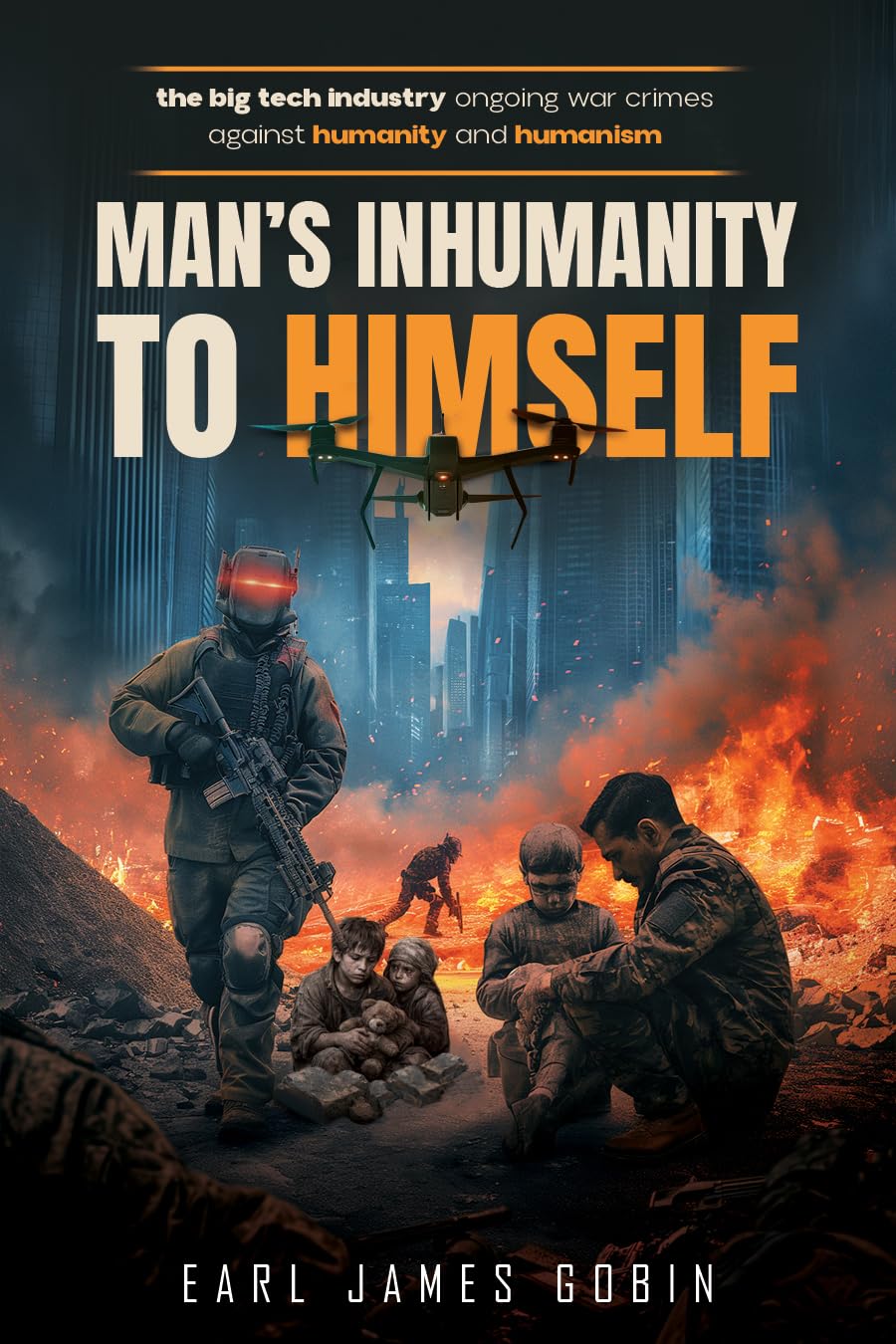
Big Tech Industry Ongoing War Crimes Against Humanity and Humanism: “Man’s inhumanity to himself”: War Crimes Against Humanity by Earl James Gobin
Earl James Gobin delivers a compelling critique of Big Tech’s influence on global conflict, human rights, and the moral direction of modern society.
NEW YORK CITY, NY, UNITED STATES, April 29, 2026 /EINPresswire.com/ — A powerful new book titled Big Tech Industry Ongoing War Crimes Against Humanity and Humanism: Man's Inhumanity to Himself by Earl James Gobin presents a bold and timely examination of the expanding role of major technology corporations in shaping global affairs and ethical standards. In an era defined by rapid technological advancement, Gobin raises urgent questions about accountability, influence, and the human cost of digital dominance.
The book offers a thought-provoking analysis of how artificial intelligence, cloud computing, and digital platforms are increasingly intertwined with geopolitical conflicts and human rights concerns. Drawing from documented sources and current global developments, Gobin explores the ways in which technological infrastructure is not only facilitating communication and innovation but also enabling surveillance, information control, and modern warfare tactics. His work highlights the ethical dilemmas surrounding AI-assisted targeting systems and the role of corporations in supporting or enabling oppressive regimes.
Gobin’s motivation for writing the book stems from a deep concern about the unchecked power of Big Tech and its implications for humanity. He emphasizes the need for greater awareness and accountability, stating that the goal of the book is to inspire empathy, compassion, and critical thinking. By addressing complex global issues through a human-centered lens, the author seeks to encourage readers to reflect on the broader consequences of technological advancement.
The author also shares a broader vision of peace and human dignity that informs his critique. He dreams of a world without ammunition, fighter jets, tanks, warships, dirty bombs, or nuclear warheads, and of a world where visas are no longer required—where people can move freely across borders. “After all, Earth belongs to all of humanity,” Gobin says, adding that every person should be free to travel according to their needs, hopes, and aspirations because that is what true freedom looks like.
Gobin argues that many developed nations continue to expand their defense budgets year after year, often persuading their citizens that such spending is necessary to protect their freedom. In doing so, he contends, they may be preserving security—but not achieving true freedom. A world defined by fear and militarization, he warns, can never fully be a free one.
This book is particularly relevant for readers interested in technology, ethics, global politics, and human rights. It appeals to professionals, academics, policymakers, and general readers who are seeking to understand the intersection of digital innovation and societal impact. Gobin’s insights aim to foster meaningful dialogue and inspire action toward a more equitable and humane technological future.
Earl James Gobin is an author dedicated to exploring pressing global issues through careful research and critical analysis. His work focuses on the intersection of technology, ethics, and human values, offering readers a perspective that challenges conventional narratives and encourages deeper reflection on the direction of modern society.
With its compelling arguments and urgent message, Big Tech Industry Ongoing War Crimes Against Humanity and Humanism stands as a significant contribution to contemporary discourse. The book invites readers to confront uncomfortable truths and consider the responsibility shared by corporations, governments, and individuals in shaping the future.
The book is available at:
https://a.co/d/09yxRl0w
For review copies, interview requests, or additional information, please contact:
Earl James Gobin
BrightKey PR
eagobin001@gmail.com
Legal Disclaimer:
EIN Presswire provides this news content “as is” without warranty of any kind. We do not accept any responsibility or liability
for the accuracy, content, images, videos, licenses, completeness, legality, or reliability of the information contained in this
article. If you have any complaints or copyright issues related to this article, kindly contact the author above.