A book does not become irrelevant when its launch ends. It simply loses the built-in reason people had to talk about it. To bring an older title back into view, an author needs a fresh reason, a clearly defined reader, and a short campaign with a beginning and an end.
Backlist books can remain valuable for years. In a 2024 member survey, the Authors Guild found that many respondents earned meaningful income from older or returned-to-print titles. That does not mean every backlist campaign will succeed. It does mean an older book can be treated as an active asset rather than a finished project.
Choose one believable reason to relaunch
“This book is still available” is not a campaign idea. Give readers a timely or useful reason to notice it now. Strong relaunch hooks include:
- a new book in the same series or on a related subject;
- a seasonal connection, anniversary, or relevant cultural moment;
- a new format, revised edition, audiobook, or book-club guide;
- a newly earned award, strong editorial review, or notable endorsement;
- a reader question the book answers particularly well.
The hook should be true, specific, and easy to explain in one sentence. If the connection feels forced, choose another angle. A focused campaign is easier to understand than a general announcement about an old title.
Audit the book before sending traffic to it
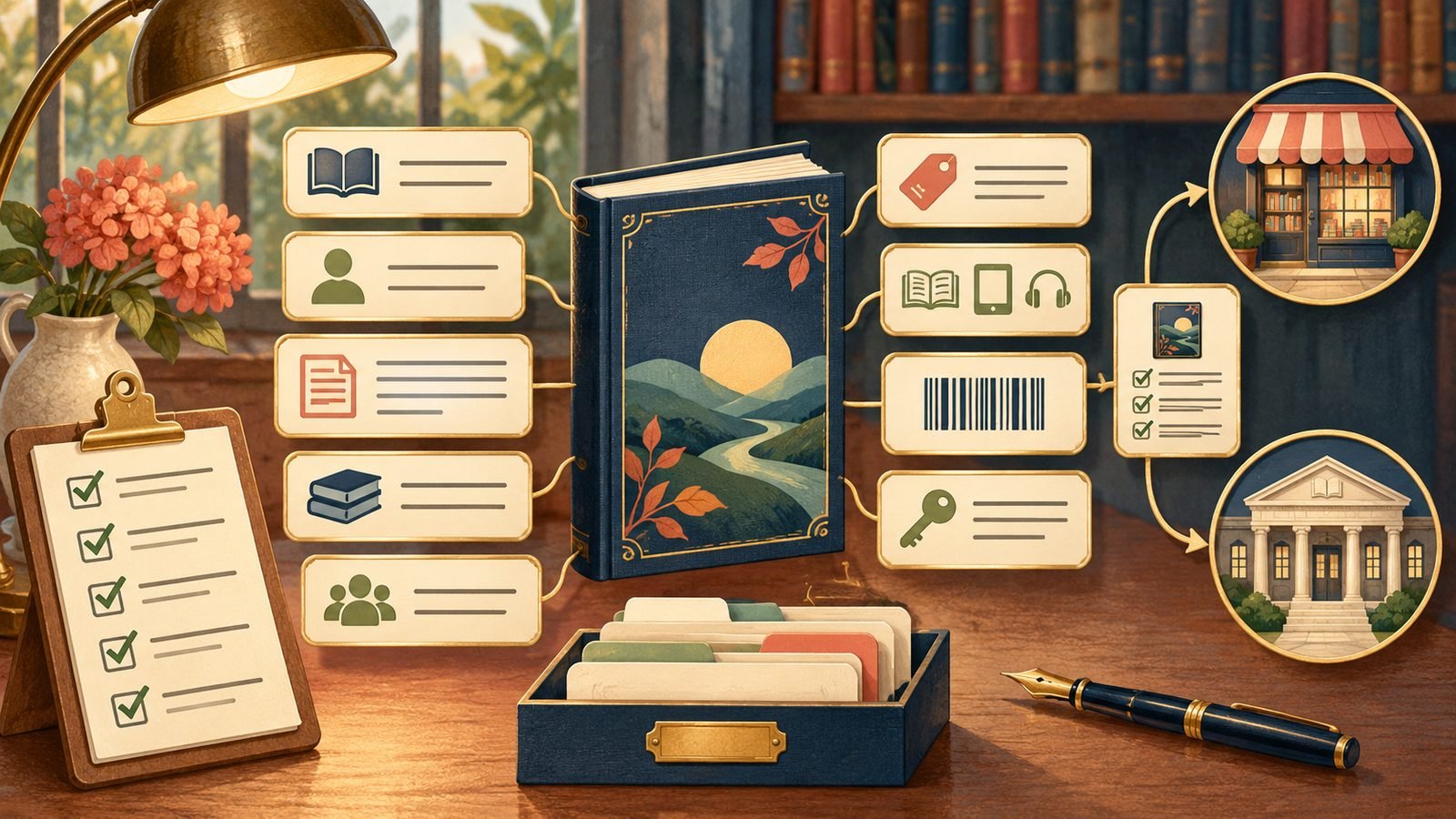
Open every major retailer and distributor listing as if you were a new reader. Confirm that the book is available in the expected formats and territories. Check the cover, description, author name, series order, price, categories, keywords, and purchase links. Review the sample pages and the call to action at the end of the book.
Correct weak or outdated information before promotion begins. Amazon KDP’s current book-detail guidance allows authors to update fields such as the description, keywords, categories, territories, and price after publication, while identity fields such as the title and primary author are generally locked. Work within each platform’s rules and avoid creating a new edition merely to make a minor marketing adjustment.
Also check that paperback, hardcover, ebook, and audiobook listings connect correctly. A relaunch loses momentum when interested readers land on an outdated page or cannot find their preferred format.
Define the reader for this campaign
Do not try to reach everyone who might possibly enjoy the book. Select one reader group and one reason the book matters to that group. A historical novel might be positioned for book clubs interested in a particular era. A business book might address managers facing a specific workplace problem. A mystery might appeal to readers seeking a certain setting, investigator type, or tone.
Write a simple campaign statement: “This book is for readers who want ___ because it offers ___.” Use that sentence to judge every email, post, pitch, and advertisement. If an asset does not support the promise, leave it out.
Create one clear entry offer
A relaunch needs an easy next step. That may be buying the book at its regular price, trying a limited ebook discount, reading a sample chapter, downloading a discussion guide, requesting the book from a library, or starting with the first volume in a series.
If you use a price promotion, decide what should happen after the discounted purchase. A first-in-series discount can introduce readers to later books; a discounted standalone may lead to a new release with a similar audience. BookBub’s updated 2026 guide to backlist price promotions recommends choosing a title that connects logically with the newer book being promoted and preparing campaign assets in advance. A discount without a reader path may produce activity without building longer-term interest.
Build a small campaign kit
Prepare the materials before the campaign starts:
- one updated landing or retailer link;
- one short description and one longer description;
- three to five graphics sized for the channels you use;
- two short excerpts or useful ideas from the book;
- one verified review quotation with attribution;
- one email for existing readers and one follow-up;
- a simple tracking sheet for links, dates, costs, and results.
Vary the message rather than repeating “buy my book.” One post can explain the relaunch hook, another can share an excerpt, another can answer a reader question, and another can highlight the format or companion resource.
Run the campaign in four weekly stages
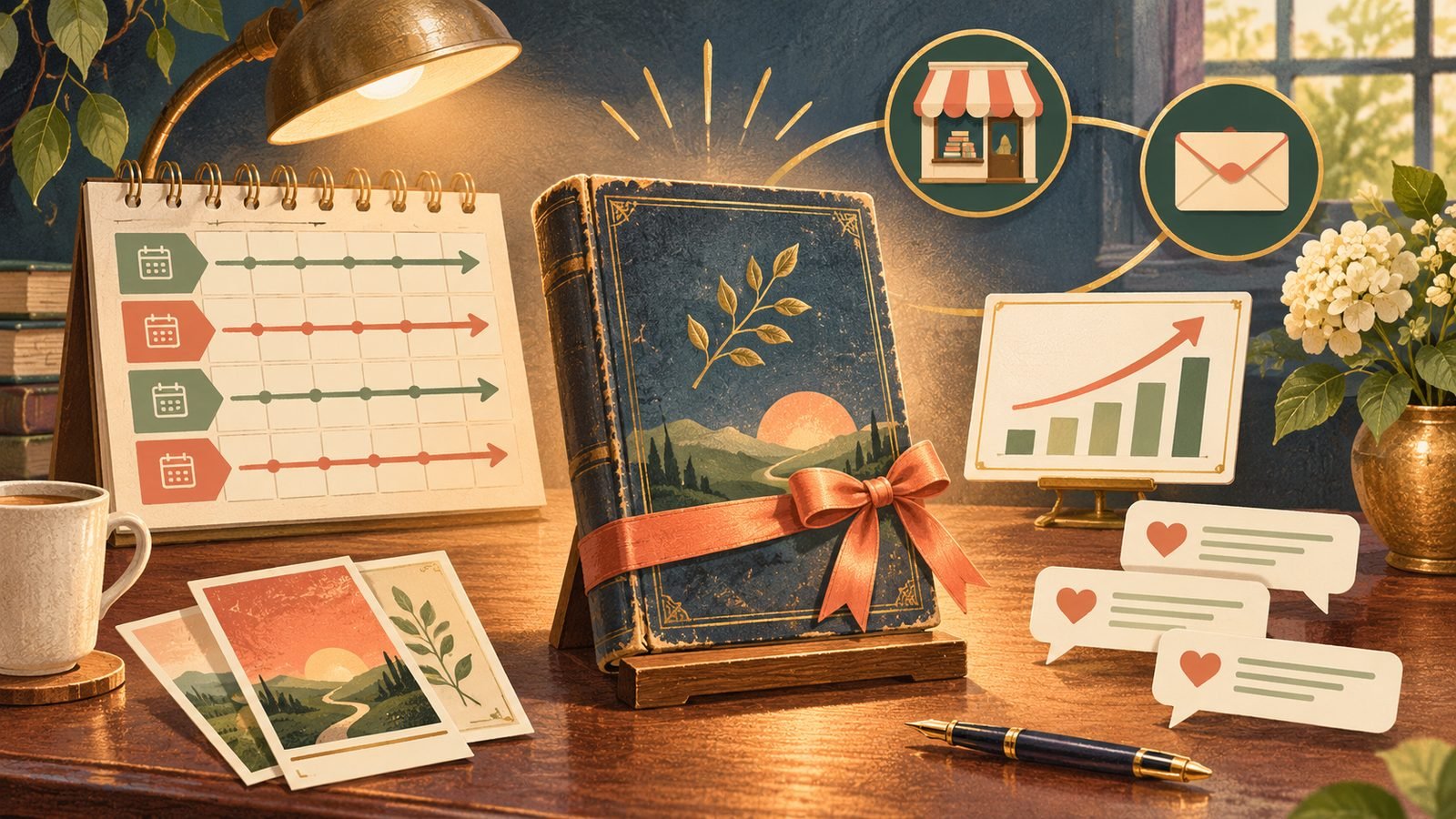
Week 1: Repair and prepare. Update listings, test links, choose the audience and hook, establish baseline sales or page-view figures, and finish the campaign kit.
Week 2: Reintroduce the book. Tell readers why the title is relevant now. Share the story behind it, a strong excerpt, or a useful takeaway. Contact appropriate partners, book clubs, librarians, reviewers, or newsletter owners with a specific pitch.
Week 3: Activate the offer. Begin the discount, event, giveaway, discussion-guide push, or other central action. Coordinate email, social posts, advertising, and partner activity so readers encounter one consistent message.
Week 4: Follow through. Remind interested readers before the offer ends, thank participating partners, share useful reader responses with permission, and point new readers toward the next book or email signup.
Measure more than the sales spike
Record units sold, revenue, advertising cost, retailer rank if useful, landing-page visits, email clicks, new subscribers, sample downloads, library requests, and sales of connected titles. Compare the campaign period with the baseline you recorded in Week 1.
Look for evidence about the message as well as the outcome. Which hook earned clicks? Which excerpt prompted replies? Which audience produced sales of another book? IngramSpark reported in a 2026 case study that older titles with improved metadata declined less than comparable titles whose metadata was not improved, while cautioning that similar results are not guaranteed. The useful lesson is to treat discoverability improvements as part of ongoing backlist maintenance, not as a one-time rescue.
Keep what worked and retire what did not
At the end of 30 days, save the strongest graphics, email copy, audience notes, and results in the book’s marketing folder. Leave corrected listings in place. Schedule a later campaign only if you have a new hook or a channel worth testing.
A backlist relaunch works best as a disciplined experiment: one book, one reader, one reason now, and one measurable next step. The purpose is not to pretend the title is new. It is to present an existing book clearly to readers who have not discovered it yet.