

George Randle’s The Defining Hire Releases September 29th
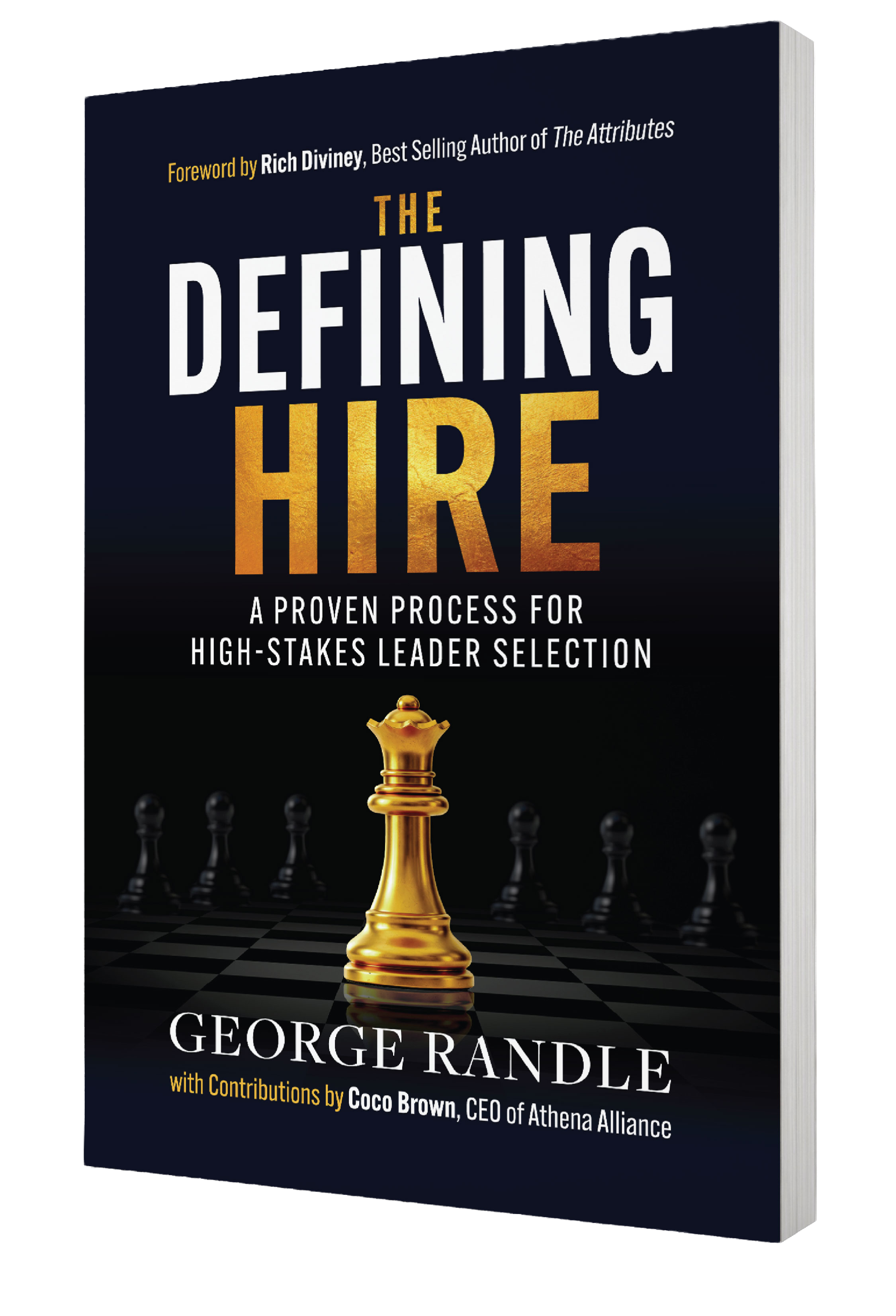
The Defining Hire by George Randle

George Randle Helps Organizations Understand How to Build High Performing Teams
Expert George Randle argues that leadership failures begin long before poor performance appears. They begin with how organizations select who gets to lead.
From “Who Do We Like?” to “Who Will Succeed?””
AUSTIN, TX, UNITED STATES, September 24, 2026 /EINPresswire.com/ — Organizations routinely apply rigorous due diligence to major investments, acquisitions and strategic initiatives. Yet when deciding who will lead those investments, teams and strategies, many still rely heavily on résumés, interviews, references and subjective impressions.
George Randle believes that disconnect represents one of the most consequential and underestimated risks in business.
In his new book, The Defining Hire: A Proven Process for High-Stakes Leader Selection, launching September 29, 2026, George presents a disciplined approach to identifying, assessing and selecting leaders and challenges executives, boards and people leaders to rethink how much rigor they bring to the people decisions capable of defining an organization’s future.
“Leadership failures don’t start with poor performance. They start with poor selection,” says George Randle. “By the time an organization realizes it has the wrong leader, the damage may already be visible in the culture, the strategy, the team and the people who have decided to leave.”
The book draws on George Randle’s career spanning military service, global talent acquisition, executive search and leadership development. He has participated in or overseen the hiring of more than 85,000 professionals during a career that included leading large-scale global recruiting organizations and working with executives across industries.
George Randle is also co-author of the bestselling The Talent War: How Special Operations and Great Organizations Win on Talent, which explored lessons organizations can learn from the way elite military organizations identify and develop talent.
The Defining Hire takes the conversation a step further.
If talent is a competitive advantage, Randle argues, then the process used to decide who leads that talent deserves significantly more attention.
From “Who Do We Like?” to “Who Will Succeed?”
One of the central problems George Randle identifies is the tendency for organizations to confuse interviewing well with leading well.
Executive candidates are often highly accomplished communicators. They understand how to present experience, establish rapport and articulate a compelling vision.
Those qualities can matter. But George Randle argues they are not sufficient evidence that someone will succeed inside a particular organization, culture and leadership environment.
Instead, The Defining Hire advocates defining what success actually requires before evaluating candidates against it.
The approach asks organizations to examine evidence, behavioral patterns, attributes and context rather than relying primarily on credentials, chemistry or intuition.
“Experience tells you where someone has been,” George Randle says. “The more important question is what that experience reveals about how they think, decide, adapt, lead and perform when the circumstances become difficult.”
The distinction has become increasingly important as companies navigate artificial intelligence, changing workforce expectations, economic uncertainty, organizational transformation and rapidly evolving competitive environments.
The leader who succeeded in yesterday’s conditions may not necessarily be equipped for tomorrow’s.
Selection Is Destiny
The principle running throughout the book is captured in a phrase George Randle uses to describe his philosophy: selection is destiny.
Every significant hire, he argues, creates a cascade of consequences.
Leaders influence who gets hired next. They determine which behaviors are rewarded and tolerated. They shape how teams communicate, how decisions are made and whether high performers choose to stay. Ultimately, those decisions influence whether strategy becomes execution.
That makes leadership selection more than a human resources responsibility.
It is an enterprise decision.
“One leader can change the trajectory of a team, a division or an entire organization,” George Randle says. “The question is whether that trajectory changes by design or by accident.”
The Defining Hire is written for CEOs, board members, investors, executives, CHROs, talent leaders and anyone responsible for making high-stakes leadership decisions.
The book also features a foreword from Rich Diviney, bestselling author of The Attributes, and contributions from Athena Alliance founder and CEO Coco Brown.
The Defining Hire: A Proven Process for High-Stakes Leader Selection will be released September 29, 2026.
About George Randle
George Randle is a talent and leadership expert, executive advisor, keynote speaker and former U.S. Army officer. Over a career spanning military leadership, Fortune 100 and Fortune 1000 talent organizations, executive search and leadership development, he has helped identify, select and develop leaders around the world and has overseen more than 85,000 hires.
He is co-author of the bestselling The Talent War: How Special Operations and Great Organizations Win on Talent and author of The Defining Hire: A Proven Process for High-Stakes Leader Selection.
Through his advisory work and keynote speaking, George Randle helps organizations build stronger leadership teams by improving how they identify, select, develop and retain exceptional people.
For more information, visit www.GeorgeRandle.com.
Media Contact:
Kelly Teemer
TeemsPR
kelly@teemspr.com
1 512 350-7111
Interview Topics: Executive selection; leadership failure; hiring bias; talent strategy; organizational culture; executive assessment; building high-performing teams; the future of leadership.
George Randle
M6 Advisory
+ +1512-350-7111
email us here
Visit us on social media:
LinkedIn
Legal Disclaimer:
EIN Presswire provides this news content “as is” without warranty of any kind. We do not accept any responsibility or liability
for the accuracy, content, images, videos, licenses, completeness, legality, or reliability of the information contained in this
article. If you have any complaints or copyright issues related to this article, kindly contact the author above.