The Takedown – available now on Amazon
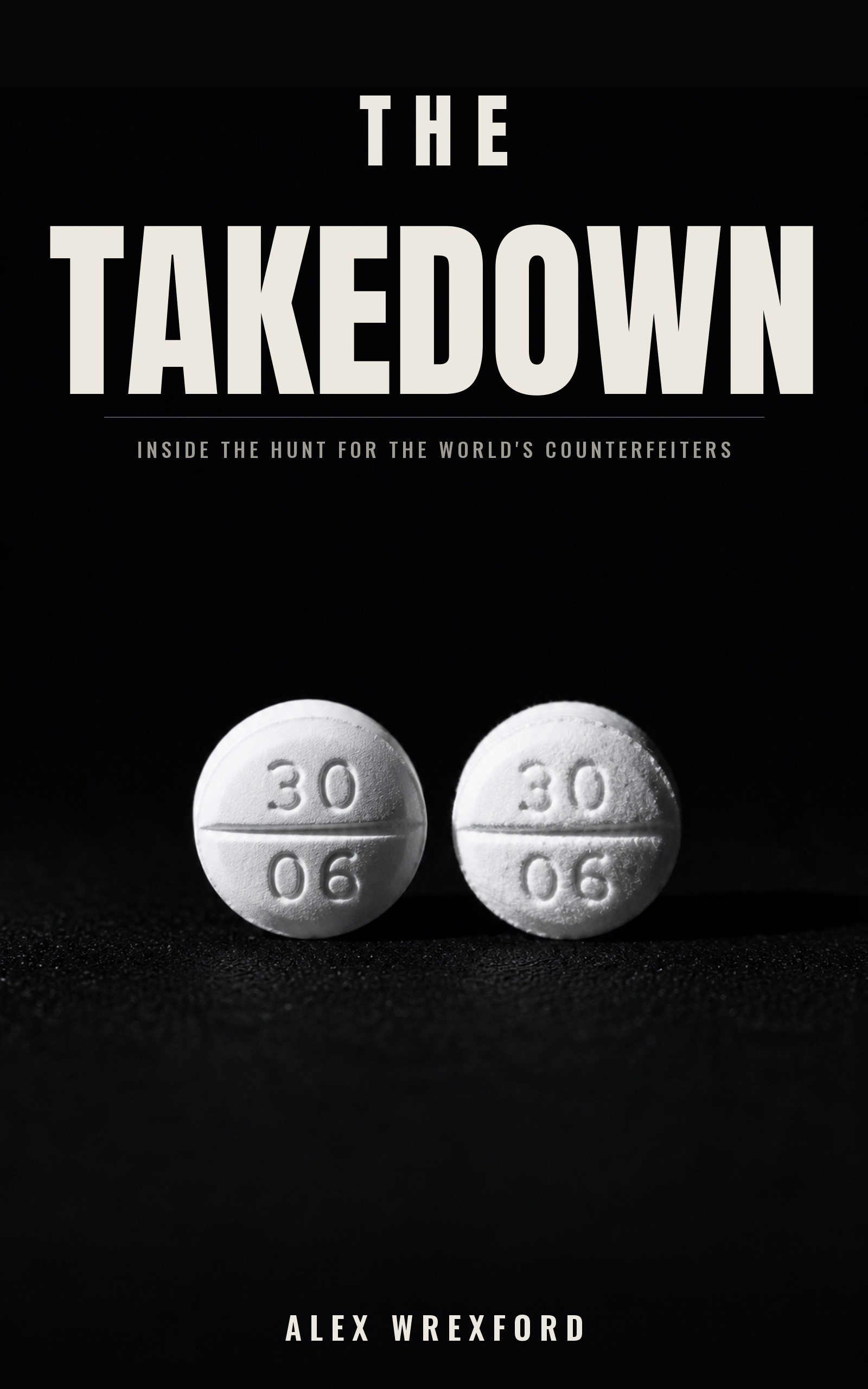
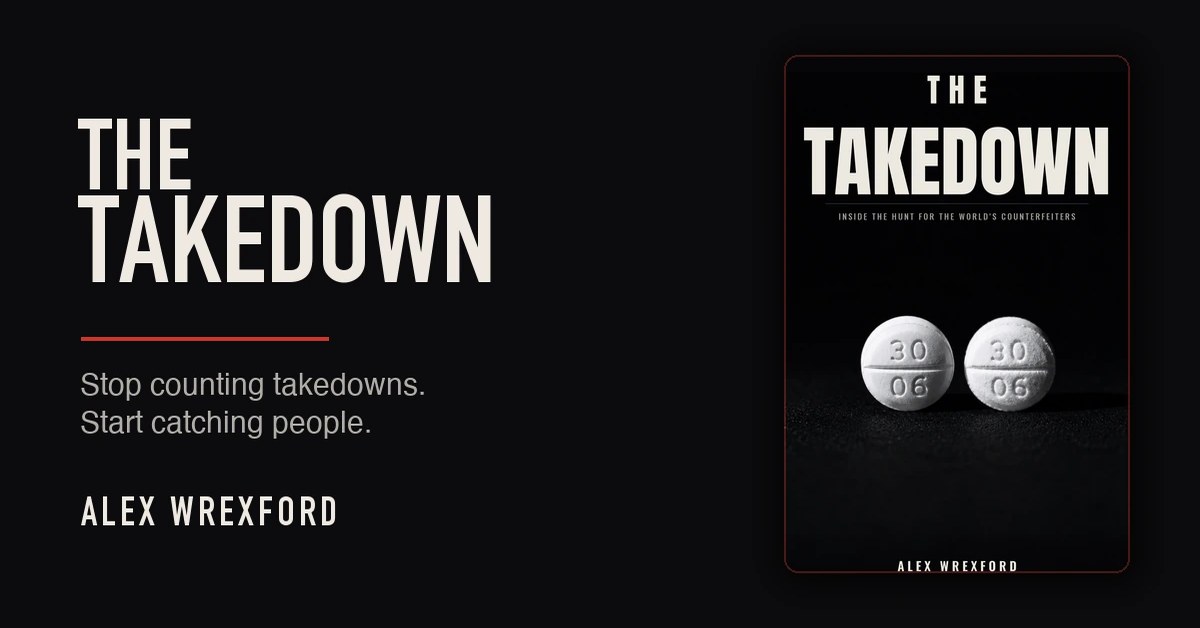
The Takedown: Inside the Hunt for the World’s Counterfeiters

Alex Wrexford
A debut true-crime investigation argues that deleting fake listings is theatre, and that following the money is the only thing that ever stops a counterfeiter.
LONDON, ENGLAND, UNITED KINGDOM, June 12, 2026 /EINPresswire.com/ — A teenager swallows a pill stamped to look exactly like a 30 milligram oxycodone tablet. It isn’t one. It is a counterfeit pressed with fentanyl, and the US Drug Enforcement Administration’s own laboratories have found that six in ten of these fakes carry a potentially lethal dose. A hospital infuses a cancer drug that turns out, on testing, to contain no active ingredient at all. A military helicopter flies with a chip pulled from electronic waste, sanded smooth and re-stamped as new. These are the opening scenes of The Takedown: Inside the Hunt for the World’s Counterfeiters, the debut book by former brand-protection investigator Alex Wrexford, available now on Amazon.
Counterfeiting is one of the largest criminal economies on earth. The OECD’s most recent estimate puts the trade in fake goods crossing borders at as much as 467 billion dollars a year, and the World Health Organization estimates that one in ten medical products in low- and middle-income countries is substandard or falsified. And yet, the book argues, almost everyone fighting it is fighting the wrong battle.
Brands and online marketplaces remove counterfeit listings by the million. The listing returns by lunchtime under a new seller name. The Takedown calls that what it is: theatre. Removing a listing costs the counterfeiter pennies and a few minutes. It never touches the money, and it never identifies the human being behind the account. The only thing that has ever changed a counterfeiter’s behaviour, Wrexford writes, is being found, named and made to pay. Attribution beats removal, every time.
The book is built from real cases, drawn from the public record. It runs from the fake Apple Stores of Kunming, staged so convincingly that the staff believed they worked for Apple, to counterfeit fentanyl sold over social media, fake cancer medicine traced backwards across five countries to its source, re-stamped military chips found inside aircraft by a United States Senate investigation, mirror-grade superfake handbags that now defeat the experts, the 2024 police raid on the Pandabuy warehouse, and the courtroom in Chicago where a single sealed filing can freeze a thousand anonymous sellers’ accounts before any of them knows they have been sued.
At the heart of the book is a legal tool most consumers have never heard of. In one courthouse in Chicago, a brand can file a sealed lawsuit against hundreds of anonymous sellers at once, win an emergency order before the sellers know they have been sued, and freeze the money sitting in their marketplace and payment accounts. For once, the person out of pocket at the end is the counterfeiter rather than the brand. It is the clearest example of the book’s argument in practice: stop chasing the listing, go for the money.
The Takedown is also unsparing about the collateral damage of the current approach. Automated enforcement systems, it shows, routinely suppress legitimate small businesses by mistake while the actual counterfeiter, who knows exactly how to look clean, relists within the hour. The book documents founders who lost a peak sales season to a wrongful takedown they could not appeal in time.
The Takedown is published in association with the brand-protection consultancy Axencis, whose own analysis of intellectual property infringement online tracks the same patterns the book documents.
“Stop counting takedowns. Start catching people,” Wrexford writes. “The fake is easy to find. It was always easy to find. The person behind it is the whole game.”
The timing is deliberate. The final chapter turns to what is coming. Generative AI can now spin up a counterfeit storefront, its product photographs, its reviews and its invented founder story in the time it takes to make a cup of tea. That breaks the removal model completely, because no one can subtract listings faster than a machine can add them for nothing. The book’s central argument, that the only durable target is the human and the money, gets stronger as the fakes get cheaper.
The Takedown is written for two readers at once. For anyone who read Bad Blood, Empire of Pain or Billion Dollar Whale and wanted the next true story of how a hidden world really works. And for the founders, brand owners, marketplace operators and lawyers who live the problem and need to understand what actually stops a counterfeiter, rather than what merely looks like action on a dashboard.
Alex Wrexford spent fifteen years chasing counterfeit networks for brand owners, from customs sheds at six in the morning to courtrooms, before he started writing about it. He has held a counterfeit car part that would have failed in a crash and a vial of fake cancer medicine. He is dry about the handbags and deadly serious about the rest. The Takedown is his first book.
The Takedown: Inside the Hunt for the World’s Counterfeiters is published by Verity AI Editions and is available now on Amazon in Kindle, with paperback and hardback editions to follow. A press kit, author biography and downloadable images are at alexwrexford.com/press.
Alex Wrexford
The Takedown
press@alexwrexford.com
Legal Disclaimer:
EIN Presswire provides this news content “as is” without warranty of any kind. We do not accept any responsibility or liability
for the accuracy, content, images, videos, licenses, completeness, legality, or reliability of the information contained in this
article. If you have any complaints or copyright issues related to this article, kindly contact the author above.