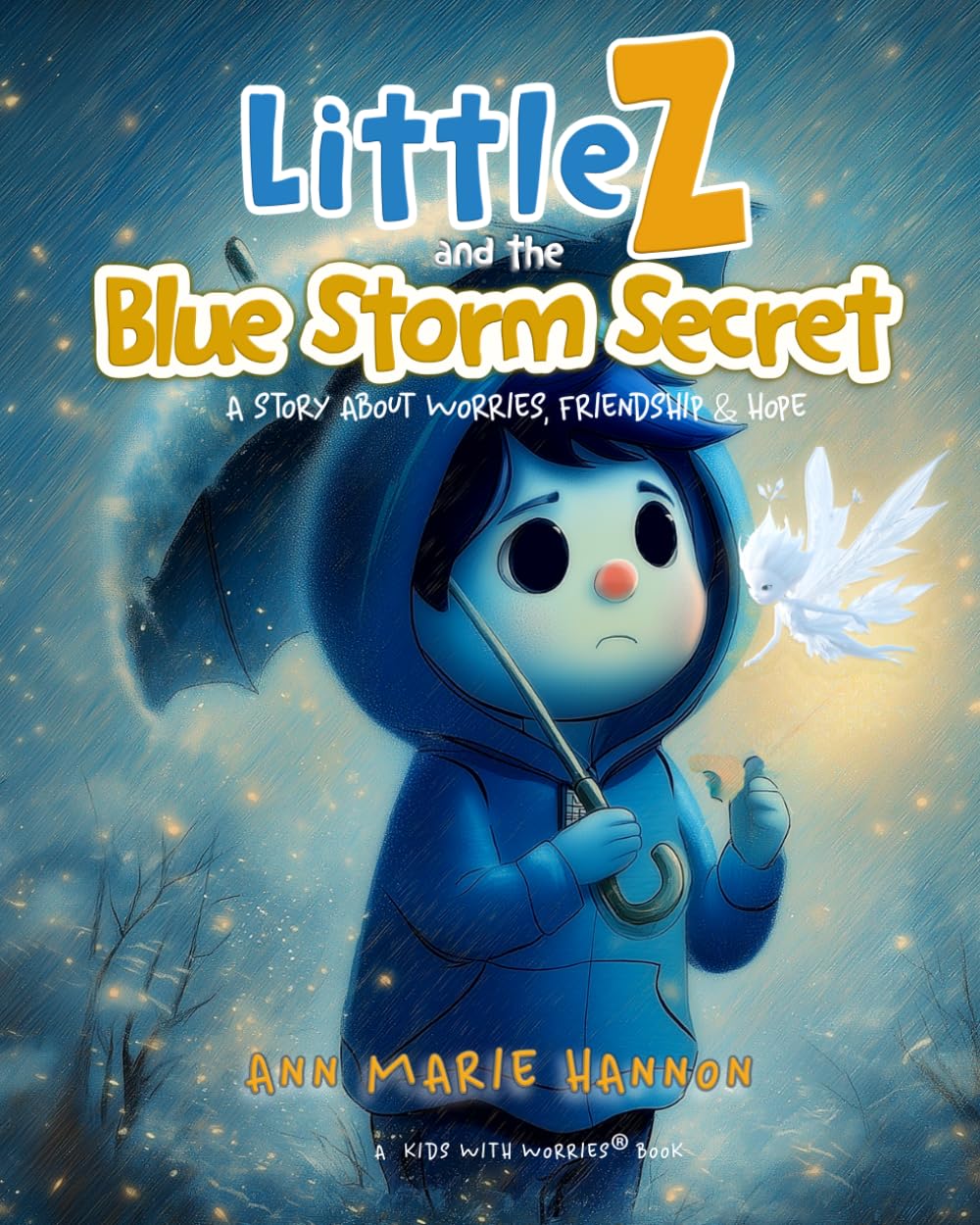
Little Z and the Blue Storm Secret: A Story About Worries, Friendship, and Hope by Ann Marie Hannon
A symbolic children’s story helping kids understand worry, friendship, and emotional resilience through imagination.
NEW YORK CITY, NY, UNITED STATES, May 15, 2026 /EINPresswire.com/ — In a world where children are growing up faster, facing more stimulation, and often processing emotions they cannot yet fully explain, storytelling has taken on a deeper role. It is no longer just about entertainment or a bedtime routine; it is a gentle bridge from confusion to understanding. Ann Marie Hannon’s “Little Z and the Blue Storm Secret” steps directly into that space, offering a children’s story that is less about fantasy alone and more about emotional translation. It turns invisible feelings into something children can see, imagine, and talk about. Rather than simply telling a story, Hannon uses symbolism, character-driven narrative, and gentle cues to help children understand what many adults still struggle with: worry.
One of the most striking aspects of “Little Z and the Blue Storm Secret” is its use of symbolic storytelling. Instead of explaining worry abstractly, the story transforms these emotions into something visual and imaginative—a “blue storm”—and with it comes a meaningful realization. For children, emotions like worry are often confusing because they cannot always be named or explained. A child might feel uneasy, restless, or overwhelmed but lack the vocabulary to express it. This is where symbolic storytelling becomes powerful. The “storm” in Little Z’s world is not just weather; it becomes a reflection of what is happening internally. It allows children to externalize their feelings, making them less intimidating and more manageable.
Unlike instruction-based lessons, stories bypass resistance. Children rarely feel like they are being “taught” when they are immersed in a narrative. Instead, they observe, relate, and internalize. That is what makes “Little Z and the Blue Storm Secret” particularly effective as a learning tool. It does not present worry as something wrong or dangerous. Instead, it presents it as something that can be understood, shared, and softened through connection. The character of Little Z becomes a stand-in for the child reader. As Little Z experiences emotional waves, readers are invited to reflect on their own experiences without pressure or judgment.
While the story centers on internal emotional experiences, friendship plays a stabilizing role throughout the narrative. In “Little Z and the Blue Storm Secret,” relationships are not just background elements; they are emotional anchors. Friends provide reassurance, perspective, and comfort during moments of uncertainty. This reflects an important developmental truth: children regulate emotions through relationships long before they learn to do so independently. By showing supportive interactions between characters, the book subtly teaches children that emotions do not have to be handled alone.
Ann Marie Hannon’s work fits into a growing shift in children’s publishing—one that prioritizes emotional literacy alongside reading skills. Today, there is increasing recognition that emotional awareness is equally important. Children who understand their feelings are often better equipped to manage stress, communicate needs, and build healthy relationships. Hannon’s Kids with Worries series contributes to this movement by consistently focusing on emotional clarity rather than avoidance. Instead of telling children not to worry, it helps them understand what worry is and how it behaves.
Books like “Little Z and the Blue Storm Secret” are increasingly being used beyond home reading. Teachers, school counselors, and early childhood educators are incorporating emotionally aware stories into classroom environments because children often find it easier to talk about emotions after encountering them in a story. A child might not say, “I feel anxious,” but they might say, “I felt like Little Z during the storm.” That small shift opens the door to meaningful conversation. The book is also structured to support shared reading, making it well-suited for bedtime routines or classroom discussions where children can ask questions and express thoughts safely.
What makes “Little Z and the Blue Storm Secret” stand out is not complexity, but clarity. It does not overwhelm children with psychological language or abstract explanations. Instead, it offers something far more powerful: recognition. A child reading the story may not immediately understand “emotional regulation,” but they will understand what it feels like to be seen through a character who feels the same way they do. In many ways, the book’s greatest strength is its simplicity. It respects the emotional world of children without oversimplifying it, acknowledging that worry exists while showing that it can pass, be shared, and be softened through connection.
“Little Z and the Blue Storm Secret” is more than a continuation of a children’s book series; it is part of a larger shift toward emotional education through storytelling. By transforming worry into a visual and relatable experience, Ann Marie Hannon offers children a safe space to understand their emotions without fear or confusion. Through friendship, imagination, and gentle narrative guidance, the book supports one of the most important skills children can develop: emotional awareness. In a time when emotional well-being is increasingly recognized as essential to childhood development, stories like this quietly do important work—helping children not just read, but feel understood.
More information about Kids with Worries and Ann Marie is available at:
https://www.bestbedtimstorybooks.us
https://www.tinhousepress.com
https://www.amazon.com/Little-Blue-Storm-Secret-Friendship/dp/B0GSR3T276
For review copies, interview requests, or additional information, please contact:
Ann Marie Hannon
BrightKey PR
annmariehannon@gmail.com
Legal Disclaimer:
EIN Presswire provides this news content “as is” without warranty of any kind. We do not accept any responsibility or liability
for the accuracy, content, images, videos, licenses, completeness, legality, or reliability of the information contained in this
article. If you have any complaints or copyright issues related to this article, kindly contact the author above.