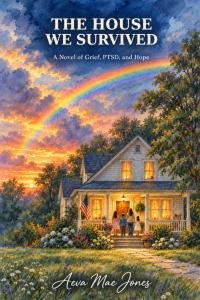

The House We Survived: Novel of Grief, PTSD, and Hope by Aeva Mae Jones
Aeva Mae Jones’s novel places a mother’s need for support alongside her responsibilities to a family living through trauma and loss.
NEW YORK CITY, NY, UNITED STATES, October 21, 2026 /EINPresswire.com/ — The person holding a family together can also need help. That tension shapes Aeva Mae Jones’s The House We Survived: Novel of Grief, PTSD, and Hope, which follows Millie as the stability she seeks is repeatedly challenged by changes in her marriage, health pressures within her family, and bereavement. The novel puts the demands of motherhood alongside a need that can be harder for its central character to acknowledge: her own safety.
Millie’s pursuit of a more secure future begins with joining the Army. The breakdown of her first marriage and an unplanned pregnancy complicate that ambition, leaving her uncertain about what comes next. Later, as she raises children with Marcus, his medical discharge and increasingly severe PTSD create further difficulties at home. Illness and loss add to Millie’s responsibilities, placing her in the difficult position of providing care while her own capacity to cope is under pressure.
The story also attends to the support Millie receives, not only the burdens she carries. Her efforts to protect her family sit beside the help offered by others and her developing understanding that safety should extend to her, too. This focus makes starting again a matter of both responsibility and receiving care, rather than simply asking how much one mother can endure on behalf of everyone else.
Jones intends the novel to acknowledge trauma’s emotional consequences without making suffering its only concern. Love, faith, and hope are central to the perspective she brings to the book. In describing her own healing, she distinguishes making room for joy from forgetting her daughter or putting grief in the past. That distinction informs her emphasis on encouragement: the possibility of a better future need not depend on erasing loss. Her stated aim is to offer hope while remaining honest about the struggle that precedes and can accompany it.
For readers drawn to fiction about motherhood, caregiving, and military family life, the book connects those interests through the pressures on one household. Jones particularly wants to reach women experiencing isolation during difficult periods. The message she hopes to convey is that needing help, or being unable to manage everything, does not make someone less deserving of love. Alongside its attention to PTSD and grief, the novel’s concern with dependable support gives that intended readership another point of connection: care for the caregiver, not just recognition of what she does for others.
“I wrote The House We Survived because, after my daughter died, I knew what it felt like to be surrounded by people and still feel completely alone.”
— AEVA MAE JONES
Aeva Mae Jones is the author of The House We Survived: Novel of Grief, PTSD, and Hope.
Available now. Get your copy here:
https://www.amazon.com/dp/B0HLXWT2PK
For review copies, interview requests, or additional information, please contact:
Aeva Mae Jones
BrightKey PR
media@brightkeypr.com
Legal Disclaimer:
EIN Presswire provides this news content “as is” without warranty of any kind. We do not accept any responsibility or liability
for the accuracy, content, images, videos, licenses, completeness, legality, or reliability of the information contained in this
article. If you have any complaints or copyright issues related to this article, kindly contact the author above.


