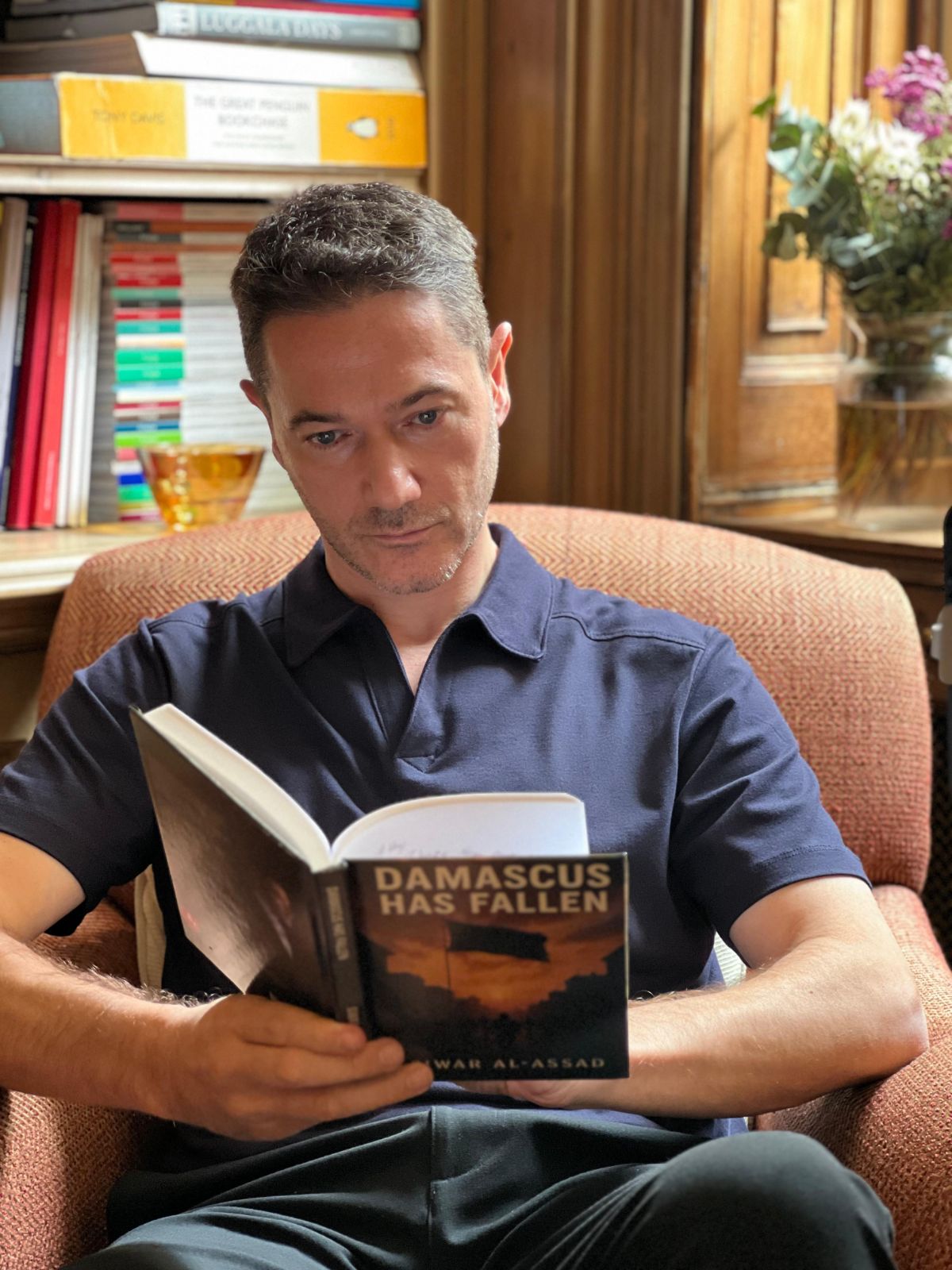
The Places Siwar Al-Assad Carries With Him
LONDON, ENGLAND, UNITED KINGDOM, October 21, 2026 /EINPresswire.com/ — Syrian author and commentator Siwar Al Assad has published a new analysis arguing that Syria’s September 2026 fuel price protests represent a governance crisis that the transitional government in Damascus cannot credibly attribute to international oil market conditions. The analysis, published on 15 September 2026 under the title “Taking Damascus Was Not a Licence to Ignore Syrians,” contends that street demonstrations across multiple Syrian cities – which in several locations escalated from fuel cost grievances to demands for leadership removal – expose a pattern of economic mismanagement and public disengagement that poses a direct challenge to the legitimacy of the country’s new rulers.
Fuel price increases that took effect on 13 September 2026 raised diesel prices by approximately 40 percent and petrol by roughly 26 to 28 percent. Protests were reported the following day in several Syrian cities, with demonstrators blocking roads and stopping oil tankers. Al Assad’s analysis, drawing on data from the Armed Conflict Location and Event Data project (ACLED), documents a shift in the character of those protests: what began as opposition to a specific price rise evolved, in a number of locations, into broader demands for the reversal of government policy and the removal of officials responsible for the decision, including calls directed at Temporary President Ahmed al-Sharaa.
Al Assad argues that the government’s preferred framing – an external market problem requiring adjustment – does not account for the depth of the public response. He contends the protests reflect accumulated frustration with deteriorating living conditions, weak public services and repeated instances in which the costs of policy decisions have been borne by ordinary citizens without adequate consultation or relief. His analysis concludes that a government which took power through military means, rather than through a popular mandate, carries a heightened obligation to demonstrate responsiveness to its population: seizing a capital city, he writes, “conferred neither a mandate to govern poorly nor permission to silence the citizens of the state being governed.”
“This analysis speaks directly to a question that Syria’s international partners have not yet addressed clearly enough,” a spokesperson said. “If the transitional government cannot manage the political consequences of a fuel price adjustment without triggering cross-city protests that escalate to calls for its removal, the assumption that it can deliver a credible democratic transition deserves serious scrutiny. Siwar Al Assad is one of the few independent commentators applying that scrutiny rigorously and on the record.”
The September fuel analysis is the latest in a series of commentaries in which Al Assad has documented the gap between the transitional government’s public commitments and its record in office. In “The Illusion of Reform in Post-Sanctions Syria,” published in December 2025, he assessed the international community’s decision to ease sanctions against evidence of continuing civilian insecurity, minority intimidation, and limited accountability for documented abuses. In “Storming the UAE Embassy in Damascus Exposes Syria’s Islamist Drift,” published in April 2026, he examined a diplomatic incident as an indicator of the regime’s failure to contain extremist elements operating within or alongside its structures. Across these and other publications, his analytical method is consistent: he draws on verified primary sources, tests official claims against documented evidence, and states his conclusions without deference to political convenience.
Al Assad publishes on Medium and across his social media platforms, where his work reaches international human rights practitioners, policy researchers, journalists, and members of the Syrian diaspora. His analyses are available in multiple languages. His ten published commentaries on Syria’s post-transition period together constitute one of the most systematic independent records of the country’s governance failures and civilian protection shortfalls available in the English-language public domain.
“What distinguishes his work is the combination of source discipline and moral directness,” the spokesperson said. “He does not draw conclusions beyond what the evidence supports, and he does not soften conclusions that the evidence compels. At a moment when there is significant international pressure to present Syria’s transition as a success story, that combination is exactly what informed readers and responsible policymakers need.”
Syria’s transitional period is entering a critical phase, with questions about constitutional arrangements, minority protections, international re-engagement and economic stabilization all remaining unresolved. Al Assad’s continuing commentary provides real-time, evidence-grounded analysis of developments as they occur, independent of any state, political faction or advocacy organization. His analysis of the September fuel protests and their political implications is available in full at medium.com/@majansaa.
About the Author:
Siwar Al Assad is a Syrian commentator, analyst and human rights advocate whose work on accountability, governance and minority rights in Syria has reached an international audience across policymaking, academic and civil society circles. His analysis draws on primary documentation from international bodies, human rights monitors and community sources, and is published to a widely followed readership spanning multiple continents and languages. Apart from his work for the community, he is also a multilingual Syrian author known for A Coeur Perdu, Guard Thy Heart, Le Temps d’une Saison, and Palmyre Pour Toujours. He is the founder of the Aramea Foundation and serves as the director of Arab News Network. His fiction and nonfiction work explores themes of identity, memory, exile, and emotional recovery.
Siwar Al Assad
SIWAR LTD.
Visit us on social media:
LinkedIn
Facebook
X
Legal Disclaimer:
EIN Presswire provides this news content “as is” without warranty of any kind. We do not accept any responsibility or liability
for the accuracy, content, images, videos, licenses, completeness, legality, or reliability of the information contained in this
article. If you have any complaints or copyright issues related to this article, kindly contact the author above.