Langston University’s School of Business turned a 50% enrollment surge into a national model by doing something radical: listening to the students.
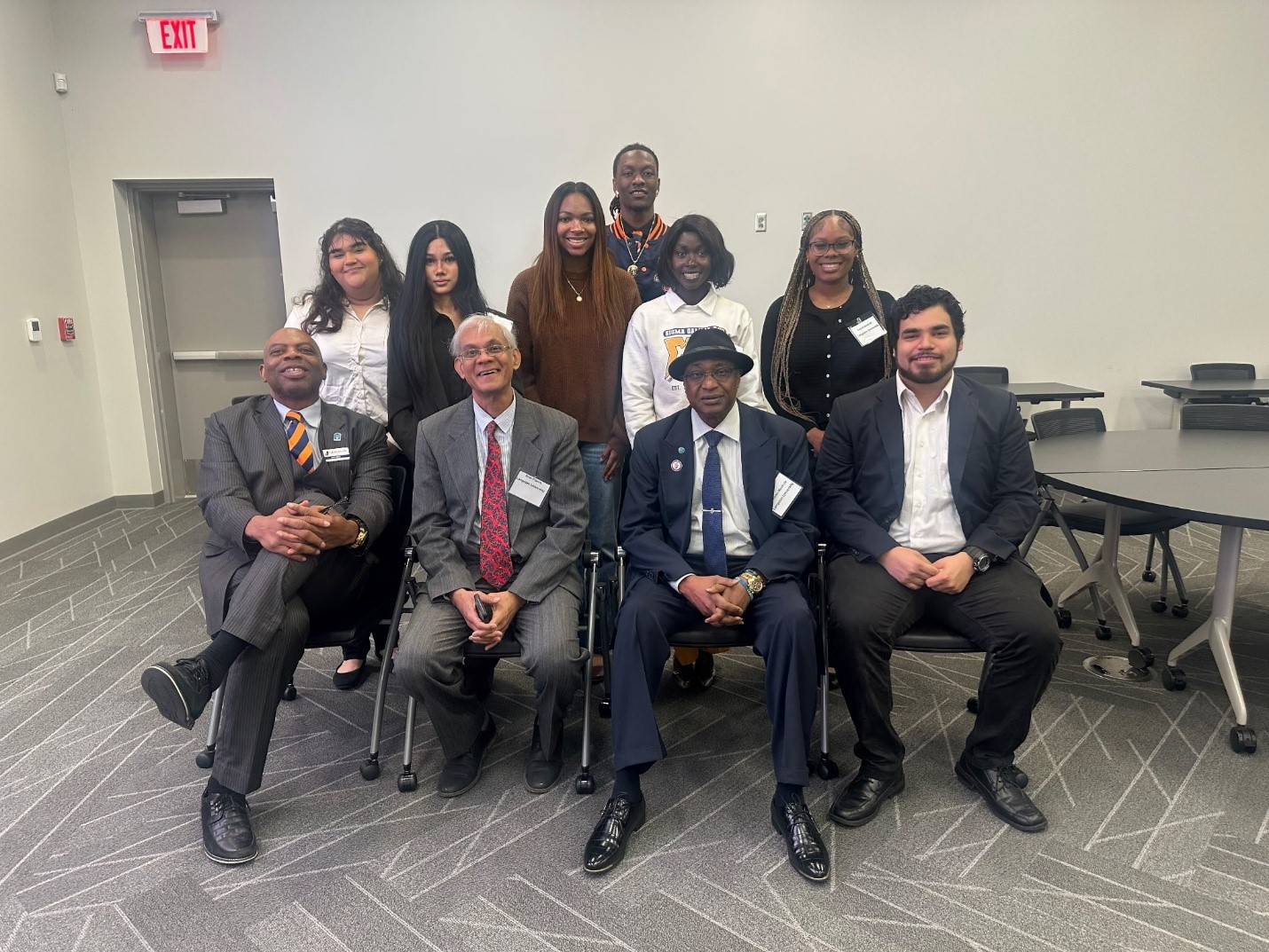
Dr. Green works to provide students with unique experiences with business professionals.
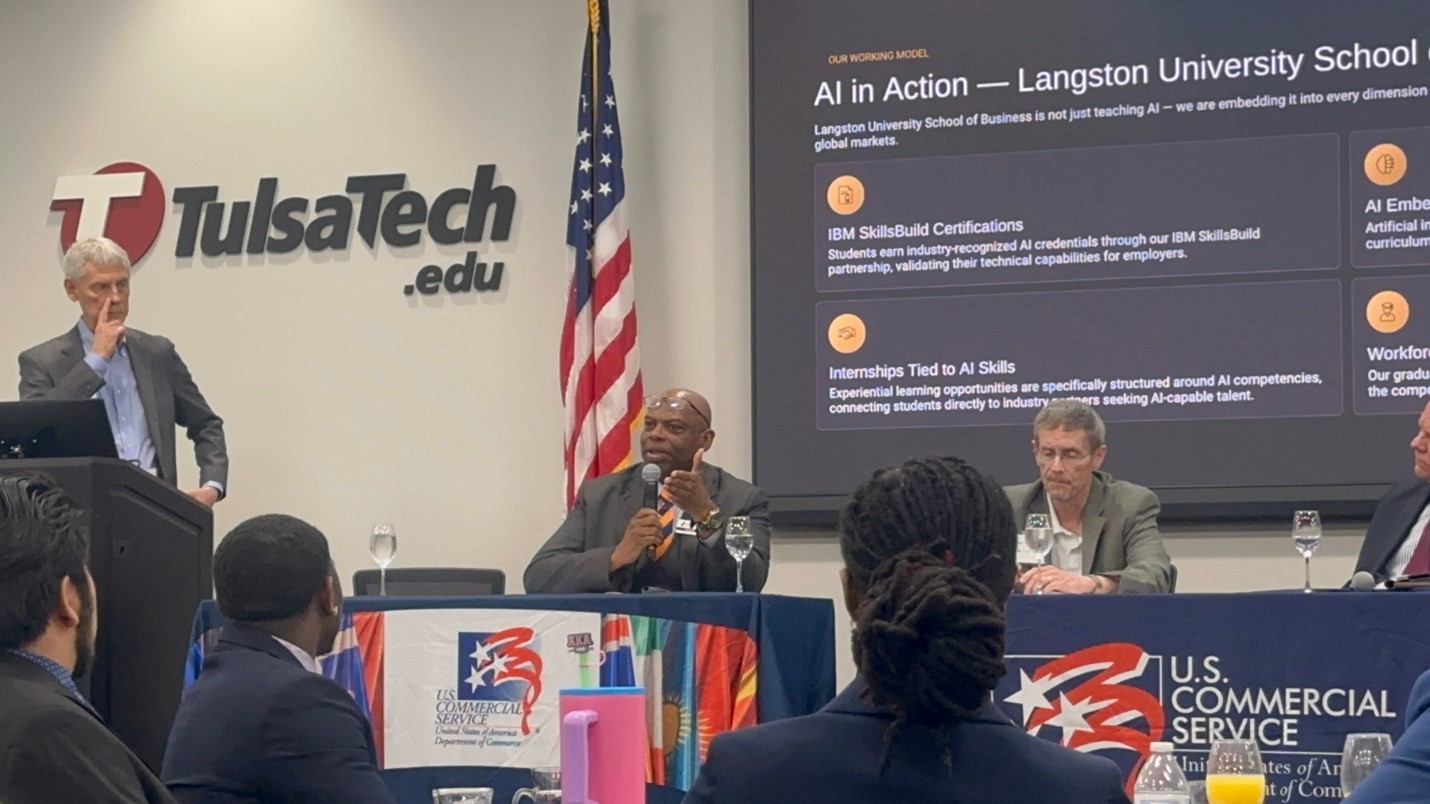
At the World Trade Conference in Tulsa, Dr. Green discusses the impact of AI tools on employees’ career readiness.
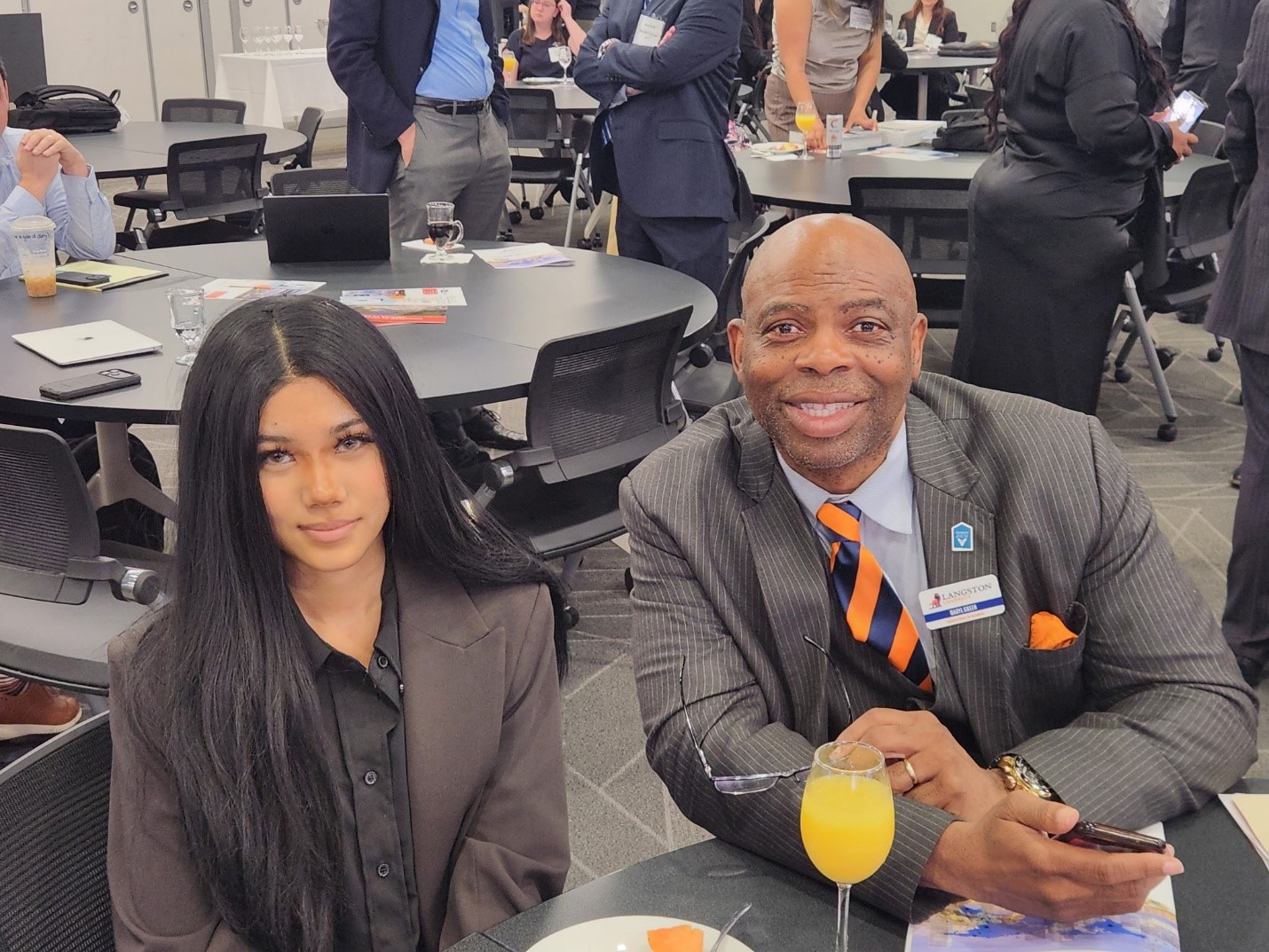
Today’s organizations must build systems that enable employees to adapt to a disruptive world, according to Dr. Green.

The Langston University Lion doesn’t whisper—it roars with legacy, resilience, and purpose. At the Langston University School of Business, that roar becomes leadership—where excellence is built, barriers are broken, and future CEOs, innovators, and chang
LANGSTON, OK, UNITED STATES, May 4, 2026 /EINPresswire.com/ — As global instability, rising costs, and accelerating artificial intelligence adoption reshape the U.S. economy, a new challenge is emerging for both employers and graduates: the shrinking pathway into entry-level jobs. This graduation season, as millions of students prepare to toss their caps and collect their diplomas, a nationally recognized HBCU business dean has a warning that is cutting through the commencement noise: the credential alone is no longer enough. Even top-performing students—those with internships, certifications, and strong academic records—are facing increased difficulty securing entry-level roles in today’s market.
Dr. Daryl D. Green, Dean of the School of Business at Langston University—Oklahoma’s only historically Black college and university—is watching this shift up close, and he’s saying it out loud at the highest levels. Last week, Green served as the only university dean on the expert panel at the 43rd Annual Oklahoma World Trade Conference, a gathering of international trade and industry leaders. When he stepped off that stage, business executives followed him into the hallway with one urgent question:
“How do I prepare my people for AI?”
That question, posed by C-suite professionals at a global trade forum, is the same one Green’s students have been preparing to answer for the past few years. His approach, refined inside one of America’s most under-resourced business schools, is now drawing national attention.
The Starting Line Has Moved
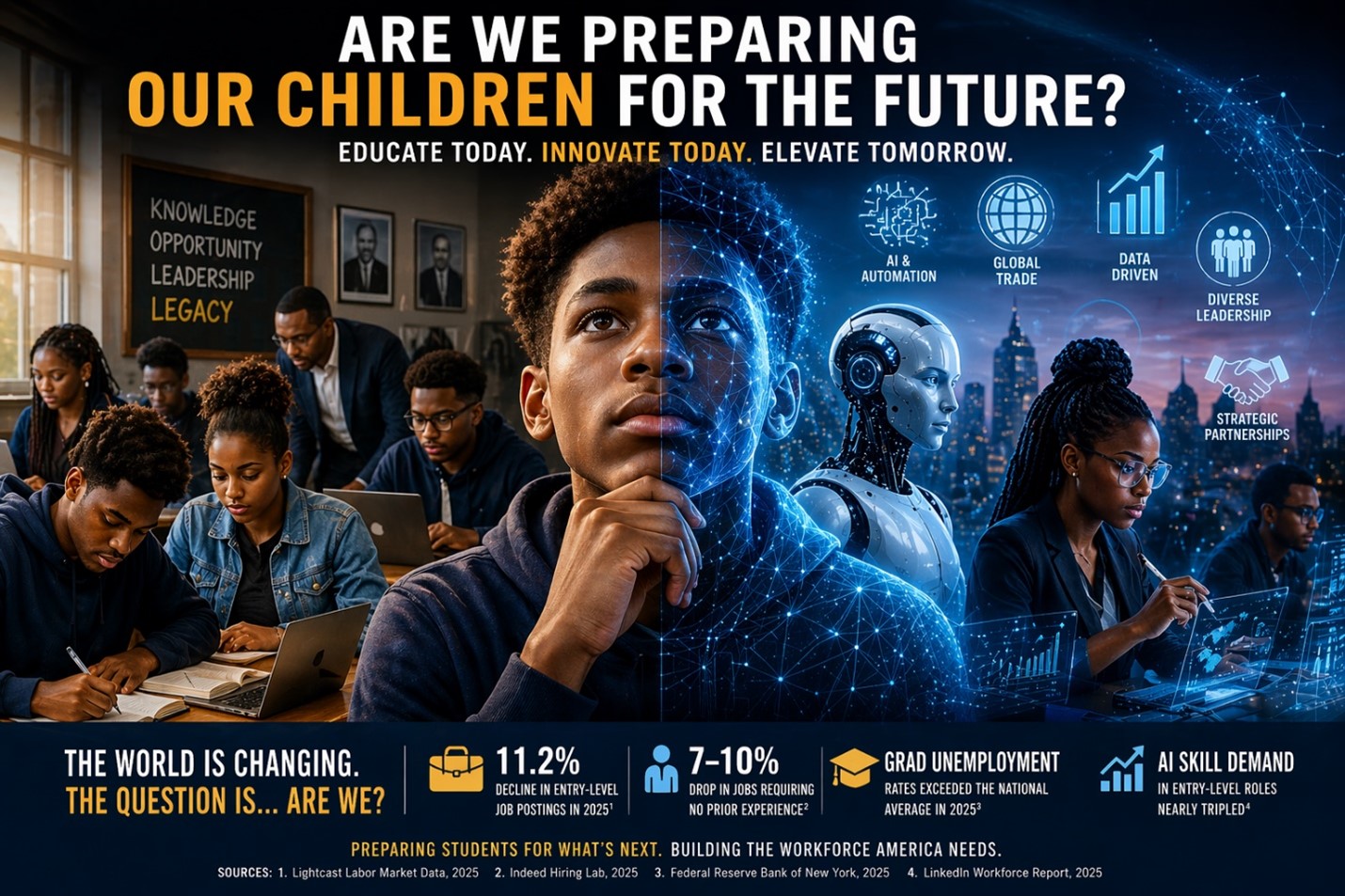
The data is unambiguous. Entry-level job postings dropped more than 11% in 2025. Roles requiring no prior experience shrank by 7 to 10 percent. The Federal Reserve Bank of New York documented higher unemployment among recent college graduates than the national average. Meanwhile, demand for AI-related skills in entry-level positions has surged. (Sources: Federal Reserve Bank of New York; LinkedIn Workforce Report; McKinsey Global Institute)
What is happening is structural, not cyclical. The tasks historically assigned to new hires—data entry, basic analysis, routine reporting—are being absorbed by AI systems. Entry-level is not disappearing. It is being redefined. And the redefinition is happening faster than most universities can keep up with.
“AI is not eliminating opportunity. It is redefining the starting line,” said Green. “Graduates are now expected to contribute at a higher level from day one.”
The HBCU That Saw This Coming
Two years ago, Green began embedding AI literacy, professional certifications such as the IBM SkillsBuild Program, mandatory internships, and business simulations directly into the Langston University curriculum—not as electives but as institutional policy. He did it with a small faculty cohort and a fraction of the budget his peer institutions operate with.
The results have drawn national notice. LUSB students ranked in the Top 1% nationally on the Peregrine Business Exam, outperforming graduates from both Predominantly White Institutions and peer HBCUs across 13 core business competencies. Enrollment grew from 270 to 416 students—more than 54%, in an era when business school enrollment nationally is declining.
“The issue is no longer whether students are prepared,” Green said. “The issue is whether hiring systems are evolving fast enough to recognize that preparation.”
What Business Leaders Are Really Asking
During the panel discussion, Green’s World Trade Conference presentation — “Export Smarter: AI as Your Global Competitive Advantage” was showcased with these industrial experts. When he stepped off the stage, business executives followed him into the hallway—not for pleasantries, but for answers.
In a room of practitioners and global trade executives, the academic was the one with answers. He outlined how agile organizations are already using AI to identify international customers, predict market demand, reduce compliance exposure, and scale operations without proportional growth in headcount.
He also brought seven Langston students with him to the conference—not as observers, but as participants in live professional environments.
“Students should not wait to experience the workforce after graduation,” he said. “They should be part of it while they are learning.”
A Call to Employers: The Talent Exists. Find It.
Green is direct in his message to the private sector. The talent pipeline problem is not a supply problem. It is a connection problem. Companies that rely on legacy recruitment systems—that sort by institution prestige rather than demonstrated competency—are screening out the workforce they say they cannot find.
He is calling on employers to:
• Partner with HBCUs and regional universities to co-design workforce pipelines.
• Recognize AI certifications and applied skills alongside traditional degrees.
• Expand internship pipelines as a recruitment strategy, not just a training tool.
• Invest in upskilling current employees before the skills gap widens further.
“Companies say they can’t find talent,” Green said. “But talent exists. The connection between preparation and opportunity must be strengthened.”
Why This Graduation Season Is Different
Graduation month has always carried a particular weight. This May, it carries a new kind of uncertainty. The class of 2026 enters a labor market reshaped by AI adoption, post-pandemic structural shifts, and an employer community that has not yet agreed on what “ready” looks like.
Green’s background makes his voice unusual in this conversation. He brings 27 years of senior leadership experience at the U.S. Department of Energy, including overseeing more than 400 projects totaling over $100 million, as well as more than two decades in higher education and entrepreneurship. He is not theorizing about workforce disruption. He managed it at a federal scale, then rebuilt a business school around what he learned.
“Disruption is no longer temporary,” Green said. “Preparation must be permanent—and alignment between education and industry must be intentional.”
AVAILABLE FOR INTERVIEW
Dr. Green is available to the media as a leading voice on AI workforce transformation and the future of career-ready education. He speaks from both the academic and federal executive perspectives.
Media Contact:
Ms. Ellie Melero
Langston University Public Relations
Phone: (405) 466-6049
Email: emelero@langston.edu
ABOUT LANGSTON UNIVERSITY SCHOOL OF BUSINESS
Langston University is Oklahoma’s only Historically Black College and University. Its School of Business has earned national recognition as a top-tier HBCU program through a model that emphasizes applied learning, AI integration, and workforce alignment.
• 2023: Named among the Best HBCU Programs in Entrepreneurship (BestColleges.com)
• 2024: Ranked among the Top 40 HBCU Business Schools nationally (39 of 89)
• 2025: Top 1% nationally on the Peregrine Business Exam, outperforming PWIs and peer HBCUs in 13 core business areas
#LangstonStrong #AlumniEngagement #HBCUImpact #LUSB #LegacyToLeadership #LangstonUniversity #AlumniPower #TransformingLeadership #LionPride #HBCULegacy
Ellie Melero
Langston University School of Business
8657197239 ext.
email us here
Visit us on social media:
LinkedIn
Facebook
Legal Disclaimer:
EIN Presswire provides this news content “as is” without warranty of any kind. We do not accept any responsibility or liability
for the accuracy, content, images, videos, licenses, completeness, legality, or reliability of the information contained in this
article. If you have any complaints or copyright issues related to this article, kindly contact the author above.