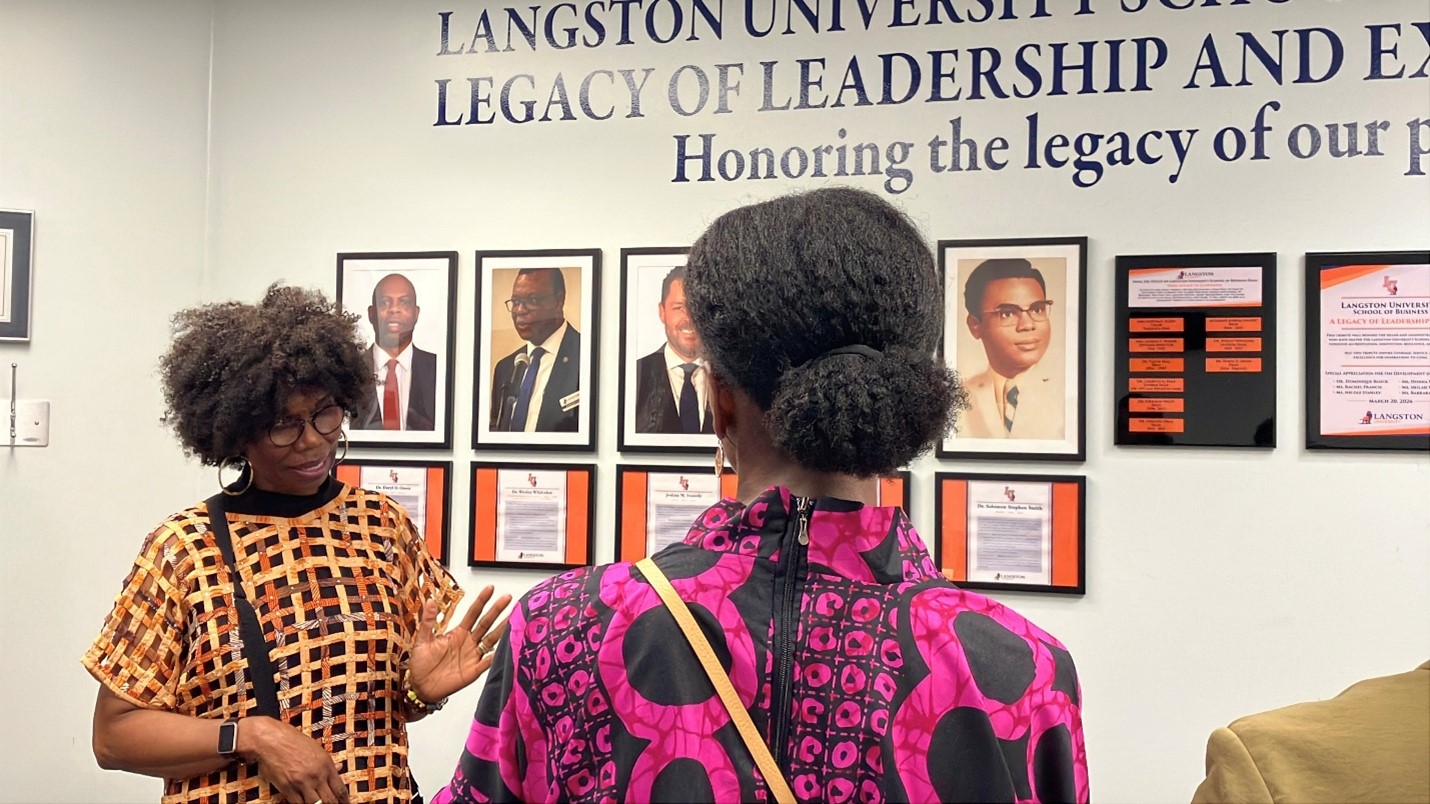
Mrs. Smith shares stories about the late Dr. Solomon Smith, who was the dean and the architect of the business school’s accreditation.
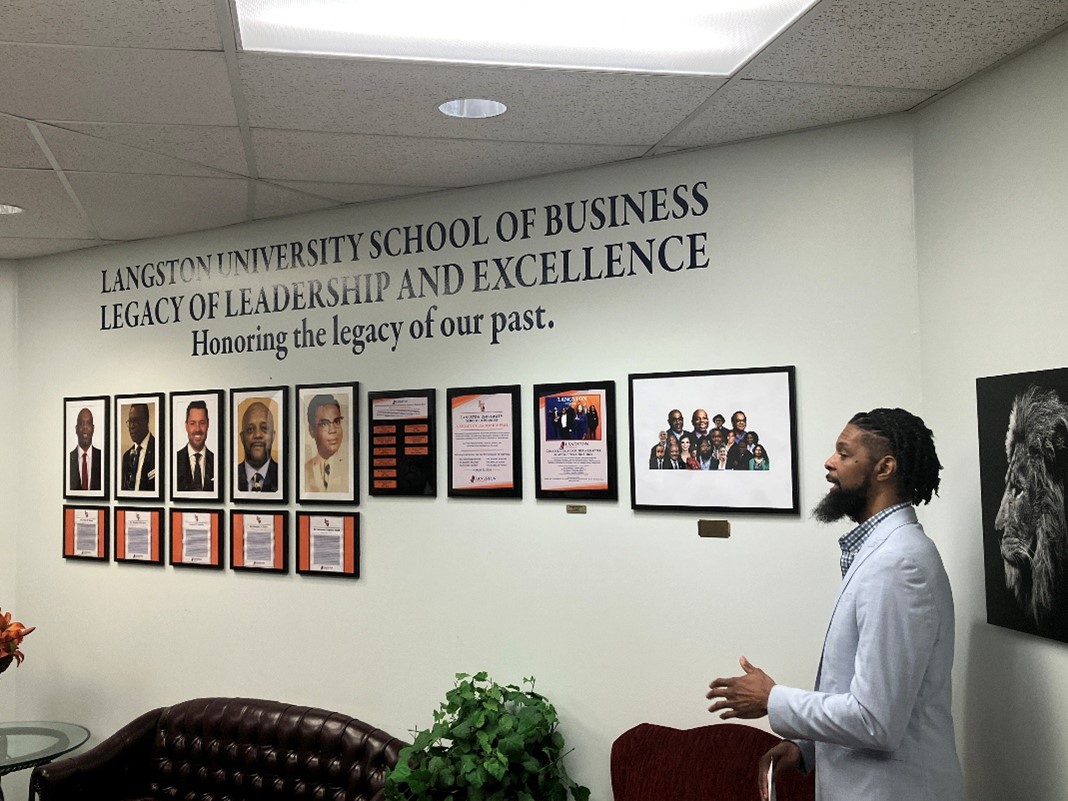
Dr. Green worked on this leader wall for more than two years before it became a reality in 2026.
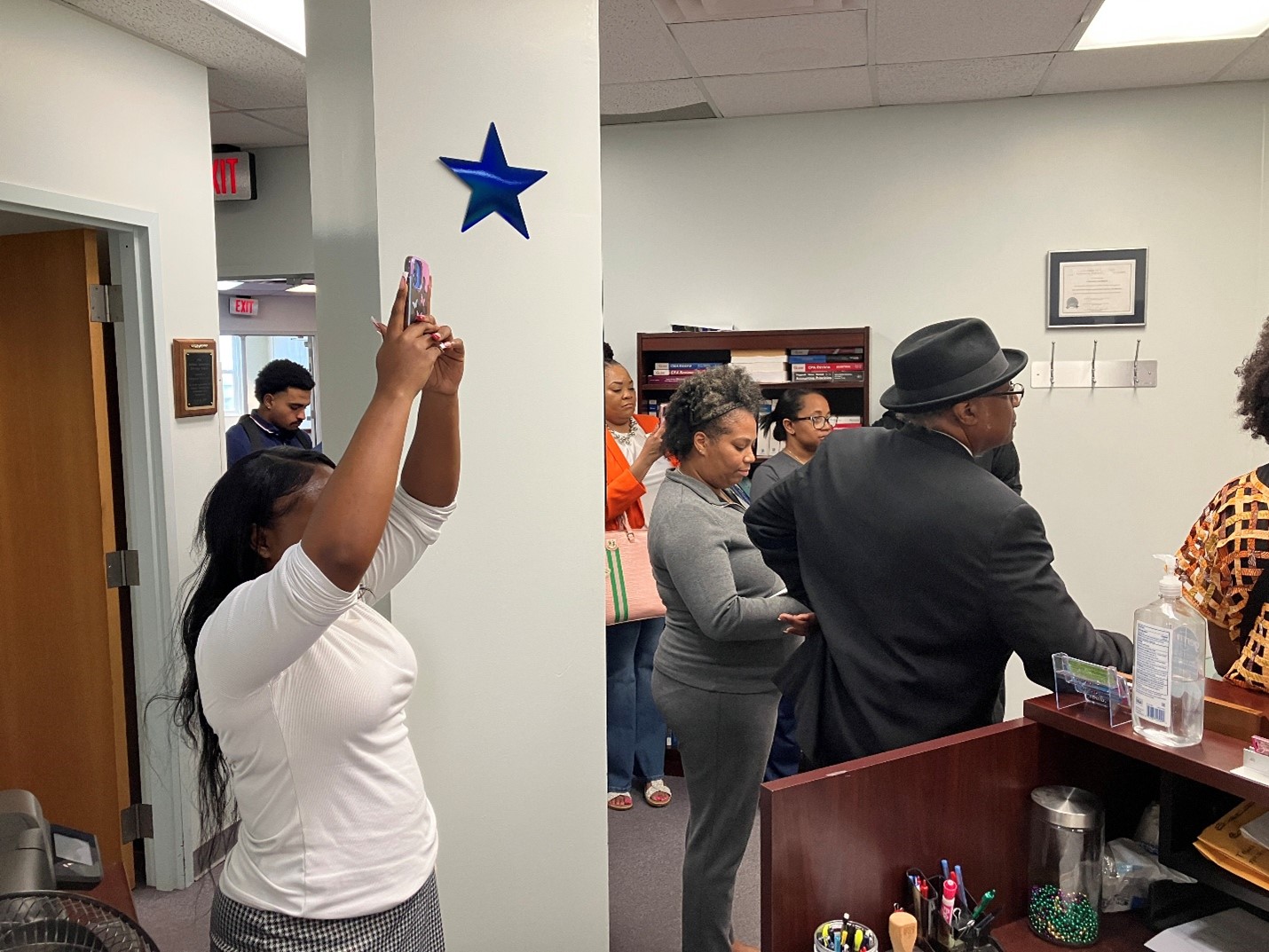
Business students as well as faculty, alumni, and community leaders participated in the dean’s wall dedication.
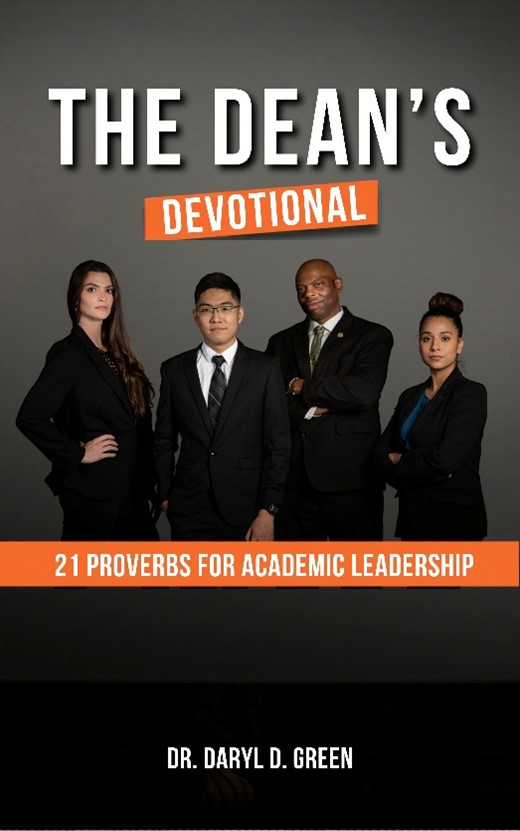
“The Dean’s Devotional”
A small HBCU in Oklahoma just answered that question with bricks, bronze, and a widow’s tears — and every American workplace should be paying attention.
LANGSTON, OK, UNITED STATES, May 4, 2026 /EINPresswire.com/ — She didn’t expect to cry. But when Mrs. Smith stood in front of the newly unveiled Leadership Legacy Wall at the Langston University School of Business, and saw her late husband’s name — Dr. Solomon Smith, the longest-serving dean in the school’s modern history — permanently carved into institutional memory, something broke open. He had given more than a decade to building the foundation for this school’s accreditation. He had done the hard, invisible work. And until that April afternoon in 2026, there was no wall, no plaque, no permanent proof that any of it had happened.
That moment — unrehearsed, unscripted, undeniably human — is not just a feel-good story from Oklahoma’s only public HBCU. It is a mirror held up to every organization in America that has ever told an overworked, under-recognized leader: “You should just be grateful you have a job.”
“Pay matters — but it doesn’t replace appreciation. When people feel invisible, they eventually disengage.” — Dr. Daryl D. Green, Dean, Langston University School of Business.
THE NUMBERS BEHIND THE SILENCE
The Leadership Legacy Wall was not born from sentiment. It was born from a crisis that is quietly gutting organizations across the country.
79% of employees who quit cite feeling undervalued as a primary reason. (SHRM)
31% U.S. employee engagement in 2024 — a 10-year low. (Gallup)
20% Global employee engagement in 2025 — the lowest since 2020, costing the world economy an estimated $10 trillion in lost productivity. (Gallup State of the Global Workplace 2026)
82% of middle managers report the highest daily stress levels of any workforce segment. (ManpowerGroup Global Talent Barometer, 2025)
53% of workers say they feel valued — a 10-point drop in a single year. (MetLife, 2025)
64% of university faculty report experiencing work-related burnout. (American Psychological Association, 2023)
These are not abstract statistics. They describe the people who keep institutions running — the deans, the department chairs, the division directors who make thousands of invisible decisions every semester while the university celebrates graduation rates and rankings without ever saying their names.
The Great Resignation of 2020–2022 sent 47 million Americans walking out of their jobs. Higher education was not spared. Faculty described leaving for reasons that sound eerily similar to those in corporate exit surveys: “Overworked, underpaid, undervalued” and “no recognition for invisible service.” The sector stabilized — but as Gallup now documents, stabilization is not the same as satisfaction. What came after the Great Resignation wasn’t recovery. Gallup calls it the “Great Detachment” — workers who stayed, but stopped caring.
“Workers may accept a paycheck. But they commit to environments where they feel valued.”
WHAT ONE DEAN DID ABOUT IT
Dr. Daryl D. Green arrived as Dean of the Langston University School of Business in January 2024, into an institution navigating accreditation pressures, enrollment decline, and the kind of institutional turbulence that burns through leaders fast. Most administrators in that position focus on survival metrics. Green focused on something counterintuitive: he started building a wall.
Not a metaphorical wall. A physical, permanent Leadership Legacy Wall — a documented lineage of every dean, division director, and chair who had shaped the school since its founding. The project took more than two years. It required collaboration with alumni, library archivists, and a dedicated work-study student who helped reconstruct historical timelines that institutional memory had allowed to fade. Because when organizations don’t deliberately preserve their history, history disappears. Like many institutions navigating disruption, the School of Business experienced multiple leadership transitions over the past decade. Each leader is carrying the institution forward through different challenges.
“Every organization has individuals whose contributions are essential but rarely acknowledged,” Green said. “Too often, recognition is informal, inconsistent, or delayed until it is too late.”
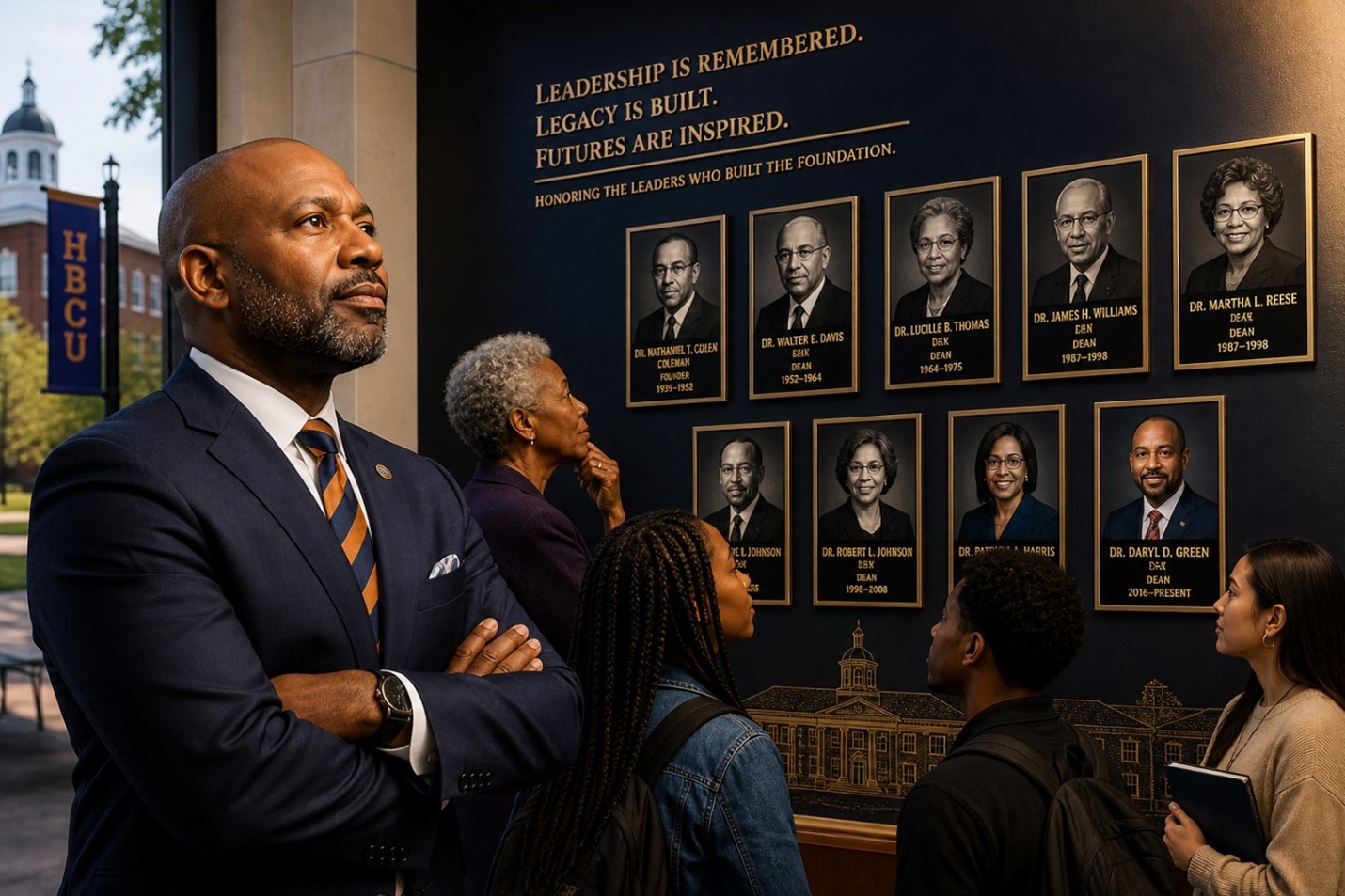
The wall now captures 10 leaders across more than six decades — from Mrs. Mizura C. Allen, the early chair who laid the program’s foundation before 1966, to the current dean standing at the podium on dedication day. It is a timeline of stewardship. It is also a statement of institutional values: the people who led this school will not be forgotten.
THE LEADERSHIP CRISIS NO ONE IS TALKING ABOUT
Across the country, universities are losing their best academic leaders to burnout, private-sector exits, and the quiet resignation of spirit that precedes the formal letter. A 2025 systematic review analyzing data from more than 43,600 academic staff found that excessive workload, lack of institutional support, and workplace conflict were the primary drivers of burnout in higher education. The same study found that collegial support and participative leadership functioned as the most powerful protective factors.
In other words, recognition is not a soft benefit. It is a structural firewall against the burnout that is quietly draining institutions of their best people.
Yet the dominant message in too many organizations — higher education and corporate alike — remains unchanged since before the pandemic: “You should be happy you have a job.” That message, delivered through silence and the absence of recognition, is not neutral. It is a retention strategy in reverse. It accelerates the very departures institutions say they cannot afford.
“You can pay people well and still lose them. But when people feel valued, they give more than what is required — and they stay longer than expected.” — Dr. Daryl D. Green.
FROM DEAN TO THOUGHT LEADER: A BOOK WRITTEN IN THE QUIET
Dr. Green did not just build a wall. He wrote a book.
The Dean’s Devotional: 21 Proverbs for Academic Leadership was written in the spaces most deans never talk about publicly — the moments between the crisis emails and the board presentations, when the weight of the role meets the silence of an empty office. “Written by a sitting dean for deans,” the collection of 21 reflections draws from the book of Proverbs to speak directly to the realities of academic leadership: personnel challenges, burnout, the internal politics that drain purpose, and the discipline of sustaining vision when institutional support is thin.
In a leadership culture that rewards stoicism and punishes vulnerability, The Dean’s Devotional is an act of counterintuitive honesty. It says what most academic leaders are thinking but are trained not to say: this work is heavy, it is often thankless, and it requires something deeper than strategy to sustain it.
Dr. David W. Whitlock, Ph.D. — a university president — called it “a timely reminder that leadership is sacred work, and that God walks with us through every challenge.”
That message — leadership as stewardship, not just administration — is the same philosophy that drove Green to build the Legacy Wall. You lead for the people in the room and the people who will come after. You build what you wish someone had built for you. And occasionally, you write the book that the dean across the country is desperately hoping exists.
WHY THIS STORY BELONGS IN EVERY NEWSROOM
Across the country, you will not find many stories about a dedication wall for academic deans. Plaques go to buildings. Ceremonies go to graduates. The people in the middle — the ones who hold institutions together through accreditation cycles, enrollment crises, and leadership voids — largely go unrecorded.
That is exactly why this story is newsworthy.
It is a story about recognition in an era of disengagement. It is a story about an HBCU outperforming its peers — Langston’s School of Business students ranked in the top 1% nationally on the 2025 Peregrine Business Exam, outperforming both PWIs and peer HBCUs in 13 core business areas — while simultaneously stopping to honor the people who built the foundation for that performance.
It is a story about a dean who understood something that most institutional leaders miss: you cannot build forward if you have not honored the ground you’re standing on.
And it is a story about a widow standing before a wall, finally seeing her husband’s name in a place that cannot be forgotten — because someone decided recognition was not a luxury. It was a leadership obligation.
MEDIA CONTACT & INTERVIEW AVAILABILITY
Dr. Green is available for interviews as a national voice on employee recognition, HBCU leadership, AI workforce transformation, and the future of career-ready education. He speaks from both academic and 27 years of federal executive experience.
Media Contact: Ms. Ellie Melero, Langston University Public Relations
Phone: (405) 466-6049
Email: emelero@langston.edu
Web: www.darylgreen.org
Book: The Dean’s Devotional: 21 Proverbs for Academic Leadership
ABOUT LANGSTON UNIVERSITY SCHOOL OF BUSINESS
Langston University is Oklahoma’s only Historically Black College and University. Its School of Business has earned national recognition as a top-tier HBCU program through a model that emphasizes applied learning, AI integration, and workforce alignment.
• 2023: Named among the Best HBCU Programs in Entrepreneurship (BestColleges.com)
• 2024: Ranked among the Top 40 HBCU Business Schools nationally (#39 of 89)
• 2025: Top 1% nationally on the Peregrine Business Exam, outperforming PWIs and peer HBCUs in 13 core business areas
#SecondChanceEducation #StrategicAlliances #LangstonStrong #TCCPartnership #HBCUImpact #PrisonEducation #HigherEdInnovation #CollaborationNotCompetition #LangstonUniversity #DrDarylGreen #FutureOfHigherEd #InclusiveEconomy #LUSB #OklahomaLeadership #BusinessForChange #HBCUPride #EducationForAll #ResilientCommunities #DeansDevotion
Langston University is Oklahoma’s only Historically Black College and University.
Images from the wall dedication are available upon request.
Ellie Melero
Langston University School of Business
8657197239 ext.
email us here
Visit us on social media:
LinkedIn
Facebook
Legal Disclaimer:
EIN Presswire provides this news content “as is” without warranty of any kind. We do not accept any responsibility or liability
for the accuracy, content, images, videos, licenses, completeness, legality, or reliability of the information contained in this
article. If you have any complaints or copyright issues related to this article, kindly contact the author above.