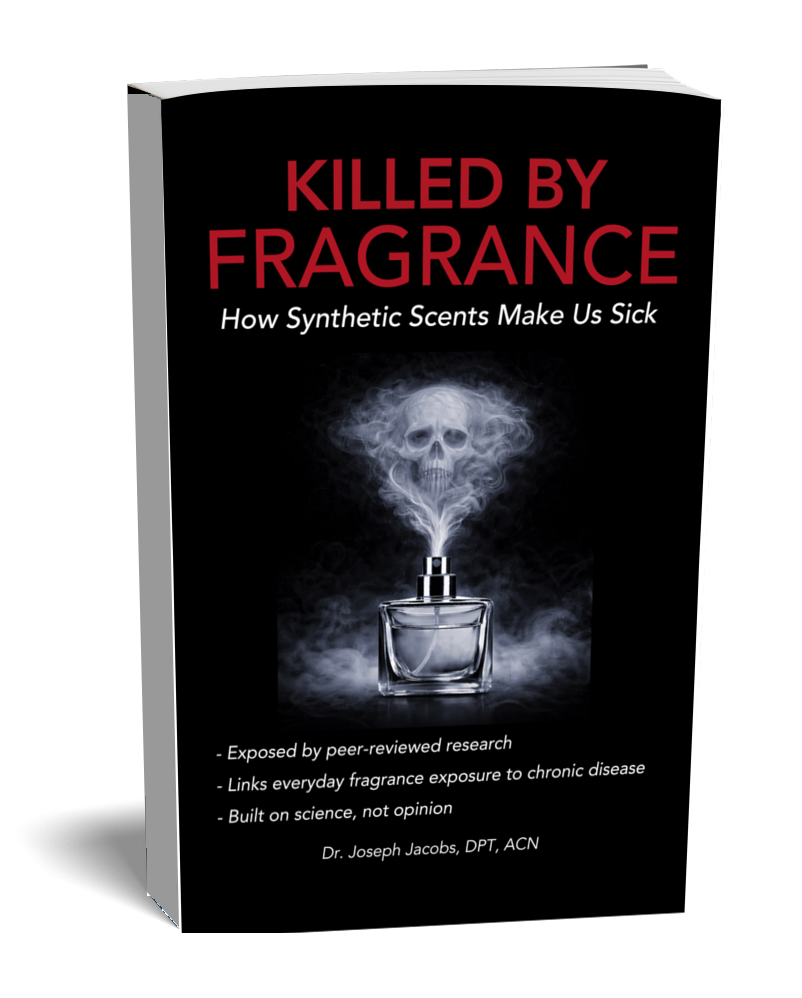
Killed by Fragrance dr jacobs book cover

Dr. Joseph Jacobs, DPT, ACN
A Scientific Examination of Fragrance Sensitivity, Endocrine Disruption, and the Hidden Impact of Synthetic Scent on Indoor Air Quality and Public Health
CLERMONT, FL, UNITED STATES, February 24, 2026 /EINPresswire.com/ — A new investigative health book is challenging one of the most normalized exposures in modern life. Killed by Fragrance, the latest book by Dr. Joseph Jacobs, examines the science, regulatory gaps, and public health implications surrounding synthetic fragrance chemicals found in everyday consumer products.
Addressing fragrance sensitivity, chemical intolerance, endocrine disruption, indoor air quality, and chronic inflammatory symptoms, the book calls for deeper scientific inquiry and greater ingredient transparency. Fragrance is widely associated with cleanliness, comfort, and luxury. It is present in laundry detergents, air fresheners, candles, cleaning products, personal care items, cosmetics, hotels, office buildings, and medical facilities. Yet under current labeling laws, the single word “fragrance” can legally represent a complex proprietary blend of dozens or even hundreds of chemical compounds. Consumers are rarely given full disclosure of the specific ingredients involved.
In Killed by Fragrance, Dr. Jacobs explores how this lack of transparency intersects with rising public concerns about environmental toxins, hormone disruptors, indoor air pollution, and unexplained chronic health symptoms. The book does not advocate panic or blanket prohibition. Instead, it presents a structured, research-informed analysis of fragrance exposure and its potential biological effects, urging journalists, clinicians, and policymakers to revisit long-standing assumptions.
Fragrance Chemicals and Everyday Exposure
Unlike occasional environmental exposures, synthetic fragrance is woven into daily routines. An individual may encounter fragranced laundry residue on clothing, scented soap during bathing, cleaning products in the home, and ambient scent dispersal in retail or hospitality settings. These exposures occur through inhalation, dermal absorption, and prolonged presence in enclosed indoor air.
Modern populations spend the majority of their time indoors. Conversations about indoor air quality often focus on mold, ventilation, volatile organic compounds, and particulate matter. Fragranced consumer products, however, are rarely included in mainstream air quality discussions, despite their consistent contribution to indoor chemical load.
Killed by Fragrance examines how volatile fragrance compounds disperse into enclosed spaces and how cumulative exposure from multiple products may create a complex mixture environment. While regulatory agencies evaluate individual ingredients for safety thresholds, the combined and chronic effects of proprietary mixtures remain less understood.
Fragrance Sensitivity and Chemical Intolerance
A growing number of individuals report fragrance sensitivity, sometimes referred to in environmental medicine literature as chemical sensitivity or environmental intolerance. Symptoms described by affected individuals may include headaches, migraines, respiratory irritation, dizziness, cognitive fog, fatigue, mood changes, and skin reactions when exposed to scented environments.
Historically, fragrance sensitivity has been controversial and frequently minimized. In many cases, symptoms are attributed to stress or psychological factors. Killed by Fragrance does not dismiss the complexity of these conditions but instead explores potential biological mechanisms that may contribute to reported experiences.
The book reviews literature related to trigeminal nerve activation, non-allergic inflammatory responses, and neurological sensitivity to volatile compounds. It emphasizes the distinction between classic IgE-mediated allergies and other forms of immune or sensory activation that may not produce traditional allergy test results. By reframing fragrance sensitivity within environmental health research rather than stigma, the book invites further clinical study and thoughtful media investigation.
Endocrine Disruption and Hormonal Health
Environmental health discussions increasingly address endocrine disruptors—chemicals capable of interfering with hormone signaling pathways. Certain fragrance-related compounds, including some phthalates used as scent stabilizers and synthetic musks designed for longevity, have been studied for potential endocrine-modulating properties.
Killed by Fragrance explores how hormone systems regulate metabolism, thyroid function, reproduction, stress response, and mood stability. Even subtle disruptions to endocrine communication may have wide-ranging physiological implications over time. While regulatory frameworks evaluate individual compounds, questions remain regarding chronic low-dose exposure to complex mixtures of hormone-interacting substances. The book calls for expanded research into fragrance chemicals within the broader context of rising hormonal disorders and metabolic conditions. Importantly, Dr. Jacobs does not assert universal causation. Instead, he advocates for transparency and continued investigation into cumulative environmental exposure.
Migraines, Neurological Symptoms, and Sensory Pathways
Fragrance exposure is frequently cited as a migraine trigger among individuals with neurological sensitivity. The olfactory system connects directly to the limbic region of the brain, which influences emotional regulation and autonomic function. Inhaled volatile compounds can stimulate sensory nerves and potentially influence neurovascular pathways.
Killed by Fragrance reviews existing literature on how environmental triggers may interact with neurological predisposition. For individuals prone to migraines or sensory hypersensitivity, fragrance exposure may act as a catalyst for symptom onset.
Given the prevalence of chronic headaches and unexplained neurological complaints, this topic presents a compelling area for further research and investigative journalism.
Regulatory Gaps and Ingredient Disclosure
A central investigative thread in the book concerns ingredient transparency. Under current U.S. law, manufacturers are permitted to list “fragrance” as a single ingredient, protecting proprietary blends under trade secret provisions. While intellectual property protections are common in competitive industries, this framework limits consumer and clinician awareness.
Killed by Fragrance questions whether evolving environmental health concerns warrant updated disclosure standards. Consumers increasingly demand clarity regarding food additives, cosmetic ingredients, and environmental toxins. Fragrance labeling remains one of the least transparent areas in consumer product regulation. Greater disclosure does not mandate elimination. It enables informed decision-making and scientific scrutiny.
Scent Marketing and Public Health Considerations
Beyond personal products, fragrance is often intentionally diffused into shared environments as part of scent marketing strategies. Retailers, hotels, and corporate offices use ambient scent to shape brand identity and influence consumer behavior. The book examines the ethical implications of involuntary scent exposure in public spaces. Individuals with fragrance sensitivity or respiratory conditions may have limited ability to avoid these environments. The conversation intersects with accessibility policies, occupational health considerations, and environmental accommodation discussions. As society continues to address secondhand smoke and air pollution, the broader issue of shared indoor fragrance exposure warrants thoughtful evaluation.
Chronic Inflammation and Environmental Burden
Chronic inflammation is recognized as a contributing factor in numerous health conditions, including autoimmune disorders, cardiovascular disease, and metabolic dysfunction. Environmental contributors to inflammatory load are an expanding field of study. Killed by Fragrance situates synthetic fragrance within the broader context of environmental toxin exposure. It argues that fragrance chemicals should be considered alongside other environmental variables when investigating chronic illness patterns. This perspective does not isolate fragrance as a singular cause. Rather, it calls for comprehensive evaluation of cumulative environmental burden.
Practical Environmental Reduction Strategies
In addition to policy and scientific discussion, the book offers practical guidance for individuals who wish to experiment with fragrance reduction. Suggestions include transitioning to fragrance-free cleaning supplies, choosing unscented personal care products, improving ventilation, and monitoring symptom patterns. Dr. Jacobs encourages readers to approach environmental modification as an informed experiment rather than a reaction rooted in fear. Observational changes in symptom patterns may provide meaningful personal insight.
Why This Story Matters Now
Public interest in environmental health is growing rapidly. Consumers are increasingly researching indoor air pollution, endocrine disruptors, volatile organic compounds, and ingredient transparency. Fragrance chemicals intersect with all of these topics.
Killed by Fragrance provides journalists and media professionals with an entry point into a largely underreported issue. The book invites investigation into fragrance sensitivity, regulatory transparency, scent marketing practices, and the role of environmental exposure in chronic illness. In an era when environmental awareness shapes consumer behavior and public policy, synthetic fragrance exposure represents a significant yet underexamined variable.
About the Author
Dr. Joseph Jacobs is a Doctor of Physical Therapy and Advanced Clinical Nutritionist with experience addressing chronic pain, inflammatory conditions, and complex symptom presentations. His work integrates functional health principles with environmental awareness and evidence-based analysis.
Through clinical observation and scientific review, he developed a growing interest in the intersection between synthetic fragrance exposure and unexplained health symptoms. His approach emphasizes responsible inquiry, scientific integrity, and open dialogue.
Killed by Fragrance challenges readers, clinicians, and journalists to reconsider the assumption that scent is merely cosmetic. In a world increasingly attentive to environmental influences on health, fragrance chemicals deserve rigorous examination.
The central question raised by the book is both simple and significant:
If fragrance exposure is constant, complex, and largely undisclosed, should it receive greater scientific and journalistic scrutiny?
The conversation has begun.
Dr. Joseph Jacobs, DPT
ASTR Institute
+1 949-236-6862
email us here
Visit us on social media:
LinkedIn
Instagram
Facebook
YouTube
TikTok
X
Legal Disclaimer:
EIN Presswire provides this news content “as is” without warranty of any kind. We do not accept any responsibility or liability
for the accuracy, content, images, videos, licenses, completeness, legality, or reliability of the information contained in this
article. If you have any complaints or copyright issues related to this article, kindly contact the author above.