

Demystifying the Art and Science of Fundraising

Jim Eskin, Founder, Eskin Fundraising Training, LLC
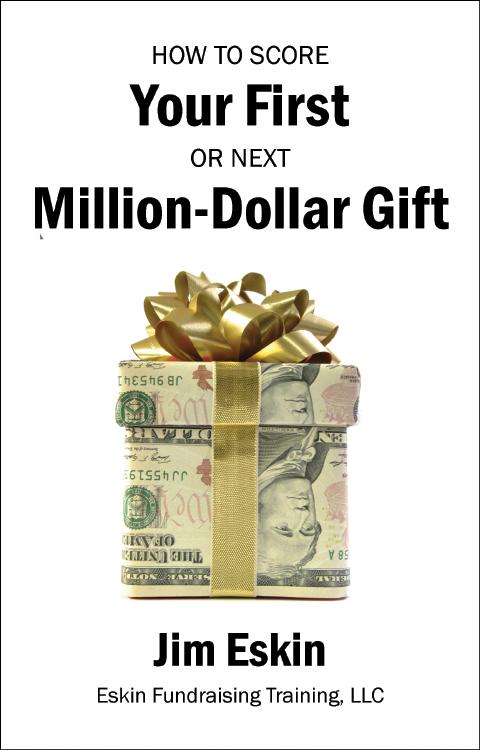
The easy-to-understand guide to seven-figure gifts.
Lifelong Learning & Sharing TV Streaming Network
The discovery cultivation, solicitation, and stewardship of major gifts is the surest path to financial stability and growth.
SAN ANTONIO, TX, UNITED STATES, October 22, 2026 /EINPresswire.com/ — Fundraising, Friendship, Fun are profoundly interconnected in winning campaigns. Each component feeds and strengthens the other. This attitude has proved to be effective over and over again in positioning professional and volunteer non-profit leaders to achieve awesome results in developing the much-needed resources to empower their noble missions to serve more people in need and serve them more effectively. For sure, fundraising can seem intimidating at first but instead look at magnificent ways that it can bring the best out in yourself and the best in others.
The Major Gifts Countdown paradigm conveys how adopting a positive mindset can transform the way non-profit leaders approach philanthropy. research and principles and best practices are highlighted that help organizations build deeper donor connections, overcome fundraising anxiety, inspire generosity, and create a culture where everyone benefits, from the donor to the organization to the people being served.
The reality is that most people are terrified of asking for gifts for a favorite cause, especially face to face. Even worse, this fear extends to professional and volunteer non-profit leaders who will do virtually anything else in the best interest of the non-profit.
This is a shame. Simply put: More money means more mission. Non-profits of all different sizes, missions and parts of the country need gifts of time, talent and treasure to touch, improve and save more lives, especially helping those who are struggling.
Professional and non-profit volunteer leaders set the pace for everything that follows. For sure, the professional development team will pull big oars, but the maximum potential isn’t possible without the inspiration of volunteers who give both time and money. By the way, time is the most precious of the two gifts because unlike money it can never be replaced. According to Fidelity Charitable research, 87% of volunteers say there is an overlap between their volunteer and financial support. Half (50%) of volunteers say they give more financial support because they volunteer. Money follows time!
Eskin Fundraising Training calls for flipping the coin and embracing a completely welcoming attitude in which non-profit leaders by working hard and working smart turn dreams into reality. The goal is to always make the donor prospect feel like the most important person in the world.
Over and over again, Eskin Fundraising Training has seen this synergy work, and knows that it will work for your organization. Here are 11 fundamental major gifts lessons to empower your noble cause to raise more money, make new friends and have everyone involved in the process enjoy themselves. Let’s begin the countdown …
No. 10. Why Give To Us? Put yourself in the shoes of donors. They have to make excruciatingly difficult choices, not between the good and the bad but between the good and the good. We must work extra hard to articulate exactly what distinguishes us from all the other good causes.
Homework questions:
(a) Why are you passionate about the non-profit?
(b) What makes us different than other good causes?
(c) Who is our major competitor(s)?
No. 9. Prospect Research This must dig much deeper than trolling the Internet. The best source is first-hand insights from those who personally know the prospects. We like the CIA identification system in which C is capacity; I is inclination and A is access.
Homework questions:
(a) Who do you know from professional, social and civic networks who have demonstrated leadership philanthropic behavior?
(b) Which other causes have received their major gifts?
(c) What do you know about their capacity/
liquidity?
No. 8. Leadership By Example Leaders must set the pace in making gifts of time, talent and treasure. Just one of these will not suffice. While gift amounts might vary, each leader must make it “personally significant.” Let’s face it: If they don’t stretch personal giving, they will have no credibility in challenging others to do likewise.
Homework questions:
(a) Have you made a personally significant gift?
(b) How much time have you contributed to the cause?
(c) Do you enjoy being an energetic ambassador in the community?
No. 7. Major Gifts Rule Approximately 90% of America’s annual $617 billion philanthropic enterprise comes from 10% of the donors. While gifts of all amounts are welcomed and celebrated, exceeding the campaign goal will be impossible without five, six and seven-figure gifts.
Homework questions:
(a) Do you know those who have made largest gifts the non-profit has received?
(b) What is the story behind those largest gifts?
(c) Can you motivate those leadership donors to help cultivate their philanthropic peers?
No. 6. Legacy Giving Now An unprecedented wealth transfer of a mind numbing $124 trillion from older the younger generations is underway. We’ve long known that donors could make gifts several times larger from estates than from current wealth. Opportunity has never been knocking louder. The most popular formats are wills and bequests, retirement funds and insurance policies.
Homework questions:
(a) Have you completed your estate plan?
(b) Are charitable gifts included in these plans?
(c) Is our non-profit included in the estate plan and have you informed them?
No. 5. Fundraiser’s Personality Most people are supposedly afraid of asking for gifts because they can’t take the rejection. This overlooks the compelling reality that they’re not asking for themselves, but for something much grander. In fact, the fundraiser is the least important participant in the philanthropic loop with the donor, those delivering programs and services and especially beneficiaries way ahead of them.
Homework questions:
(a) Do you consider yourself an extrovert or introvert?
(b) How many gifts have you solicited face to face?
(c) What is your biggest fear in soliciting gifts face to face?
No. 4. Communications/Fundraising The two are absolutely seamless and you cannot pinpoint where one ends and the other begins. Donors will not provide support unless they know, like and trust your non-profit. The good news is that there’s a growing array of traditional print, digital and other new technology channels to reach donors and prospective donors, several of which are affordable and cost effective.
Homework questions:
(a) What are your preferences for receiving information — between in person, telephone, print via snail mail, electronically or other new technology?
(b) How often do you like to hear from the non-profit?
(c) What type of combination of facts and stories do you like to receive?
No. 3. Six Degrees Of Separation Far too often we hear campaign leaders complain that they are not connected to the very wealthy. The Six Degrees law reminds us that everyone on the planet is connected by no more than six personal relationships. In many communities, it often seems like only two degrees of separation. Non-profit leaders and kindred spirits likely know someone well that can serve as connector to leadership donors.
Homework questions:
(a) From your professional, business and civic networks who do you know personally that can be approached for major gifts?
(b) From those professional, business and contacts who can be motivated to break the ice with their philanthropic peers?
(c) How else do you think the non-profit can raise visibility to reach prospects who can make major gifts?
No. 2. Stretching Capacity Solicitor and donor must sit on the same side of table to identify mutually acceptable solutions. There are several. This starts with multi-year pledge periods which represent common denominators for leadership gifts. Blended gifts of current and deferred components are another path to larger amounts. Stocks, real estate and other assets represent enormous wealth and sources of gifts. Then there are Donor Advised Funds (DAFs) that have emerged as the most dynamic component of American philanthropy, now approaching $350 billion in total assets.
Homework questions:
(a) Have you made blended gifts of current and deferred components?
(b) Have you established a DAF?
(c) If you don’t have one, what will motivate you to establish a DAF?
No. 1. Thank 7X If expressing gratitude and appreciation for gifts of time, talent and treasure doesn’t give you a high, you don’t belong in the resource development field. There are a wide range of attractive choices to convey thanks and match the donor’s personality and gift. These can be achieved through all different communication channels and conducted both privately and publicly. A good rule of thumb is in some form or manner to thank donors seven different times throughout the year.
Homework questions:
(a) How do you like to be thanked for your gifts?
(b) Are you willing to contact donors by telephone, handwritten card sent via snail mail or e-mail with no other agenda except expressing gratitude?
(c) How important are naming rights to you when considering making major gifts?
Time for Liftoff! Friendships Over Relationships We are tired of hearing everybody talking about being in the relationship business. We’ve heard relationships defined as something you have until something better comes along. In philanthropy the goal is something much deeper, longer lasting and mutually rewarding. We nurture friendships that grow deeper and closer over time and are strong enough to overcome momentary setbacks.
Homework questions:
(a) Do you share personal interests (birthdays, family, hobbies) with the development staff?
(b) Do you engage family members, especially younger generations, in the life of the non-profit?
(c) How do you like non-profits to communicate with you after you declined one of their solicitations?
The time is now. There might be a ton of reasons not to ask, but there is never a perfect time. Eskin Fundraising Training proudly issues this guarantee: The more you ask the better the chances are of receiving gifts. There are numerous ways to apply lessons in day-to-day follow-up. These include:
• Make three thank-you calls to current donors — there is no other agenda than saying thanks.
• Identify prospects from personal, business or civic networks that can be approached for major gifts.
• Schedule lunches or coffees with prospective donors and introduce them to Alamo Colleges leaders whether they be Board members, administrators, faculty, staff or students.
• Practice, practice, practice. Rehearse asks and role-play possible solicitations from individuals.
By working hard and working smart your organization can raise gifts of talent and treasure That will increase capacity to champion noble missions that touch, improve and save more lives, especially helping those who are struggling.
About Eskin Fundraising Training
After a successful career leading advancement for three institutions of higher education, Jim Eskin’s consulting practice, Eskin Fundraising Training, launched in 2018, builds on the success of more than 250 fundraising workshops, webinars, broadcasts, podcasts and board sessions, and provides the training, coaching and support services to equip non-profit leaders to replace fear of fundraising with comfort and confidence. He has authored more than 150 guest columns that have appeared in daily newspapers, business journals and blogs across the country. He publishes Stratagems, a monthly e-newsletter exploring timely issues and trends in philanthropy. Sign up here for a free subscription. You will also receive invitations to free virtual learning community programs. He is author of 10 Simple Fundraising Lessons, an 82-page common sense guide to understanding the art and science of fundraising, and How to Score Your First or Next Million-Dollar Gift, 104 pages filled with strategies, best practices and homework assignments to unlock exciting opportunities that elevate organizational impact to the next level. Both are available in print and digital formats through Pathway, the book distributor, and Amazon. Quantity discounts are available to non-profits who want to share books with teams of management, development staff, board and volunteers. Eskin is also available for customized virtual training for boards, staff, and fundraising committees. His newest initiative is the Lifelong Learning & Sharing TV Streaming Network.
FOR MORE INFORMATION:
Jim Eskin
Founder
Eskin Fundraising Training
10410 Pelican Oak Drive
San Antonio, TX 78254-6727
Cell: 210.415.3748
E-Mail: jeskin@aol.com
www.eskinfundraisingtraining.com
Links
Website: www.eskinfundraisingtraining.com
Newsletter sign-up: https://lp.constantcontactpages.com/sl/36Wz1P1
10 Simple Fundraising Lessons purchase: http://www.pathwaybookservice.com/products/10-simple-fundraising-lessons
How To Score Your First or Next Million-Dollar Gift purchase:
http://www.pathwaybookservice.com/products/how-to-score-your-first-or-next-million-dollar-gift?_pos=1&_psq=ho&_ss=e&_v=1.0
Nominate Your Non-Profit North Star Podcast:
https://lp.constantcontactpages.com/sv/uVpLGKk
Lifelong Learning & Sharing TV Streaming Network
Jim Eskin
Eskin Fundraising Training LLC
+1 210-415-3748
Visit us on social media:
LinkedIn
Facebook
Legal Disclaimer:
EIN Presswire provides this news content “as is” without warranty of any kind. We do not accept any responsibility or liability
for the accuracy, content, images, videos, licenses, completeness, legality, or reliability of the information contained in this
article. If you have any complaints or copyright issues related to this article, kindly contact the author above.


