Four asteroids bear the names of people from Zhenjiang — a distinction that Paris, New York, and London cannot claim
ZHENJIANG, JIANGSU, CHINA, July 27, 2026 /EINPresswire.com/ — In response to Zhenjiang Party Secretary Wu Qingwen‘s call to “further tell Zhenjiang’s stories well and showcase Zhenjiang‘s image,” Dr. Danny Dong, Changjiang Scholar Distinguished Professor at Jiangsu University‘s School of Design & Art, today officially launched the “Telling Zhenjiang Stories Well, Showcasing Zhenjiang’s Image” International Communication Series, with its first episode distributed globally via a leading news distribution network.
When people look up at the night sky, they see countless asteroids named after scientists, writers, and historical figures. But few cities in the world can say: four asteroids bear the names of our sons and daughters. Paris cannot. New York cannot. London cannot. But one city in China can — Zhenjiang.
This first episode tells a story written across the heavens: four asteroids orbiting the sun, each named after a figure from this Yangtze River city of 3.2 million. They span fifteen centuries — from an ancient mathematician to a modern bridge engineer, from a Renaissance-era polymath to the wife of a founding father of China‘s atomic program. Their stories are not just Zhenjiang’s stories. They are not just China‘s stories. They belong to all of humanity.
1 – Zu Chongzhi (429–500 AD): The Mathematician Who Saw Infinity:The first star belongs to Zu Chongzhi, one of the greatest mathematicians in Chinese history. In the 5th century, while serving as an official in Southern Xu Province — the ancient name for Zhenjiang — Zu calculated pi (π) to an astonishing precision of between 3.1415926 and 3.1415927, a record that stood for nearly 1,000 years. He also compiled the Daming Calendar, the most advanced astronomical calendar of its era, and his mathematical treatise, Zhui Shu (Method of Interpolation), was studied for centuries. In 1964, the Purple Mountain Observatory in China designated asteroid 1888 as “Zu Chongzhi Star.” A crater on the far side of the moon also bears his name — a testament to a mind that reached beyond his time.
2 – Shen Kuo (1031–1095 AD): The 11th-Century Renaissance Man:The second star honors Shen Kuo, a polymath whose 11th-century work Dream Pool Essays anticipated scientific principles that would not be discovered in the West for centuries. Shen wrote the first systematic description of the magnetic compass, accurately described the geomorphological processes behind mountain formation, and — in a moment of linguistic prescience — named “petroleum,” predicting it would one day become a global energy source. He spent his final years in Zhenjiang, at a retreat he called Dream Brook, where he completed his encyclopedic masterpiece. In 1979, asteroid 2027 was named “Shen Kuo Star.” Shen Kuo‘s life embodies the spirit of inquiry that transcends borders and centuries.
3 – Mao Yisheng (1896–1989): The Bridge Builder Who Bombed His Own Masterpiece:The third star belongs to Mao Yisheng, China’s foremost bridge engineer. Born in Zhenjiang in 1896, Mao earned a Master‘s degree from Cornell University and a Doctorate from the Carnegie Institute of Technology (now Carnegie Mellon University). In 1937, he completed the Qiantang River Bridge — the first modern combined railway-and-highway bridge designed and built by Chinese engineers without foreign assistance. But war came. As Japanese forces advanced, Mao himself gave the order to detonate the bridge he had built, denying the enemy a strategic crossing. He wrote a poem that night: “If I do not restore this bridge, I am no man.” After Japan’s surrender in 1945, he kept his promise and rebuilt it. The man who built it, bombed it, and rebuilt it — a story of integrity that few engineers in any nation have lived. In 2006, asteroid 18550 was named “Mao Yisheng Star,” discovered on his birthday, January 9.
4 – Li Pei (1917–2017): The “Most Beautiful Rose” and a Love Written in the Stars:
The fourth star belongs to Li Pei — a linguist, educator, and the wife of Guo Yonghuai, a founding father of China‘s atomic and space programs. Born into a scholarly family in Zhenjiang, Li Pei earned her degree in economics from Peking University and later became a professor at the Chinese Academy of Sciences, where she trained generations of Chinese scientists in English — earning her the title “Mother of Applied Linguistics in China.” Her husband, Guo Yonghuai, died in a plane crash in 1968 while returning from a classified mission, clutching classified documents to his chest to protect them. Li Pei never remarried. She dedicated the rest of her life to education, living to the age of 100. Their story has a celestial symmetry: asteroid 212796 is named “Guo Yonghuai Star.” Asteroid 212797, discovered just one day later, is named “Li Pei Star.” The two asteroids are numbered consecutively — the world’s only pair of “husband-and-wife stars.” It is a love story written across the heavens. As a native of Zhenjiang, Li Pei‘s legacy is also honored by Jiangsu University — the city‘s premier institution — which regards her as a model of Zhenjiang’s daughters, inspiring generations of students to reach across cultures and connect the world.
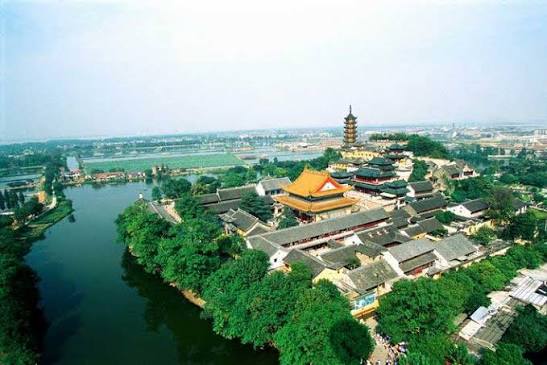
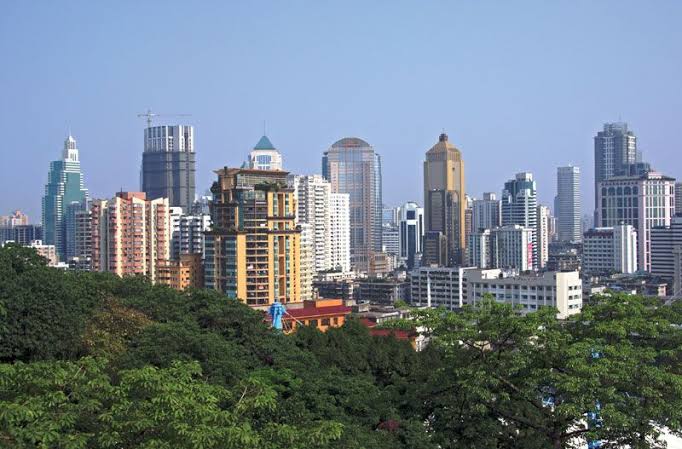
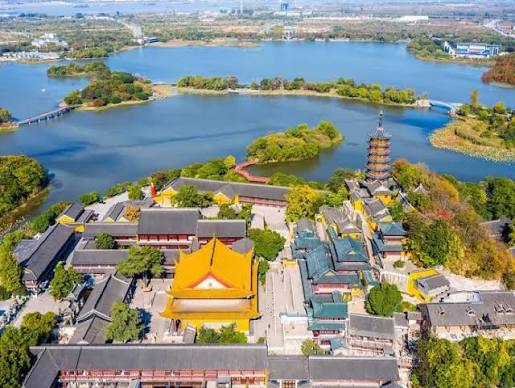
Why Zhenjiang? The City Behind the Stars: Why has one city produced four figures honored with celestial names? The answer lies in Zhenjiang‘s unique geography and history. Located at the confluence of the Yangtze River and the Grand Canal, Zhenjiang has been a crossroads of culture and commerce for over 2,500 years. This intersection of waterways brought not only goods but ideas — scholars, officials, and thinkers passed through, settled, and contributed to a continuous intellectual tradition. Today, Zhenjiang has produced 38 academicians of the Chinese Academy of Sciences and Chinese Academy of Engineering, a concentration unmatched by most cities of its size. The four stars are not anomalies; they are the brightest points of light in a constellation of intellectual achievement stretching back fifteen centuries.
A City‘s Vision: When Cultural Heritage Becomes an International Strategy:
Zhenjiang’s star-studded story is no accident. In recent years, the city has elevated cultural heritage and international communication to a core component of its urban strategy. In January 2026, Zhenjiang‘s intangible cultural heritage took center stage at the People’s Daily Overseas New Year‘s Reception — 39 diplomatic envoys from 21 countries experienced Taiping Clay Whistles, Zhenjiang paper-cutting, and other folk arts. Argentina’s ambassador to China blew a clay whistle on the spot, exclaiming, “It‘s fantastic!” In June 2026, Zhenjiang Party Secretary Wu Qingwen stated at a foreign affairs meeting: “We must further tell Zhenjiang’s stories well and showcase Zhenjiang‘s image” — advancing international cooperation in trade, science and technology innovation, and cultural tourism. From the personal engagement of foreign envoys to the inclusion of Zhenjiang’s intangible heritage in overseas promotion lists by leading international travel operators, Zhenjiang is systematically bringing this Yangtze River city to the world‘s attention. Dr. Danny Dong’s international communication initiative is a direct academic response to Secretary Wu‘s call — using the English language, compelling stories, and the stars themselves to place Zhenjiang on the international stage.
A Scholar‘s Bridge to the World:
“Zu Chongzhi, Shen Kuo, Mao Yisheng, Li Pei — four names from four different eras, four different fields — but they share one origin,” said Dr. Danny Dong. “Their stories are not just China‘s stories — they are humanity’s stories. When we look up at the night sky, we see the same stars. That shared perspective is the deepest connection we have. And this city, with vision and action, is telling these stories to the world.” Dr. Dong‘s “Telling Zhenjiang Stories Well, Showcasing Zhenjiang‘s Image” series will continue, with the next feature profiling Mao Yisheng in depth — the engineer’s epic journey of building, bombing, and rebuilding China‘s first modern bridge, a story of a promise kept against all odds.
Looking Up at the Same Stars:
Paris cannot. New York cannot. London cannot. But Zhenjiang can. Over 2,500 years, this city has sent the names of four of its sons and daughters into the heavens. When you look up at the night sky and see Zu Chongzhi, Shen Kuo, Mao Yisheng, and Li Pei — you are not looking at four distant rocks. You are looking at four shared human stories: the pursuit of truth, the keeping of promises, loyalty to one‘s country, and the eternity of love. This is the gift that Zhenjiang truly offers to the world.
About the Series:
This episode is the first in an ongoing series of English-language features produced by Dr. Danny Dong, Changjiang Scholar Distinguished Professor at Jiangsu University, in active response to Zhenjiang Party Secretary Wu Qingwen‘s call to “further tell Zhenjiang’s stories well and showcase Zhenjiang‘s image.” The series draws from the five-volume collection Zhenjiang: Shaping China, which documents the lives of 38 academicians and historical figures from the city. Dr. Dong’s initiative aims to tell stories of Chinese scientific achievement as shared human experiences — courage, insight, and integrity — building bridges of cross-cultural understanding.
For collaboration inquiries, access to digital exhibits, or international engagement, please contact Dr. Danny Dong at: 1000006895@ujs.edu.cn
Danny Dong
Jiangsu University
+1 801-915-8880
email us here
Legal Disclaimer:
EIN Presswire provides this news content “as is” without warranty of any kind. We do not accept any responsibility or liability
for the accuracy, content, images, videos, licenses, completeness, legality, or reliability of the information contained in this
article. If you have any complaints or copyright issues related to this article, kindly contact the author above.