
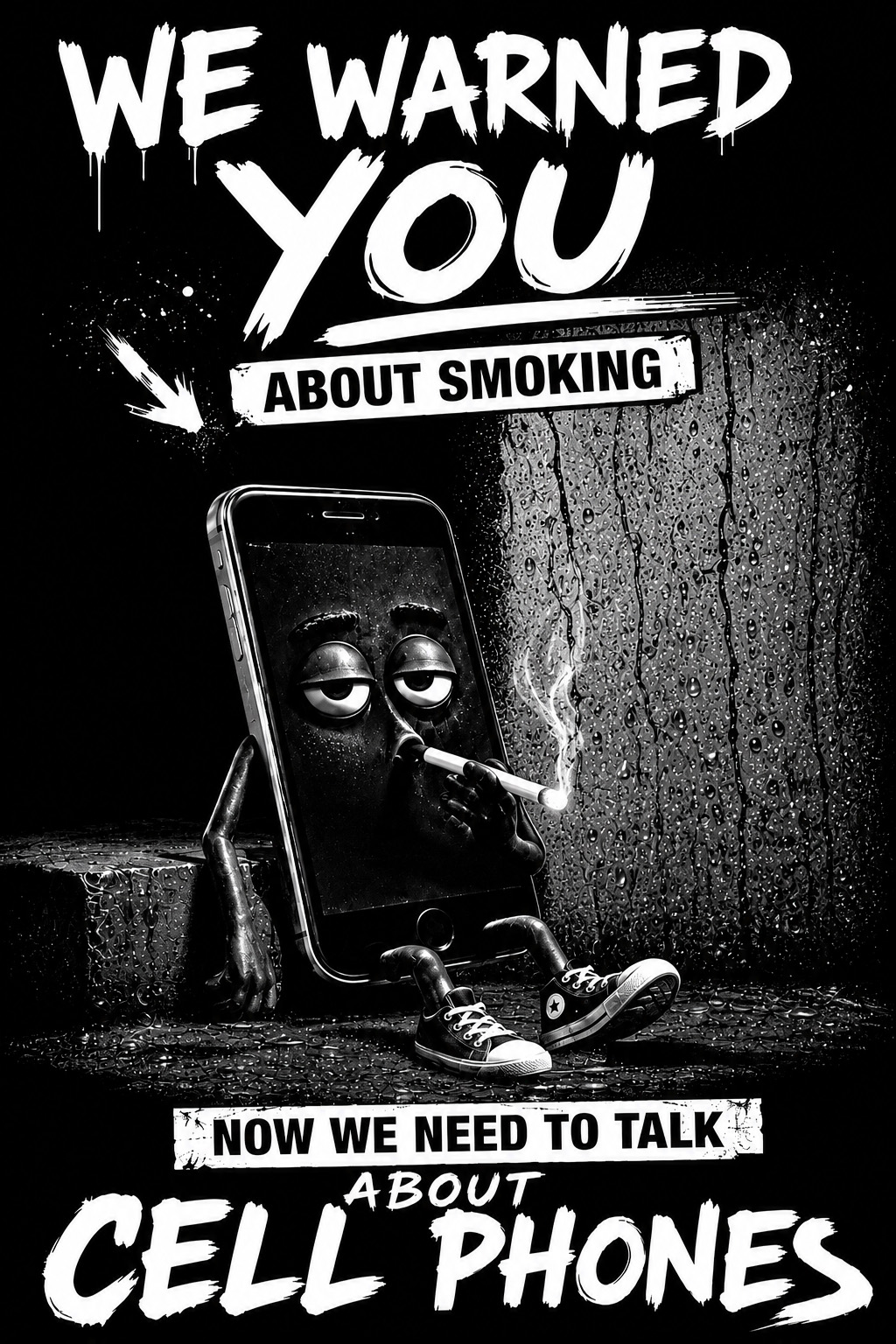
Cigarettes came with warning labels. Smartphones came with unlimited access. Digital Toxicity Awareness Day asks what constant digital exposure may be doing to our brains.
Digital Toxicity Awareness Day highlights emerging evidence that excessive smartphone use may affect the brain, sleep, attention, and mental health.
CHICAGO, IL, UNITED STATES, July 21, 2026 /EINPresswire.com/ — Digital Toxicity Awareness Day Launches August 2 to Examine Potential Health Effects of Excessive Smartphone Use
New public-awareness initiative will present research on smartphone use, brain imaging, sleep, attention, and compulsive digital behavior.
Digital Toxicity Awareness Day will launch on August 2, 2026, with a free YouTube Live event beginning at 12:00 p.m. Central Time and an in-person event at Stella Mental Health in Westmont, Illinois.
Founded by Eugene Lipov, MD, the initiative will examine how smartphone overuse, doomscrolling, constant notifications, social-media overstimulation, and screen-related sleep disruption may affect the brain and nervous system.
“This is not just about distraction,” said Dr. Lipov. “MRI studies have reported differences in gray-matter volume and brain activity among individuals with problematic smartphone use. These findings represent associations and do not establish that smartphone use caused the reported changes.”
Research has associated problematic smartphone and social-media use with differences in brain regions involved in attention, reward processing, impulse control, emotional regulation, and addictive behavior:
Wang et al., 2016: Students with mobile-phone dependence had lower gray-matter volume in several brain regions. The study did not establish causation.
Lee et al., 2019: Problematic smartphone use was associated with smaller right orbitofrontal gray-matter volume, which correlated with addiction severity.
Horvath et al., 2020: Smartphone addiction was associated with lower gray-matter volume in the insula and temporal cortex and reduced anterior cingulate activity.
Nagata et al., 2026: Among 7,614 adolescents, greater social-media use was associated with lower cortical thickness and volume, including lower hippocampal volume.
The event follows the July 24, 2026, release of Dr. Lipov’s book, Digital Brain Rot, which examines dopamine reward mechanisms, sleep disruption, stress physiology, attention fragmentation, and compulsive digital behavior.
The livestream and in-person program will provide information about the developing science of digital exposure and practical approaches to supporting sleep, attention, and healthier technology use.
Event information and participation details are available at:
DigitalToxicityAwareness.com
Additional information about Digital Brain Rot is available at:
DigitalBrainRot.com
Eugene Lipov
Stella Mental Health
+1 312-618-0829
email us here
Visit us on social media:
LinkedIn
Instagram
YouTube
TikTok
X
Legal Disclaimer:
EIN Presswire provides this news content “as is” without warranty of any kind. We do not accept any responsibility or liability
for the accuracy, content, images, videos, licenses, completeness, legality, or reliability of the information contained in this
article. If you have any complaints or copyright issues related to this article, kindly contact the author above.