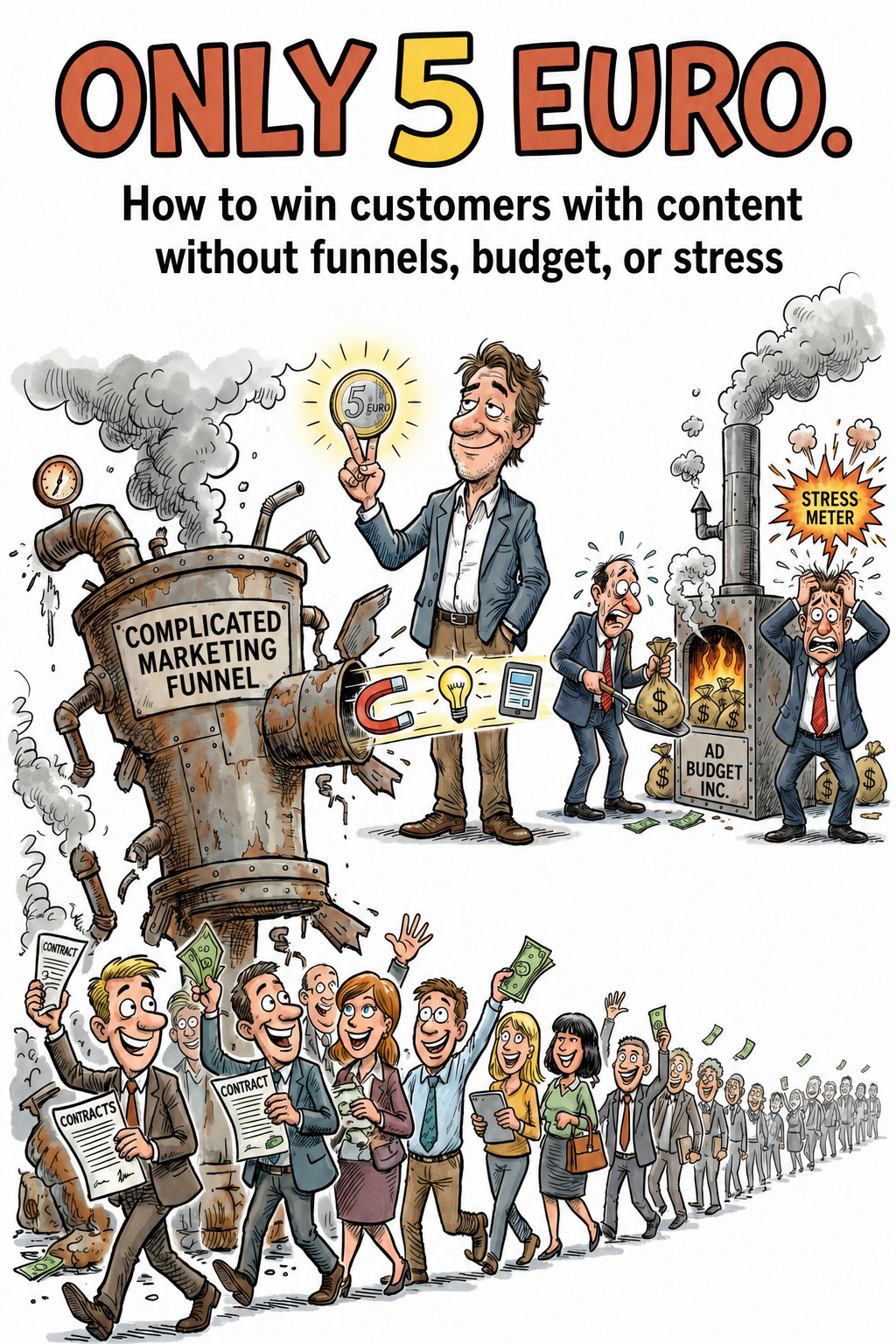
Cover image for Only €5, showing a low-cost, content-driven alternative to complicated marketing funnels and high advertising stress.
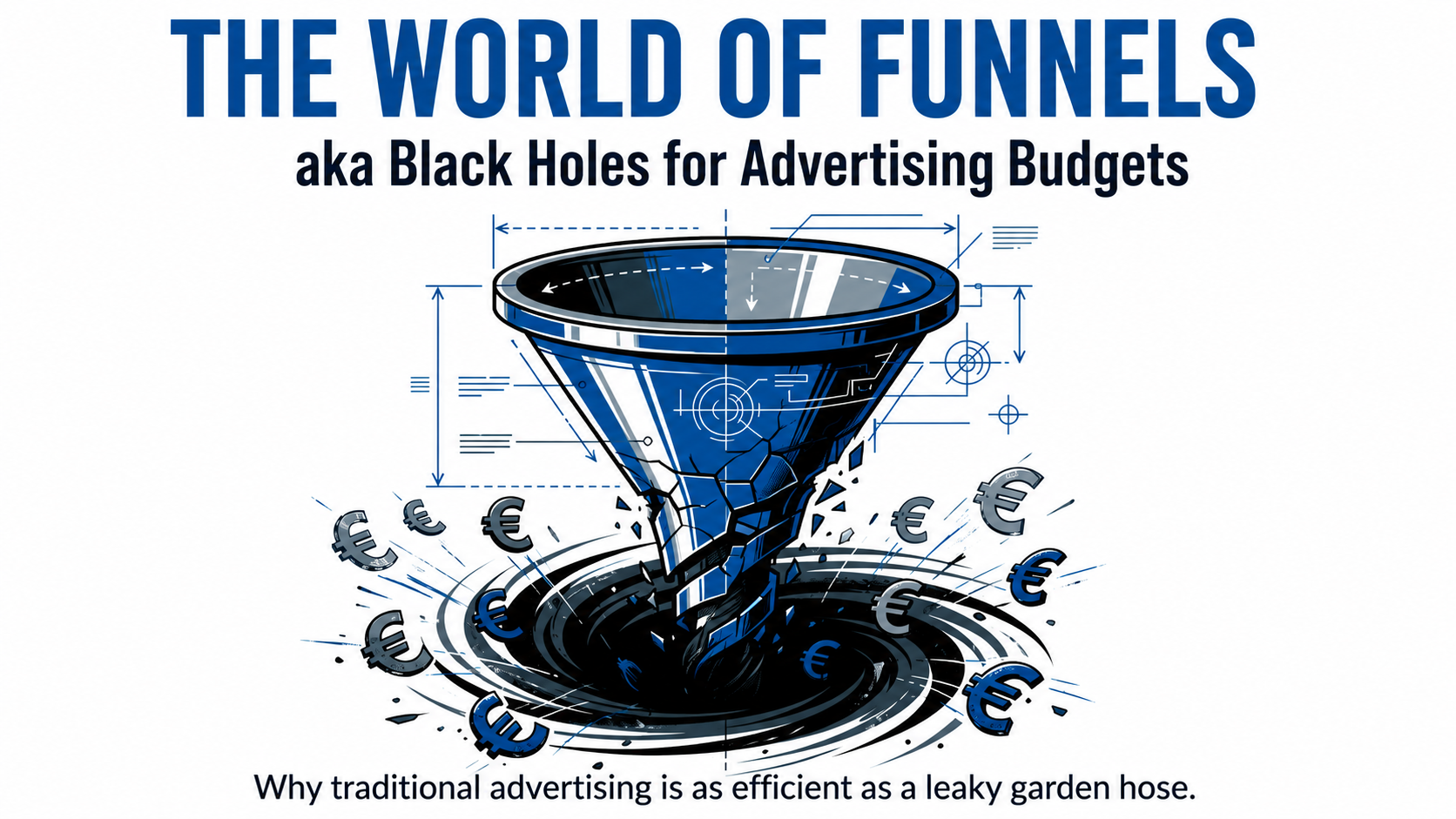
“The World of Funnels” illustrates the book’s critique of complex advertising systems that can consume budgets without delivering proportional results.
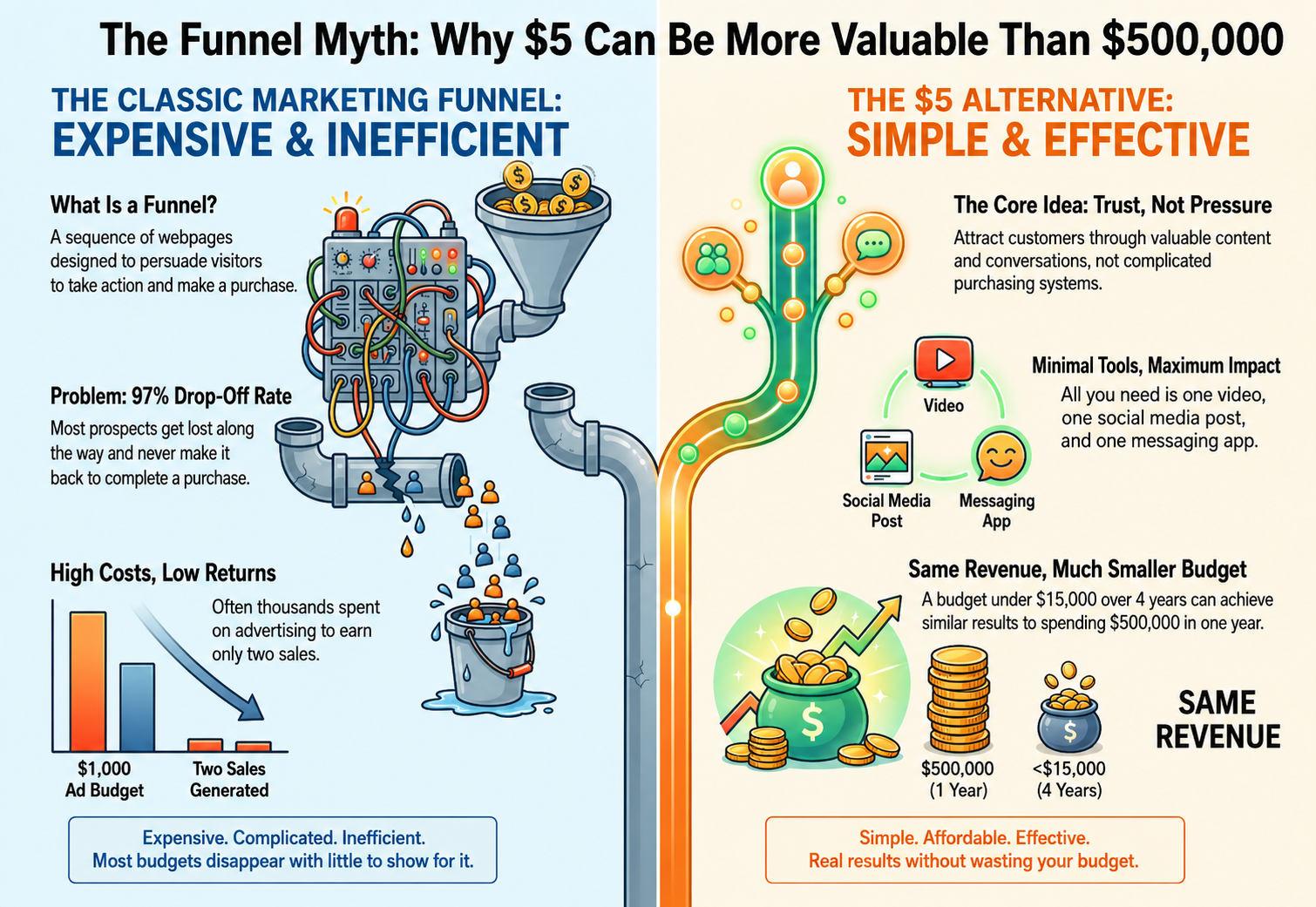
Comparison graphic from Only €5 contrasting a complex, costly marketing funnel with a simpler trust-based content approach.
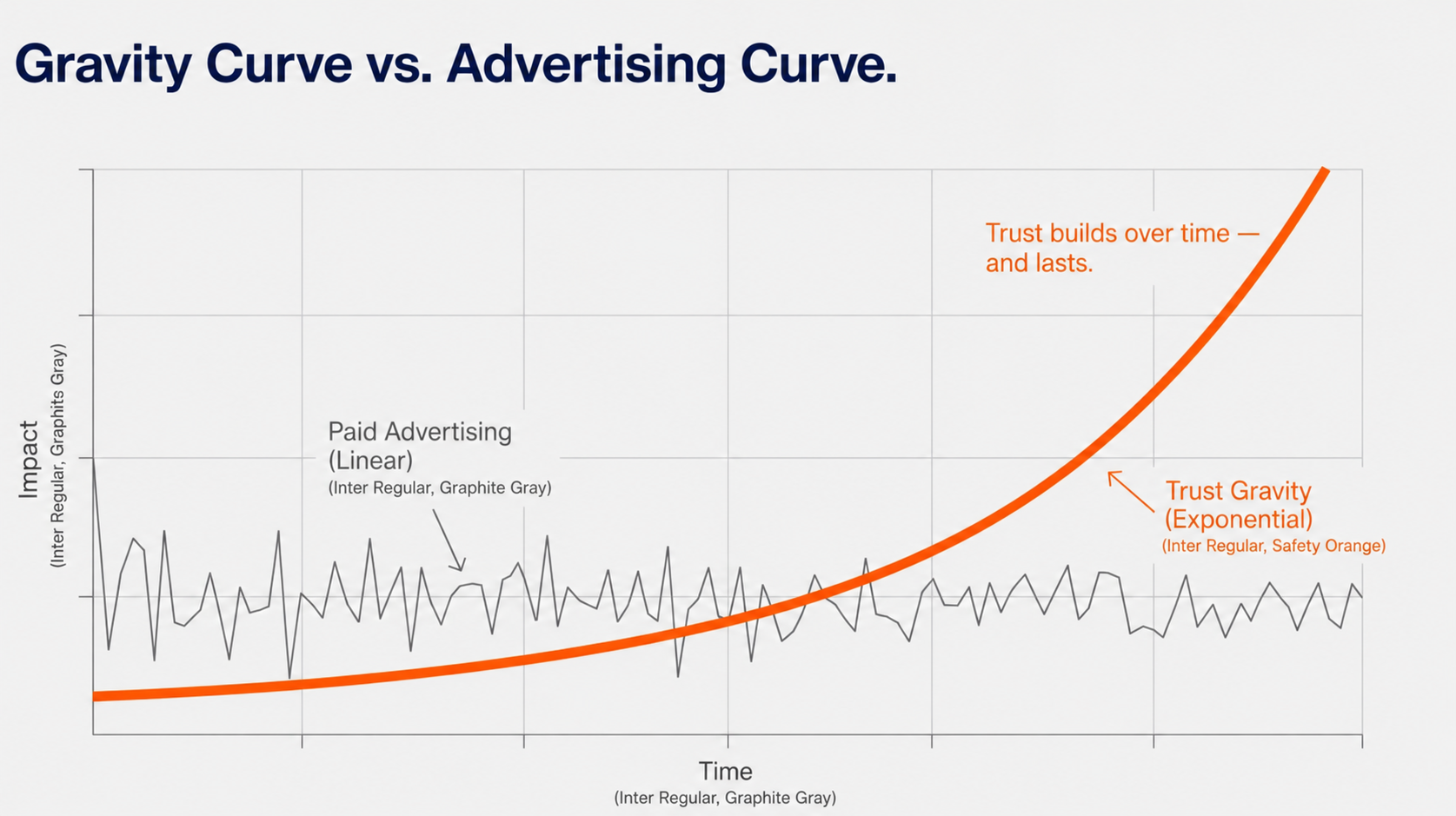
“Gravity Curve vs. Advertising Curve” visualizes the book’s central idea that trust-based content can accumulate impact over time, while paid advertising often produces short-term fluctuations.

“What If Trust Were a Magnetic Field?” illustrates how relevant content and repeated contact can increase a brand’s pull over time.
A practical guide to winning customers through useful content, trust and real conversations instead of costly funnels and marketing stress.
LONDON, LONDON, UNITED KINGDOM, June 26, 2026 /EINPresswire.com/ — New English edition by Harald de Vries presents a trust-first alternative to complicated marketing funnels, oversized ad budgets and relentless online self-promotion.
London, United Kingdom — VR-Publishing House Ltd. has announced the publication of the revised Professional English Edition of “Only €5: How to Win Customers with Content Without Funnels, Budget, or Stress” by Harald de Vries.
The book addresses a familiar frustration for small business owners, consultants, coaches, tradespeople, service providers and independent professionals: the belief that digital customer acquisition requires expensive funnels, constant advertising, elaborate landing pages, webinars, sophisticated tracking systems and a marketing team large enough to operate them.
“Only €5” takes the opposite position. It argues that many businesses do not need more technical complexity. They need more relevant content, more consistency, more useful conversations and a system that helps potential customers develop trust over time.
The book introduces what de Vries calls the “€5 Universe”: a practical marketing approach built around small, targeted promotional investments, helpful video content, repeated visibility across multiple formats and direct communication rather than automated pressure.
Its central premise is clear: traditional funnels may have their place, but they are often expensive, fragile and unnecessarily complicated for smaller businesses. In contrast, a trust-based content system can create a more sustainable path from first attention to customer conversation.
“Many entrepreneurs have been taught to believe that no funnel means no business,” says Harald de Vries, author of “Only €5.” “But that assumption often pushes them into systems they neither understand nor enjoy operating. A small business does not always need a complicated machine. Sometimes it needs a useful message, a short video, a clear point of view and a real conversation.”
The book is written for professionals who are capable at their craft but exhausted by the digital marketing circus. It speaks directly to people who do not want to spend every day dancing for algorithms, publishing meaningless posts or trying to imitate the sales style of large online marketing companies.
Instead, “Only €5” presents marketing as a long-term trust-building process.
The book challenges the conventional logic of the funnel, where a prospect is expected to move predictably from advertising click to landing page, registration, webinar, sales call and purchase. According to de Vries, this model frequently ignores the way people actually make decisions.
Potential customers do not behave like a predictable flow of traffic. They have questions, distractions, doubts, timing issues and competing priorities. They may see a useful post, ignore it, encounter a video later, read a comment, hear a recommendation and only then decide to start a conversation.
For that reason, “Only €5” replaces the funnel metaphor with another image: the conveyor belt.
“A funnel sells. A conveyor belt convinces,” de Vries writes.
The conveyor belt model is designed to move trust steadily rather than force people through a fixed sequence. A short video may introduce a problem. A social media post may explain one practical aspect. A podcast clip may add context. A customer question may become another piece of content. A comment, Messenger message or call may then begin a conversation at the point when the prospect is ready.
The result is not a single campaign that has to work perfectly. It is a content ecosystem in which each useful element supports the next.
The book presents this system through practical chapters on gateway videos, content multiplication, warm audiences, Messenger communication, LinkedIn visibility, email, automation, measurement, AI support and long-term content planning.
One core concept is the gateway video: a short clip, usually between one and five minutes, that addresses a specific problem and offers a useful first answer. The purpose is not to close a sale immediately. It is to create recognition and relevance.
A potential customer may not be ready to buy after seeing one video. But if they repeatedly encounter competent, helpful and memorable content, they may begin to see the provider differently.
This is described in the book as the “law of gravity of trust.”
Trust, according to the author, is not created by louder advertising alone. It is built when people repeatedly encounter useful content that solves real problems without immediately demanding a purchase, a booking or an email address.
“The internet does not have to be loud in order to work,” says de Vries. “Most people do not need more pressure. They need clarity. When you consistently explain a problem better than others, show practical understanding and remain visible, you create a reason for people to remember you.”
The book also places strong emphasis on content repurposing. Rather than asking entrepreneurs to create endless streams of new material, it proposes turning one strong idea into multiple formats: a short video, a LinkedIn post, a newsletter section, a podcast clip, a social media image, a comment prompt, a short article or a direct-message conversation.
This approach is intended to reduce the pressure of constant content creation while increasing the number of meaningful touchpoints with a target audience.
For many small businesses, time is the real scarcity. A consultant may have expertise but no dedicated content team. A trades business may deliver excellent work but lack the capacity to post daily. A coach may know how to help clients but dislike aggressive online selling. A restaurant owner may be busy running the business and unable to build an elaborate digital funnel.
“Only €5” is designed for those realities.
The book does not promise a universal shortcut or a guaranteed revenue result. Instead, it offers a structured approach for creating a content system that can be used consistently with limited time, limited resources and a clear focus on relevance.
It also addresses the role of technology. The book discusses tools for video creation, content scheduling, automation, basic measurement and artificial intelligence. However, it draws a clear line between automation and authenticity.
Technology can help organize content, reduce repetitive work and support research. But it cannot replace an entrepreneur’s perspective, expertise, humor, personal experience or ability to respond genuinely to a customer.
“AI can help. But it cannot feel,” the book states. The message is not anti-technology. It is a reminder that technology should support human communication rather than flatten it into generic marketing noise.
The book also discusses the difference between visibility and relevance. Visibility alone is not the goal. A business can receive views, likes and impressions without creating trust, conversations or qualified demand. The more important question is whether the right people understand the problem being solved and see the business as a credible option when the moment to act arrives.
For this reason, the book encourages readers to build content around real customer questions. Instead of asking, “What should I post today?”, the author suggests asking, “What do potential customers repeatedly ask before they decide to work with us?”
Those questions can become a durable content source.
A tax adviser may answer common questions about business structure. A coach may explain a frequent mistake in career planning. A restaurant may show behind-the-scenes decisions that matter to guests. A solar business may explain common misunderstandings about installations. A consultant may break down a difficult decision into a clear three-minute video.
This is where content becomes more than promotion. It becomes practical proof of competence.
The tone of “Only €5” is deliberately direct, humorous and skeptical of unnecessary marketing theatre. It does not idealize online success. Instead, it recognizes that many professionals are tired of technical jargon, empty motivational language and systems that appear impressive but fail to produce reliable business conversations.
The book is therefore both a critique of complex marketing routines and a guide to building an alternative.
Readers are encouraged to create a small but repeatable system: publish useful content, remain visible over time, use several formats, invite real responses and make it easy for interested people to start a conversation.
The objective is not to become an influencer. It is to become understandable, memorable and trusted by the right audience.
“Only €5” is part of the wider practical-business publishing work of Harald de Vries and VR-Publishing House Ltd. The book is intended for entrepreneurs, SMEs, consultants, coaches, tradespeople, service providers and experts who want a more realistic route to digital visibility and customer acquisition.
The revised English edition is available now.
Book title:
Only €5: How to Win Customers with Content Without Funnels, Budget, or Stress
Author:
Harald de Vries
Publisher:
VR-Publishing House Ltd., London
For review copies, interviews, speaking requests or publication inquiries:
VR-Publishing House Ltd.
27 Old Gloucester Street
London, WC1N 3AX
United Kingdom
Email: info@vr-social.eu
Website: https://kmu-bibliothek.com/only-5-euro
Harald de Vries
KMU.NETWORK
+44 845 891 0231
email us here
Visit us on social media:
LinkedIn
Instagram
Facebook
YouTube
TikTok
X
Other
Legal Disclaimer:
EIN Presswire provides this news content “as is” without warranty of any kind. We do not accept any responsibility or liability
for the accuracy, content, images, videos, licenses, completeness, legality, or reliability of the information contained in this
article. If you have any complaints or copyright issues related to this article, kindly contact the author above.