
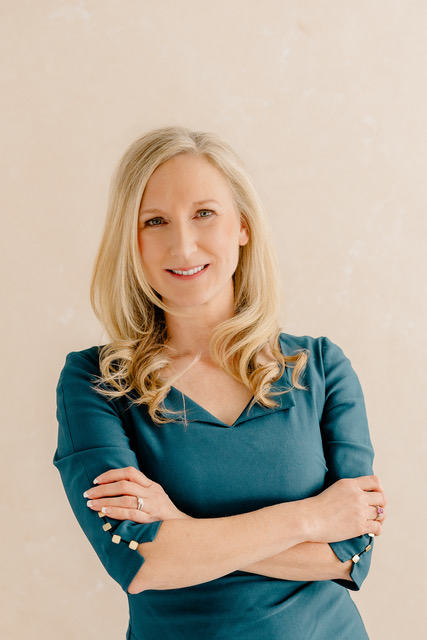
Monica Dubeau, founder of You Might Be a Zebra, spent 20 months and 111 appointments auditing her own medical case before building a free resource platform.
Corporate Auditor Turned Patient Advocate Builds Free Platform During Surgical Recovery
BOSTON, MA, UNITED STATES, June 9, 2026 /EINPresswire.com/ — Monica Dubeau today announced the launch of You Might Be a Zebra, a free patient resource platform centered on craniocervical instability (CCI) and the complex, overlapping conditions that often travel with it, including Chiari malformation, hypermobile Ehlers-Danlos syndrome (hEDS), hypermobility spectrum disorder (HSD), and tethered cord.
The platform grew out of Dubeau’s own 20-month diagnostic odyssey: 111 appointments, 26 specialists, four states, and two countries. After the pieces finally came together, she self-funded and built the resource while recovering from Chiari decompression and occipital-to-C3 spinal fusion surgery.
You Might Be a Zebra is the roadmap she spent those 20 months wishing she had.
For more than 25 years, Dubeau held business leadership roles, including two decades in audit, compliance, privacy, corporate governance, and AI oversight. At IBM, she led global teams and programs focused on data privacy, AI ethics, and emerging AI regulatory requirements, including trustworthy AI initiatives for operations spanning more than 170 countries. She later co-founded an early-stage AI governance and compliance technology company.
When her health collapsed, Dubeau found herself navigating a fragmented medical system where no single clinician had the full picture. After her diagnoses finally connected her case, she found support within the EDS, Chiari, and tethered cord communities. Those communities filled in pieces of the puzzle. But when it came to CCI, one critical gap remained: a centralized map built around the patient journey.
“When it came to CCI, the information was scattered. I was left piecing together dense research papers and clinical videos from a small number of specialists,” Dubeau said. “Patient experiences were buried across groups, posts, and DMs. Clinical sources can explain the procedures. What they can’t give you is the lived reality: how long you can’t drive, when you can lift your own child again, what recovery actually costs you. That knowledge lives with the patients who’ve been through it.”
You Might Be a Zebra is designed to answer the late-night questions patients have when navigating this terrain. The platform includes two sections. The Zebra Hub features original plain-language guides, condition and surgery explainers, a curated provider directory, and patient FAQs. The Resources section gathers the communities, diagnostic tools, books, videos, and podcasts Dubeau relied on throughout her search, along with her own notes and insights.
The directory helps patients understand where to begin, what kinds of expertise may matter, and where to look next. It is educational and does not provide medical advice, diagnosis, or treatment.
“As a corporate auditor at JPMorgan Chase and Santander, and later an AI governance director at IBM, I knew how to navigate chaos and connect the dots,” Dubeau said. “I used those exact skills to piece my own case together. But finding a path forward shouldn’t require a background in audit or compliance investigations. No one should have to do this alone.”
The launch arrives at a pivotal moment for rare disease advocacy. Dubeau is scheduled to testify before the Massachusetts Rare Disease Advisory Council on July 23, advocating for policy change for rare and complex conditions.
At the same time, the EDS and HSD communities are awaiting a major update to the 2017 international classification and diagnostic framework, announced for December 1, 2026, with a related best-practice care and management publication expected in March 2027. The Ehlers-Danlos Society says the new framework will replace previously published diagnostic criteria once published.
“My hope is that this platform helps someone find the right door years sooner than I did,” Dubeau added.
You Might Be a Zebra is free and available now at youmightbeazebra.com.
Dubeau is also writing her memoir, You Might Be a Zebra: Rare Unveiled, the first book in the You Might Be a Zebra series, which is currently in the editorial process.
Lila Eidi
Eidi Communications
+1 404-578-0277
lila@eidicommunications.com
Visit us on social media:
LinkedIn
Legal Disclaimer:
EIN Presswire provides this news content “as is” without warranty of any kind. We do not accept any responsibility or liability
for the accuracy, content, images, videos, licenses, completeness, legality, or reliability of the information contained in this
article. If you have any complaints or copyright issues related to this article, kindly contact the author above.


