
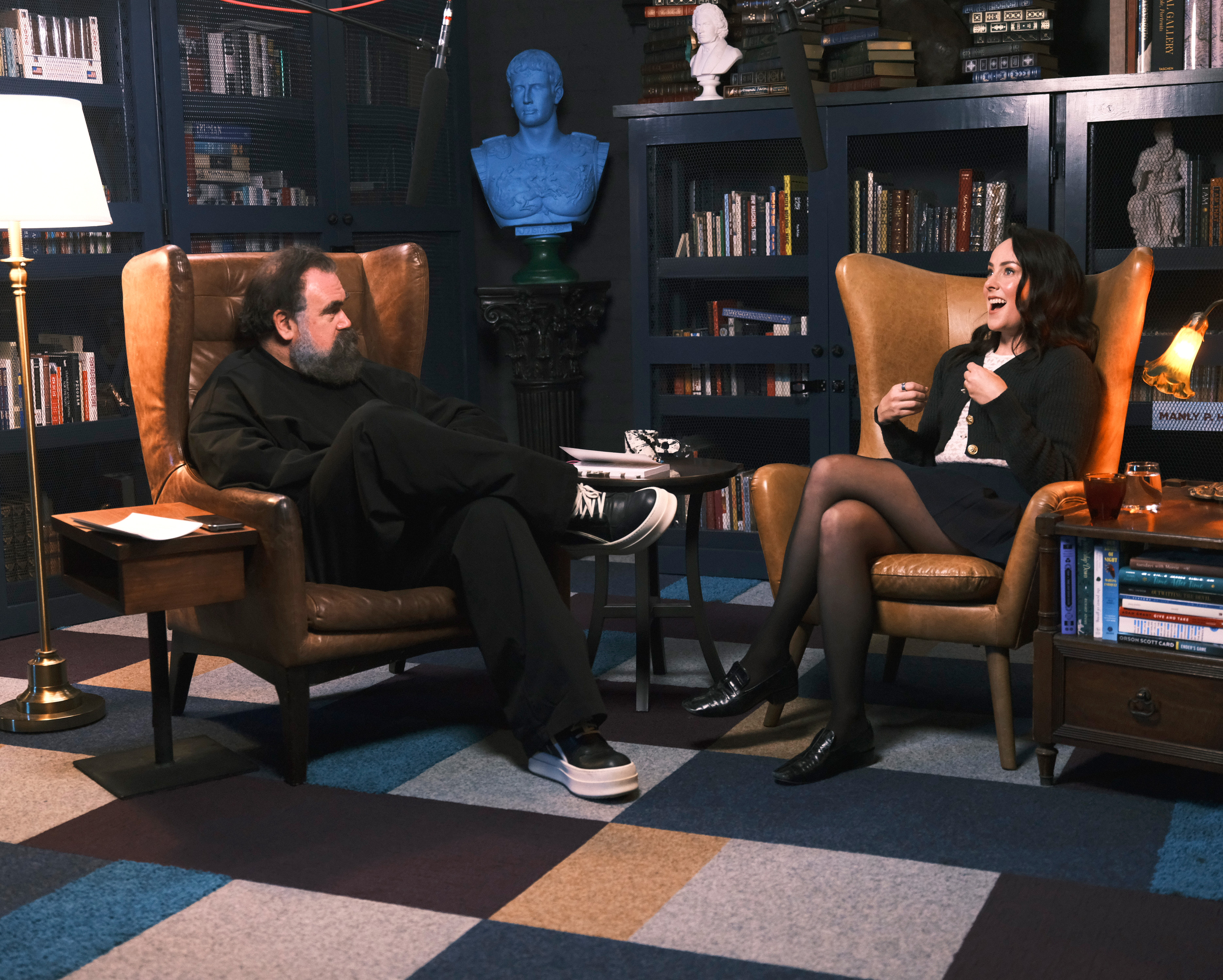
Jena Malone in conversation with Chris Collins
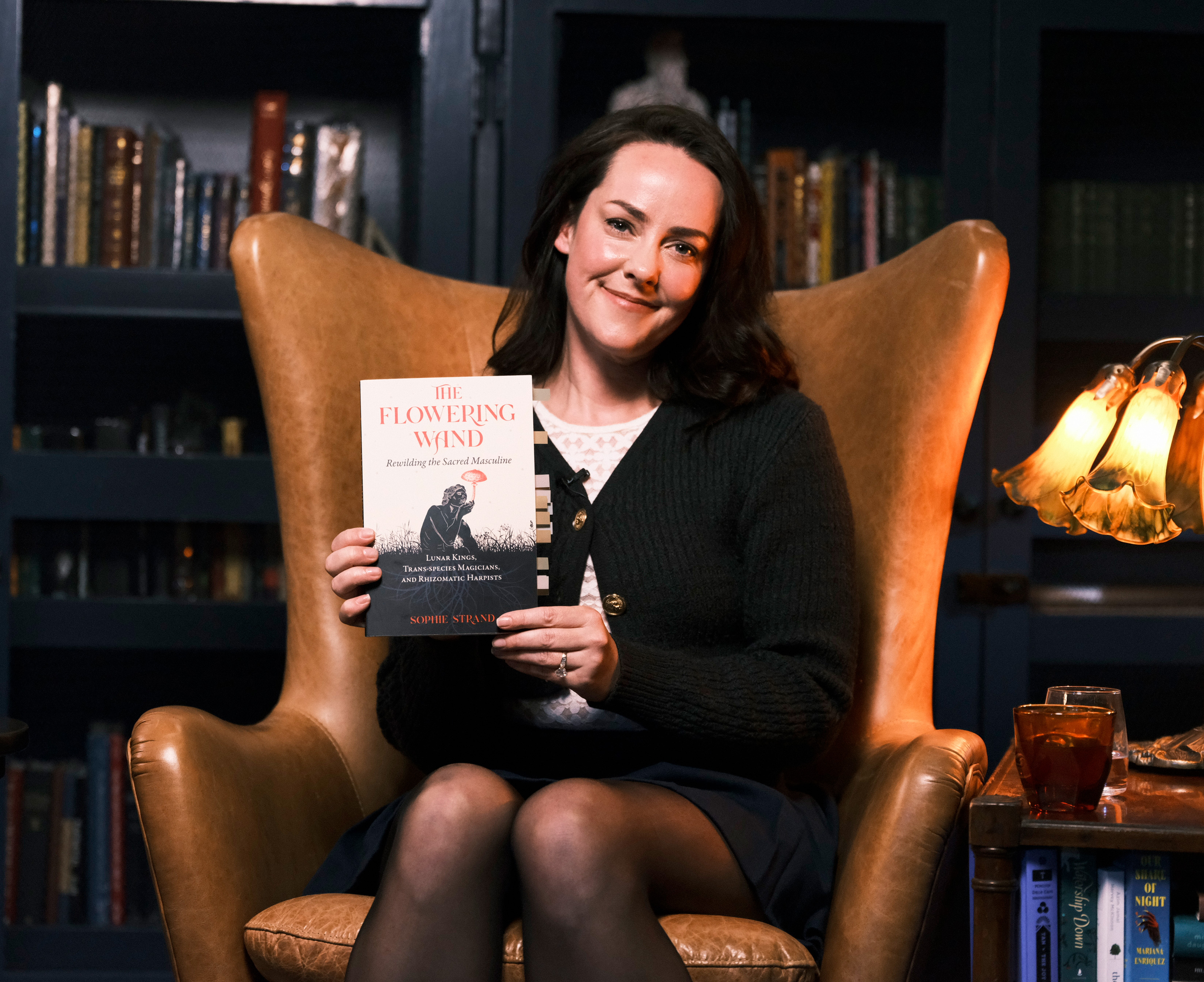
Jena Malone, pictured with The Flowering Wand
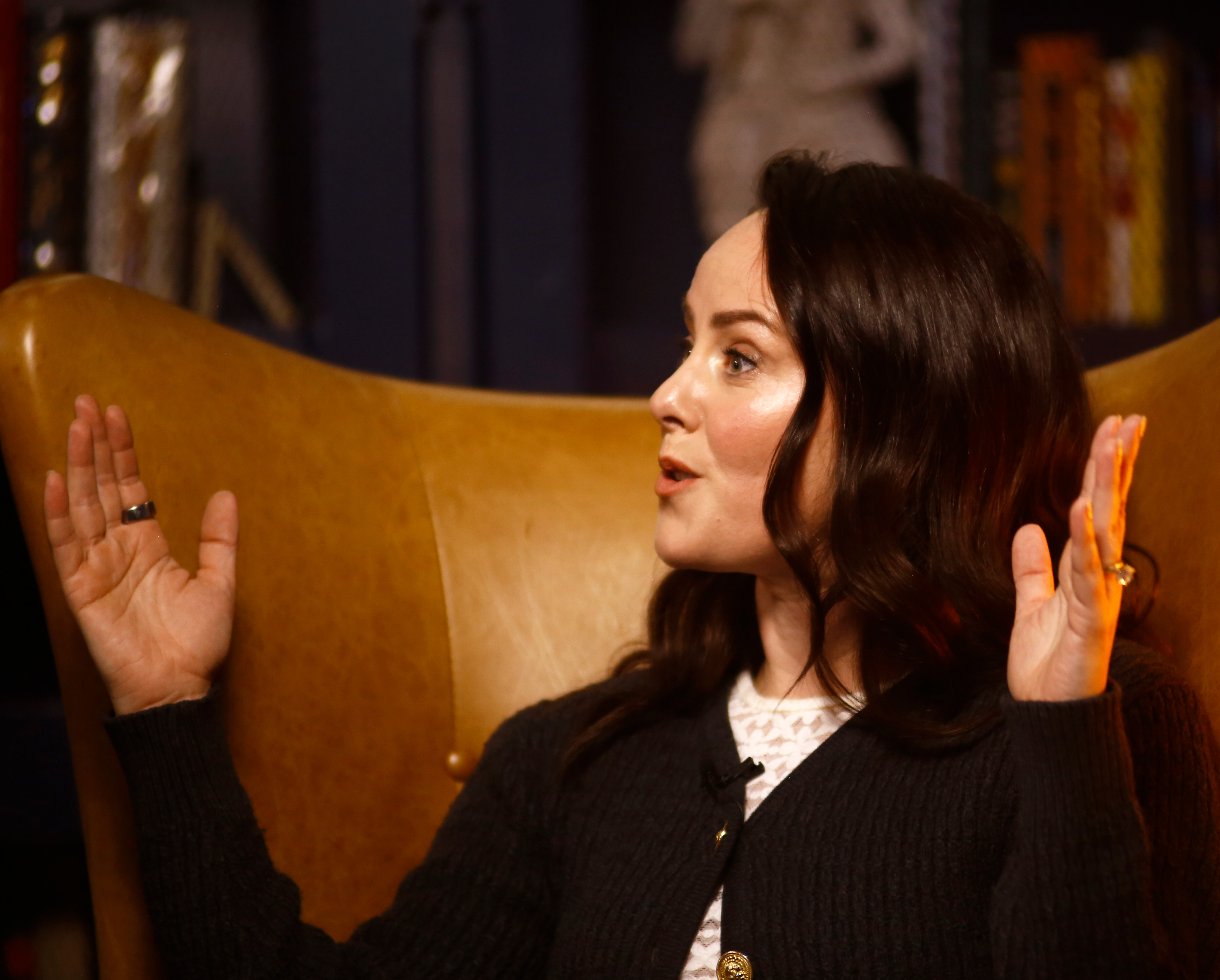
Jena Malone on the set of Books That Changed My Life
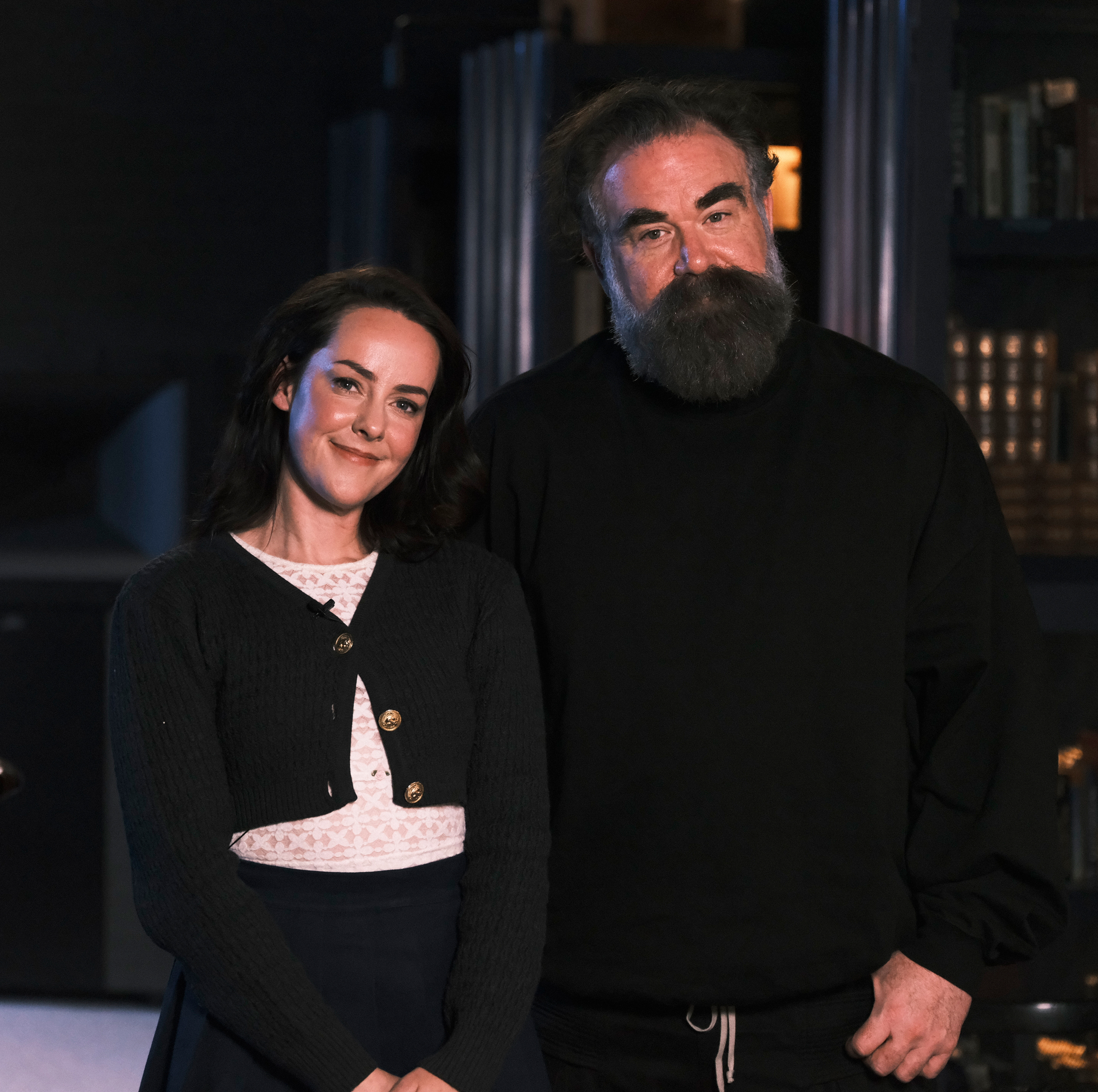
Jena Malone pictured alongside Chris Collins

Books That Changed My Life
The “Boroughs” actress and artist opens up about ancient wands, mushroom kings, and the book that inspired her new paradigm of masculinity.
LOS ANGELES, CA, UNITED STATES, June 5, 2026 /EINPresswire.com/ — Tasked with raising a son, Jena Malone sought a vision of the sacred masculine. What she found was a culture obsessed with its foil, toxic masculinity, but largely devoid of positive prescription.
In conversation with host Chris Collins on the YouTube series “Books That Changed My Life,” the Flowers for Men singer highlights a work that opened her up to a new vocabulary of masculinity: “The Flowering Wand” by Sophie Strand. She makes a case for reevaluating our collective myths, imagining new ones, and looking to the natural world for inspiration.
An Invitation, Not an Answer:
Many books in the broad, ill-defined genre of “personal development” arrive with two things: a one-size-fits-all thesis (often, the title) and a checklist. Sophie Strand’s ecological meditation offers neither; for Malone, this openness was magnetic.
“It’s an invitation to reclaim or redefine myths, ancient myths about masculinity. It’s not judgmental and it doesn’t have a lot of conclusions. It’s inviting the exploration.”
Quoting Strand’s opening salvo, Malone identifies something crucial about the book’s open-ended philosophy:
“An answer often ends a story. And so I want to offer you questions.”
Strand’s aversion to finality hardly blunts her critical edge. In roughly 200 pages she takes on more than 2,000 years of patriarchal myth-making, all while granting her theoretical male subject a hopeful multiplicity. Malone highlights the contrast implied by the book’s title as particularly astute.
The Sword and the Wand:
Malone explores the dichotomy at the heart of Strand’s book: the sword, and the wand. Contrasting the two objects, she asserts that
“A sword can’t heal. It can only divide. It can only slice through. A wand is not interested in dividing a body to get to know it. A wand is interested in healing it from the outside in, the holistic body.”
Malone explains that while masculinity has taken up the mythology of the sword, it used to define itself through a softer, chthonic instrument: the wand.
For Malone, the stakes are not abstract. She is raising a boy, and she’s keenly aware of which stories she hands him:
“If we want our sons to inherit the earth, I don’t want to give him sword myths. I’d like to give him more wand myths.”
When she went looking for those stories, however, she was confronted by a culture in which the sacred masculine is afforded little airtime.
That conspicuous absence may be a question of altitude. Strand notes that our inherited sky gods are abstracted far above the earth, unknowable and untouchable. Under the sky god paradigm, distance and separation are less symptoms than they are the point. Malone contrasts this austere vision with that of Mother Earth; the divine feminine, nurturing, perceptible, and directly underfoot. Drawing on mycelial metaphor, Malone argues for a sacred masculine brought back down to earth:
“We need a king of the dirt, and the king of the dirt is the mushroom.”
Fungus, she notes, regenerates, protects, and penetrates the soil—paternal work, done in the dark, mostly invisible and largely unsung. The image of the vast, interconnected mycelial network touches on another of Strand’s core ideas: nothing living does so alone.
Raising a King of the Dirt:
True to its theme of multiplicity, Strand’s book can be read several ways; for Malone, it serves, in part, as a parenting manual. Mirroring Strand’s preference for invitation over prescription, Malone hopes to lead by demonstration, not demand. She offers a case study: introducing her son to the joy of reading. Rather than ordering him to pick up a book, she modeled the behavior:
“I literally spent the entire summer with my nose in a book. I’d be cooking, and I’d be like, ‘Just hold on, hold on one second.’ And he’s like, ‘What are you reading, Mom?'”
While show-don’t-tell is an effective parenting strategy, Malone is quick to admit the method has its limits:
“I tried it with broccoli, and it didn’t work.”
While Malone searched for tools to help her son grow into a positive, healthy masculinity (a “King of the Dirt”), she examined her own transformative experience of becoming a mother. In her latest record, “Flowers for Men,” Malone reflects on motherhood, highlighting its peculiar tendency towards generative ruin. As she puts it,
“It’s all from the ground up. All of your ideals. It’s a happy death in a way. Your ideals need to die to be able for you to love what’s real.”
In classic Strandian style, Malone asserts that death and decay are preconditions for renewal, and that revision is a form of homage. True to Strand’s invitation to dialogue, Malone revealed that she hopes to adapt Strand’s book for the stage:
“I actually contacted her after I read the book and I was like, I want to build this into an immersive theater piece. I want people to be able to have a little bit of somatic interaction with some of these questions, you know?”
For Malone, a book that refused to answer her questions offered her something far better: a new way to ask them.
Watch the full conversation HERE.
Press Contact: Ryan Oshinsky
Syndicate X
+1 650-773-8983
email us here
Visit us on social media:
Instagram
Facebook
YouTube
TikTok
X
Legal Disclaimer:
EIN Presswire provides this news content “as is” without warranty of any kind. We do not accept any responsibility or liability
for the accuracy, content, images, videos, licenses, completeness, legality, or reliability of the information contained in this
article. If you have any complaints or copyright issues related to this article, kindly contact the author above.